Home automation devices have become essential for creating a smarter, more convenient living space. Whether you’re looking to control lights remotely, monitor energy usage, or add voice commands, there are options to suit every need. The best overall choice in 2026 is the Amazon Smart Plug, praised for its ease of use and reliable Alexa integration. For those seeking a versatile smart hub, the Home Assistant Green stands out with advanced automation capabilities. While these devices offer many benefits, tradeoffs include compatibility issues, setup complexity, and costs. Keep reading for a detailed breakdown of the top picks and what to consider before buying.
Key Takeaways
- The best smart plugs prioritize compatibility with popular voice assistants like Alexa and Google Home.
- A dedicated smart home hub, such as Home Assistant Green, provides more advanced automation but requires more setup effort.
- Energy monitoring devices are ideal for cost-conscious users wanting detailed insights into power usage.
- Compact plugs and multi-packs offer great value for expanding your smart home without breaking the bank.
- Device compatibility and ecosystem integration remain the most important factors influencing long-term satisfaction.
| Amazon Smart Plug – Works with Alexa, Easy Setup, Voice Control |  | Best Overall for Alexa Users | Size: 3.2” x 1.5” x 2.2” (80 mm x 38 mm x 57 mm) | Weight: 3.1 oz. (87 grams) | Electrical Ratings: Input: 120VAC, 60Hz 15A Max; Output: 15A Max | VIEW LATEST PRICE | See Our Full Breakdown |
| Kasa Smart Plug Ultra Mini 15A (4-Pack), Smart Home Wi-Fi Outlet EP10P4 | 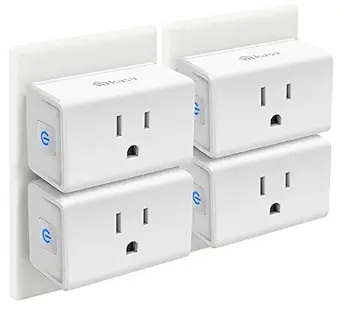 | Best Value for Multi-Platform Compatibility | Model: EP10P4 | Max Load: 15A | Connectivity: 2.4GHz Wi-Fi | VIEW LATEST PRICE | See Our Full Breakdown |
| Amazon Echo Show 15 (Newest Model) – 15.6″ Full HD Smart Display with Fire TV and Alexa |  | Best for Central Home Control and Family Organization | Display: 15.6″ Full HD (1920 x 1080) | Size: 16.1″ W x 10.1″ H x 1.4″ D | Weight: 4.96 lbs | VIEW LATEST PRICE | See Our Full Breakdown |
| Govee Wi-Fi and Bluetooth Smart Plugs, 4-Pack |  | Best for Versatile Connectivity and Group Control | Model: H5083 | Quantity: 4 plugs | Connectivity: 2.4 GHz Wi-Fi and Bluetooth | VIEW LATEST PRICE | See Our Full Breakdown |
| Linkind Matter Smart Plug, Compatible with Apple Home, Alexa, Siri, Google Home | 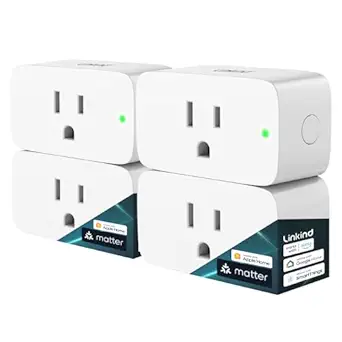 | Best for Cross-Platform Compatibility with Apple Home | Connector Type: Plug in | Number of Poles: 1 | Power Capacity: 1800W | VIEW LATEST PRICE | See Our Full Breakdown |
| Home Assistant Green | Smart Home Hub with Advanced Automation |  | Best Overall Home Automation Hub | RAM: 4 GB | Storage Capacity: 32 GB | Connectivity Technology: Ethernet, USB | VIEW LATEST PRICE | See Our Full Breakdown |
| Meross Smart Home Energy Monitor, Real-Time Power & Cost Tracking |  | Best for Energy Monitoring and Cost Savings | Certification: ETL, UL 61010 | System Compatibility: Single-phase, 3-phase | Max Current: 200A main, 60A branch | VIEW LATEST PRICE | See Our Full Breakdown |
| Emporia Vue 3 Home Energy Monitor – Smart Home Automation Module and Real-Time Electricity Usage Monitor |  | Best for Solar and Net Metering Integration | Certification: UL Listed, CE | Installation: Circuit panel with clamp-on sensors | Supported Systems: Single phase, split phase | VIEW LATEST PRICE | See Our Full Breakdown |
| GHome WiFi Smart Plug – Compatible with Alexa and Google Assistant | 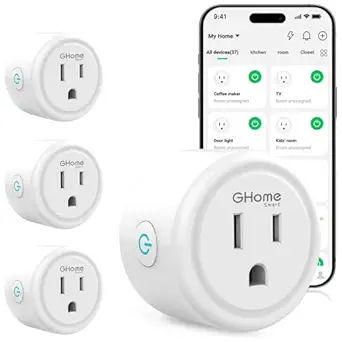 | Best Budget-Friendly Voice-Enabled Smart Plug | Operation Mode: ON-OFF-ON | Current Rating: 10 A | Operating Voltage: 120 volts | VIEW LATEST PRICE | See Our Full Breakdown |
| TP-Link Tapo P125M Matter Smart Plug Mini (3-Pack), White |  | Best for Cross-Platform Compatibility and Compact Design | Brand: TP-Link | Model: Tapo P125M | Product Type: Smart Plug Mini | VIEW LATEST PRICE | See Our Full Breakdown |
More Details on Our Top Picks
Amazon Smart Plug – Works with Alexa, Easy Setup, Voice Control
This Amazon Smart Plug stands out for its seamless integration with Alexa, making it an ideal choice for those already invested in Amazon’s ecosystem. Its simple setup and reliable connection provide a hassle-free experience, especially compared to multi-platform options like the Linkind Matter Plug, which offers broader compatibility but adds setup complexity. The compact design preserves outlet space, but its dependency on 2.4 GHz Wi-Fi and exclusive Alexa support limit versatility. It’s perfect for users seeking straightforward voice control without extra fuss, though it isn’t suitable for homes relying on Google Assistant or requiring 5 GHz Wi-Fi.
Pros:- Easy to set up with Alexa and the app
- Compact design leaves second outlet free
- Supports scheduling and routines for automation
- Reliable connection with automatic reconnection after outages
Cons:- Limited to 2.4 GHz Wi-Fi networks
- Only compatible with Alexa, not other voice assistants
Best for: Alexa-centric households seeking a straightforward, reliable smart plug
Not ideal for: Users who want compatibility across multiple voice assistants or need 5 GHz Wi-Fi support
- Size:3.2” x 1.5” x 2.2” (80 mm x 38 mm x 57 mm)
- Weight:3.1 oz. (87 grams)
- Electrical Ratings:Input: 120VAC, 60Hz 15A Max; Output: 15A Max
- Network Connectivity:2.4 GHz only, 802.11 b/g/n
- Use:Indoor use only
Our verdict“This pick makes the most sense for Alexa users wanting a reliable and simple smart plug solution.”
Kasa Smart Plug Ultra Mini 15A (4-Pack), Smart Home Wi-Fi Outlet EP10P4
The Kasa Smart Plug Ultra Mini 4-pack offers remarkable value, especially for households aiming to control multiple devices across different ecosystems. Unlike the Amazon Smart Plug, which is Alexa-only, this model supports Alexa, Google Assistant, and SmartThings, broadening its appeal. Its ultra-compact size prevents blocking neighboring outlets, making it ideal for dense power strips. However, it requires the Kasa or Tapo app for setup and only supports 2.4 GHz Wi-Fi, which could be limiting in Wi-Fi-heavy environments. This makes it better suited for users who want multi-platform flexibility and bulk affordability, but less so for those with complex Wi-Fi setups needing 5 GHz support.
Pros:- Ultra-compact design doesn’t block other outlets
- Works with Alexa, Google Assistant, and SmartThings
- Easy setup with no hub required
- Includes scheduling, timers, and Away Mode
Cons:- Requires 2.4 GHz Wi-Fi only
- App setup necessary for operation
Best for: Budget-conscious consumers managing multiple devices across various smart home platforms
Not ideal for: Homes relying solely on Google Assistant or requiring 5 GHz Wi-Fi support
- Model:EP10P4
- Max Load:15A
- Connectivity:2.4GHz Wi-Fi
- Voice Assistants:Amazon Alexa, Google Assistant, Samsung SmartThings
- Certifications:UL, FCC, IC, RoHS
- Operating Temperature:32°F to 104°F
- Warranty:2 years
- Quantity:4 plugs
Our verdict“This model makes the most sense for users seeking multi-platform control and bulk savings without extra hub requirements.”
Amazon Echo Show 15 (Newest Model) – 15.6″ Full HD Smart Display with Fire TV and Alexa
The Echo Show 15 offers a sizable 15.6-inch Full HD display with versatile orientation, making it a natural hub for home management. Its built-in Fire TV transforms it into an entertainment center, while the smart home controls are extensive, supporting Zigbee, Matter, and Thread protocols—more integrated than most smart displays like the Govee Wi-Fi Smart Plugs. Its advanced video calling and privacy features make it ideal for family use. The main tradeoff is its high price and WiFi dependency, which might be overkill for simple device control. This makes it perfect for users who want a central command station with entertainment and communication capabilities.
Pros:- Large 15.6-inch Full HD display with flexible orientation
- Built-in Fire TV for streaming
- Advanced video calling with auto-framing
- Supports multiple smart home protocols
Cons:- Premium price may be high for some users
- Requires stable WiFi for best performance
- Some features may need subscriptions
Best for: Families seeking an all-in-one device for home control, entertainment, and communication
Not ideal for: Users with limited WiFi bandwidth or those seeking a dedicated smart home control device without entertainment features
- Display:15.6″ Full HD (1920 x 1080)
- Size:16.1″ W x 10.1″ H x 1.4″ D
- Weight:4.96 lbs
- Camera:13 MP with shutter
- Audio:Two 2″ woofers and two 0.6″ tweeters
- WiFi:WiFi 6E, Tri-band
- Smart Home Hub:Zigbee, Matter, Thread
Our verdict“This device is ideal for families wanting a central hub that combines smart home control with entertainment and communication features.”
Govee Wi-Fi and Bluetooth Smart Plugs, 4-Pack
The Govee Smart Plugs offer flexibility with both Wi-Fi and Bluetooth support, making them suitable for homes with varying network conditions. Unlike the Amazon or Kasa options, these plugs give users the option to control devices locally via Bluetooth, which can be useful in unstable Wi-Fi environments. Their support for schedules and group control adds convenience for managing multiple devices simultaneously. However, they only support 2.4 GHz Wi-Fi and require the Govee Home app for setup, which may be a hurdle for those who prefer native voice assistant integration without additional apps. This product appeals to users who value connectivity options and local control but may not suit Wi-Fi-heavy setups or those seeking seamless platform integration.
Pros:- Supports both Wi-Fi and Bluetooth connectivity
- Works with Alexa and Google Assistant
- Supports scheduling and group control
- Compact design conserving outlet space
Cons:- Does not support 5 GHz Wi-Fi
- Setup requires the Govee Home app
Best for: Homeowners needing flexible control options and group automation without a hub
Not ideal for: Users requiring 5 GHz Wi-Fi or simple voice control without app dependencies
- Model:H5083
- Quantity:4 plugs
- Connectivity:2.4 GHz Wi-Fi and Bluetooth
- Voice Assistants:Amazon Alexa and Google Assistant
- Voltage:120 V
- Maximum Power:1200 W
- Certifications:ETL and FCC
Our verdict“This pick is best for those who need flexible local and remote control options, especially in less stable Wi-Fi environments.”
Linkind Matter Smart Plug, Compatible with Apple Home, Alexa, Siri, Google Home
The Linkind Matter Smart Plug excels in offering broad compatibility, supporting Apple Home, Alexa, Google, and SmartThings, making it ideal for households with multiple voice assistants and ecosystems. Its offline LAN control feature allows local device control, reducing reliance on internet stability, a significant advantage over the Amazon or Govee options. However, it supports only 2.4GHz Wi-Fi and needs a Matter-certified hub or controller for full platform integration, which could add complexity and cost. This device is well-suited for users who want seamless cross-platform control and local operation but should be avoided by those who lack a compatible hub or need higher power capacity.
Pros:- Supports multiple platforms including Apple Home, Alexa, Google, and SmartThings
- Offline LAN communication for local control
- Scheduling and timer functions
- Safety certifications and overload protection
Cons:- Only supports 2.4 GHz Wi-Fi
- Requires a Matter hub or controller for full functionality
Best for: Users with mixed smart home ecosystems seeking reliable, cross-platform control
Not ideal for: Homes without a Matter-certified hub or users needing high power capacity
- Connector Type:Plug in
- Number of Poles:1
- Power Capacity:1800W
- Amperage:15 A
- Color:White
- Material:Copper
Our verdict“This device suits users wanting versatile, platform-agnostic control with local operation capabilities.”
Home Assistant Green | Smart Home Hub with Advanced Automation
The Home Assistant Green stands out as the most comprehensive solution for those committed to a centralized, local-control smart home system. Its support for Z-Wave, Zigbee, and Thread, combined with a powerful quad-core processor and 32GB storage, makes it ideal for users who want robust automation without relying on cloud services. Unlike the GHome WiFi Smart Plug, which focuses on simple device control, this hub offers advanced automation capabilities and local data security, but it’s limited to home automation and requires Ethernet for initial setup, which could be a hurdle for some users. The fanless, compact design ensures silent operation, perfect for a dedicated control center, though it lacks Wi-Fi connectivity, relying solely on Ethernet or USB expandability. This model is best suited for tech-savvy homeowners seeking a reliable, secure, and flexible automation control point.
Pros:- Supports multiple connectivity standards (Z-Wave, Zigbee, Thread)
- Pre-installed with Home Assistant OS for easy setup
- Fanless and compact, ensuring silent operation
- Supports USB expandability for additional devices
Cons:- Limited to home automation; not a general-purpose computer
- Requires Ethernet connection for initial setup
- No built-in Wi-Fi, which may be inconvenient for some setups
Best for: Homeowners who want a dedicated, secure hub with advanced automation features and support for multiple protocols
Not ideal for: Casual users seeking simple device control or those without Ethernet wiring in their home
- RAM:4 GB
- Storage Capacity:32 GB
- Connectivity Technology:Ethernet, USB
- Wireless Compatibility:Bluetooth
- Operating System:Home Assistant OS
- Item Dimensions:4.41″L x 4.41″W x 1.26″H
Our verdict“Best suited for users seeking a secure, local-control hub with extensive protocol support and automation power.”
Meross Smart Home Energy Monitor, Real-Time Power & Cost Tracking
The Meross Smart Home Energy Monitor excels at providing detailed, real-time insights into energy consumption, making it a smart choice for users focused on reducing bills or optimizing solar energy use. Its circuit-level monitoring supports accurate tracking of power, voltage, and current, comparable to the Emporia Vue 3, but with a slightly simpler setup process. While both offer local data storage, Meross’s focus on real-time power tracking with high accuracy makes it ideal for homeowners who want fine-grained control over energy use, though it does require some technical installation and is limited to US electrical systems. Connectivity issues reported by some users can be a drawback, especially for those who prefer a plug-and-play experience. This device is perfect for energy-conscious households aiming to integrate detailed usage data into their automation routines.
Pros:- Accurate real-time power and voltage monitoring
- Supports circuit-level detailed insights
- Local data storage for privacy
- Integrates with Home Assistant for automation
Cons:- Requires some technical installation knowledge
- Limited to US electrical systems
- Connectivity issues reported by some users
Best for: Homeowners wanting precise energy tracking and automation integration to lower utility bills
Not ideal for: Users with non-US electrical systems or minimal technical setup experience
- Certification:ETL, UL 61010
- System Compatibility:Single-phase, 3-phase
- Max Current:200A main, 60A branch
- Data Storage:Up to 5 years
- Connectivity:WiFi, Open API
- Included Components:Wire harness, current transformers
Our verdict“Ideal for energy-conscious users who want detailed, local energy data integrated into their smart home.”
Emporia Vue 3 Home Energy Monitor – Smart Home Automation Module and Real-Time Electricity Usage Monitor
The Emporia Vue 3 offers a comprehensive energy monitoring solution, especially suited for homes with solar systems and net metering. Its UL listing and clamp-on sensors provide a reliable, safe way to track electricity usage and automate responses based on real-time data. Compared to the Meross Energy Monitor, the Vue 3 supports more detailed load monitoring with sixteen sensors, making it better for complex or larger households. However, its setup requires installing sensors in the circuit panel and maintaining Wi-Fi connectivity, which might be a barrier for less technically inclined users. Data retention is limited when the app isn’t active, but overall, it excels at integrating solar and energy automation into a smart home system, making it ideal for energy-conscious homeowners with solar panels.
Pros:- UL-certified for safety and reliability
- Supports detailed load monitoring with 16 sensors
- Compatible with solar and net metering
- Real-time data for automation
Cons:- Requires installation in the circuit panel
- Wi-Fi dependency for full functionality
- Limited data retention when app inactive
Best for: Homeowners with solar panels or complex electrical setups looking for detailed monitoring and automation
Not ideal for: Users without access to a circuit panel or those seeking simple plug-and-play solutions
- Certification:UL Listed, CE
- Installation:Circuit panel with clamp-on sensors
- Supported Systems:Single phase, split phase
- Sensors:Sixteen 50A sensors
- Connectivity:2.4 GHz Wi-Fi
- Data Retention:7 days minute data, indefinite hourly
Our verdict“Best suited for solar homeowners and those with complex electrical systems seeking detailed automation integration.”
GHome WiFi Smart Plug – Compatible with Alexa and Google Assistant
The GHome WiFi Smart Plug offers a straightforward way to control appliances remotely and via voice commands, making it ideal for users new to home automation. Its compatibility with Alexa and Google Assistant provides easy voice control, and scheduling functions add automation capabilities. Compared to the TP-Link Tapo P125M, which supports Matter and broader platform compatibility, GHome’s setup is simpler but limited to 2.4GHz WiFi and basic ON/OFF control. Its small size helps avoid blocking adjacent outlets, a practical feature for dense power strips. However, the reliance on a stable Wi-Fi connection and the inability to connect directly to smart assistants without the app may frustrate some. This plug makes the most sense for casual users seeking quick, reliable device control at an affordable price.
Pros:- Easy remote control from anywhere via app
- Supports voice commands with Alexa and Google Assistant
- Scheduling and timers for energy savings
- Compact design prevents blocking outlets
Cons:- Requires stable 2.4GHz WiFi network
- Cannot connect directly to voice assistants without app
- Limited to 2.4GHz WiFi only
Best for: Renters or casual users wanting easy remote and voice control of basic appliances
Not ideal for: Users needing advanced automation or multi-plug setups with broader compatibility
- Operation Mode:ON-OFF-ON
- Current Rating:10 A
- Operating Voltage:120 volts
- Control Method:App, Remote, Touch, Voice
- Connectivity Protocol:Wi-Fi
- Wattage:1200 watts
Our verdict“Perfect for users seeking simple, affordable voice-controlled device automation without complex setup.”
TP-Link Tapo P125M Matter Smart Plug Mini (3-Pack), White
The TP-Link Tapo P125M is designed for users who want broad compatibility across smart home platforms, thanks to its Matter support. Its compact form factor minimizes outlet blocking, making it suitable for crowded power strips. The setup through Bluetooth simplifies onboarding, and its support for Apple Home, Alexa, Google, and Samsung SmartThings makes it highly versatile. Compared to the GHome WiFi Smart Plug, which is more basic, the Tapo P125M offers a more seamless experience across different ecosystems, but it only works on 2.4GHz Wi-Fi and is limited to 15A/1800W. Its 3-pack offers value, but users should be aware that device compatibility may vary depending on platform updates, and it’s not suitable for high-power devices exceeding its rated load. Its broad platform support makes it ideal for users with multiple smart home ecosystems.
Pros:- Supports Matter for broad compatibility
- Compact size prevents outlet blocking
- Easy Bluetooth onboarding
- Works with major platforms including Apple, Amazon, Google
Cons:- Limited to 2.4GHz Wi-Fi networks
- Maximum load of 15A / 1800W restricts high-power devices
- Works only with Bluetooth for setup, which can be slow in some environments
Best for: Smart home owners wanting a versatile, cross-platform compatible plug for various devices
Not ideal for: Users who prefer Wi-Fi setups over Bluetooth or need to control high-power appliances
- Brand:TP-Link
- Model:Tapo P125M
- Product Type:Smart Plug Mini
- Pack Size:3-Pack
- Color:White
- Smart Home Protocol:Matter
- Max Load:15A / 1800W
- Setup:Bluetooth onboarding
Our verdict“Best for households wanting a versatile, cross-platform smart plug with easy setup and minimal footprint.”
How We Picked
Our selection process focused on performance, ease of setup, build quality, and value for money. We prioritized devices that seamlessly integrate with popular voice assistants and ecosystems, ensuring broad compatibility. Reliability and user-friendly features were key, as was the ability to handle common automation tasks without frequent issues. To rank these options, we considered customer reviews, product versatility, and ongoing support, aiming to highlight devices suited for both beginners and experienced users alike.Factors to Consider When Choosing Home Automation Devices
Choosing the right home automation device involves more than just features. It’s important to consider your existing ecosystem, compatibility, and the level of automation you desire. Understanding these factors can help you avoid costly mismatches and future-proof your smart home setup.Compatibility and Ecosystem Integration
One of the most critical factors is whether a device works with your preferred voice assistants and smart home hubs. Devices like Amazon Echo or Apple HomeKit require specific protocols; choosing incompatible products can lead to frustration. Consider whether you want a device that works across multiple ecosystems or is tailored to a single platform, as this impacts both setup and future expansion.
Ease of Setup and User Experience
Devices with straightforward installation and intuitive apps tend to deliver more satisfaction. Overly complex setups can discourage ongoing use or lead to misconfigurations. Look for options with clear instructions, minimal wiring, and reliable connectivity, especially if you’re not tech-savvy or plan to add multiple devices over time.
Reliability and Security
Smart devices need to be stable and secure since they control critical aspects of your home. Devices with good firmware support, regular updates, and strong encryption help prevent hacking and connectivity issues. Reading customer reviews about reliability can save you from devices prone to disconnections or bugs.
Scalability and Ecosystem Growth
Think about how your device choice fits into your broader smart home plans. Will it be easy to add more devices later? Brands offering multi-packs or compatible hubs often provide better scalability. Be wary of vendor lock-in, which can limit your options or increase costs down the line.
Cost and Long-term Value
While affordability is tempting, investing in more capable devices can pay off through increased reliability and features. Consider ongoing costs such as subscription plans or energy monitoring fees. Balancing price with durability and feature set helps ensure your investment remains worthwhile over time.
Frequently Asked Questions
Will a smart plug work with my existing voice assistant?
Most smart plugs are designed to work with popular voice assistants like Alexa, Google Assistant, or Siri, but compatibility varies. Check the product specifications to confirm support for your preferred platform. Some devices, like the Linkind Matter Smart Plug, offer broad compatibility, making setup smoother. Always verify before purchasing to avoid frustration later.
Is it worth investing in a dedicated smart home hub?
A dedicated hub, such as the Home Assistant Green, can centralize control and enable complex automations that basic plugs can’t handle. However, it requires more technical knowledge and initial setup effort. If you plan to expand your smart home significantly or need advanced automation, a hub can be a smart investment. For small setups, a simple plug with app control may suffice.
How important is energy monitoring in my smart home devices?
Energy monitoring can help track power consumption and reduce costs by identifying inefficient devices. Devices like the Meross Smart Home Energy Monitor offer real-time insights, which are valuable for budget-conscious users or those wanting to optimize energy use. However, if your primary goal is convenience, and energy data isn’t critical, simpler devices may be enough.
Can I mix and match devices from different brands?
Compatibility depends on the protocols and ecosystems supported. Many brands now adopt standards like Matter, which aims to improve interoperability. However, mixing brands can sometimes lead to issues with automations or connectivity. To avoid headaches, focus on products that declare compatibility with your ecosystem, or consider devices that support universal standards.
Do I need to pay extra for smart home automation features?
Many devices include automation features at no extra cost, but some advanced options or cloud services might require subscriptions. For example, energy monitors often have free apps, but some automation platforms charge for premium features. Weigh the cost of these subscriptions against the benefits they offer to determine if they’re worth the additional expense.
Conclusion
For most users seeking a straightforward, reliable smart plug, the Amazon Smart Plug offers seamless Alexa integration and ease of use, making it ideal for beginners. Those wanting a more customizable setup or advanced automation should consider the Home Assistant Green, which provides greater flexibility at the cost of complexity. Budget-conscious consumers will appreciate multi-packs like the Kasa Smart Plug Ultra Mini for value, while homeowners aiming to monitor energy consumption should look at dedicated energy monitors like the Emporia Vue 3. Ultimately, your choice depends on your existing ecosystem, automation needs, and how much you’re willing to invest in building a smarter home.