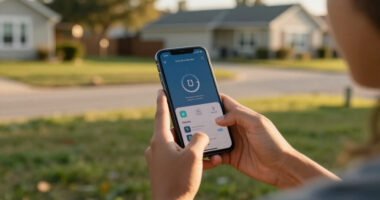
📊 Full opportunity report: How To Research A Contractor’s Safety Grade Before You Hire on IdeaNavigator AI — validation score, market gap, and execution plan.

Get business pricing on tech for your team
- Business-only prices and quantity discounts
- Tax-exempt purchasing
- Multiple users, one account, clear invoices
TL;DR

IdeaNavigator AI has outlined a proposed A-to-F report to help homeowners check a contractor’s license status, insurance evidence and public complaint or disciplinary records before hiring. The concept remains untested: its suggested next step is to manually review 50 contractors in three states and find out whether homeowners would pay for the reports.
IdeaNavigator AI has proposed testing an A-to-F contractor safety grade for homeowners preparing to hire for a major renovation. The suggested report would combine license status, proof of insurance and public complaint or disciplinary records, but the proposal describes a product to validate—not a service already available or a proven measure of contractor safety.
The concept targets a specific decision point: a homeowner comparing bids or preparing to sign a renovation contract. The proposal says homeowners can have difficulty determining whether a contractor is licensed and insured or has serious complaints, leaving them to make judgments based on limited information. A report would attempt to bring those checks into one lookup using a contractor’s name or license number.
The proposed minimum version would draw on state licensing records, insurance evidence and public complaint or disciplinary signals to produce a letter grade. The idea identifies state license boards and court records becoming more accessible online as a reason such a service may now be feasible. It does not specify which databases would be used, how records would be verified or how individual signals would affect a grade.
The suggested business model is a pay-per-report fee, with a discounted or packaged option for homeowners comparing several contractors. To test demand and the grading process, the proposal recommends manually assessing 50 contractors across three states, then asking homeowners who are currently hiring whether they would pay for a report before signing.
A Check Before Signing
For homeowners, the potential value is practical: license, insurance and disciplinary information can be scattered across different public records, and a consolidated report could make those checks easier to complete before money changes hands. A usable report might also help a customer identify questions to ask a contractor or distinguish verified records from unsupported assurances.
But a letter grade could carry more certainty than the underlying information supports. A license listing, an insurance document and a complaint record are different kinds of evidence; they do not by themselves establish the quality of a contractor’s work or predict whether a project will be completed safely. The grading method and limits would matter as much as the convenience of putting the information in one place.
The proposal also points to a commercial question: whether homeowners facing an immediate hiring decision will pay for this kind of screening. Testing actual willingness to pay could indicate whether the idea is useful enough to become a service, rather than simply whether public information can be gathered.
home renovation contractor hiring checklist book
As an affiliate, we earn on qualifying purchases.
As an affiliate, we earn on qualifying purchases.
From Public Records to Grades
The proposal is an early-stage product idea in the home-improvement contractor-vetting market. It frames the first target customer narrowly—a homeowner about to hire for a major renovation—rather than proposing a broad directory or rating platform. Its central premise is that information already available through public records may be hard for an individual homeowner to assemble and interpret.
The proposed validation has two parts. First, manually review contractors in three states to see whether the relevant records can be found and converted into consistent assessments. Second, ask homeowners who are actively hiring whether they would buy a report before signing. Those steps could test record availability, grading consistency and customer interest, but the proposal gives no results from such a test.
Public complaints and court records require careful interpretation. A record may not establish wrongdoing, and different states may publish different information or use different processes. The proposal names these records as possible inputs, but does not describe an appeals process, update schedule or way to correct a mistaken match between a contractor and a record.
home improvement contractor license and insurance verification guide
As an affiliate, we earn on qualifying purchases.
As an affiliate, we earn on qualifying purchases.
How the Grade Would Be Set
No grading rubric or test results are provided. It is not clear how a license lapse, missing insurance evidence, a complaint or a disciplinary action would be weighted, or whether contractors would be able to review and challenge the information before a grade is published.
The proposal also does not identify the three states for the suggested trial, the databases to be searched or how current records would be. It remains unknown whether insurance proof would come from contractors, insurers or another source, and how the service would distinguish an unresolved allegation from a substantiated finding. No pricing, customer research, launch schedule or evidence of homeowner demand is reported.
home renovation contract template homeowner
As an affiliate, we earn on qualifying purchases.
As an affiliate, we earn on qualifying purchases.
The Proposed Three-State Test
The next step outlined in the proposal is to select three states and manually review 50 contractors using public records. Researchers would then need to check whether the same criteria can be applied consistently and whether records can be matched reliably to the right businesses and individuals.
The second proposed test is to speak with homeowners who are actively comparing contractors and ask whether they would pay for a report before signing a contract. Until those checks are completed and results are shared, the A-to-F grade should be treated as a product concept, not a verified safety rating. The proposal does not give a date for a pilot or say when findings might be available.
Source: IdeaNavigator AI
contractor reference and project tracking notebook
As an affiliate, we earn on qualifying purchases.
As an affiliate, we earn on qualifying purchases.
Key Questions
Is an A-to-F contractor safety grading service available now?
The described A-to-F grade is a proposed product concept. No operating service, launch date or completed pilot is reported.
What information would the proposed report include?
The suggested report would combine license status, insurance evidence and public complaint or disciplinary signals. The proposal does not specify the databases or verification process.
Does a public complaint prove a contractor did something wrong?
No. A complaint is a record of an allegation or report and does not, by itself, establish wrongdoing. The proposed grading method would need to distinguish complaints from confirmed disciplinary findings.
How would the idea be tested?
The proposed first test is to manually review 50 contractors in three states, then ask homeowners who are hiring whether they would pay for a report before signing a contract.
Source: IdeaNavigator AI
Halloween Picks
halloween
As an affiliate, we earn on qualifying purchases.