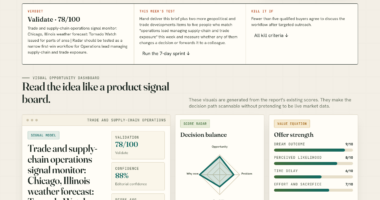
📊 Full opportunity report: Phone-based injury-risk movement screening for hiring on IdeaNavigator AI — validation score, market gap, and execution plan.

Get business pricing on tech for your team
- Business-only prices and quantity discounts
- Tax-exempt purchasing
- Multiple users, one account, clear invoices
TL;DR
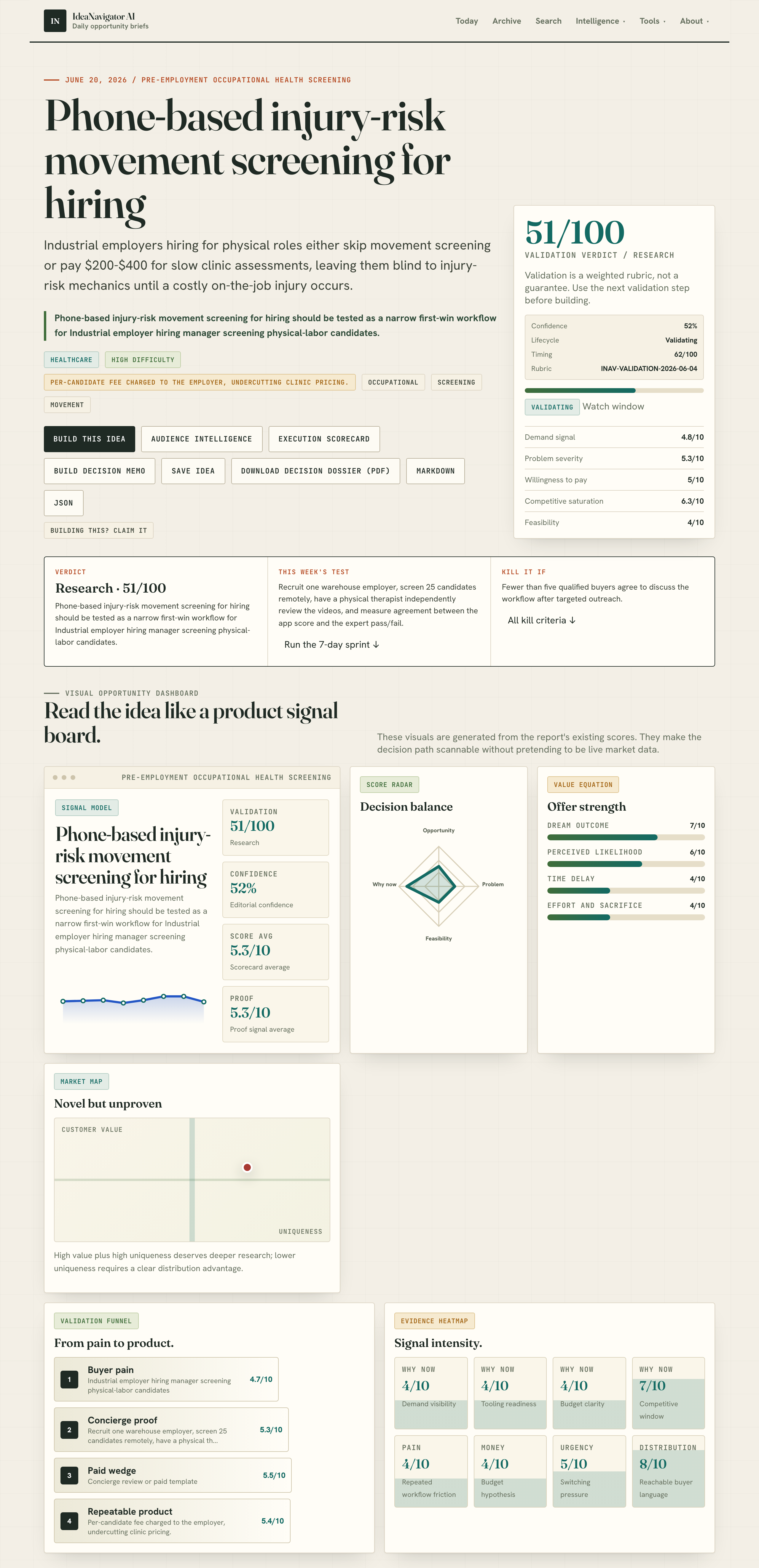
A pilot program is testing a phone-based movement screening tool for industrial hiring. It uses video capture and AI to assess injury risk, promising a faster, cheaper alternative to clinic assessments. Results are pending from initial employer testing.
Industrial employers are beginning to test a new remote movement screening process that uses phone cameras and AI to evaluate injury risk in job candidates, aiming to streamline hiring and reduce injury-related costs. This approach could offer a faster, more affordable alternative to traditional clinic assessments, which are often costly and time-consuming.
The proposed system guides candidates through a series of 5-7 simple movements, including squats, reaches, lift simulations, and balance holds, which are recorded via smartphone. An AI-powered app then analyzes these videos to generate a pass/fail injury risk score within 24 hours, at a cost estimated between $30 and $50 per candidate. This contrasts with clinic assessments that typically cost between $200 and $400 and can take several days.
The initiative is aimed at employers in the industrial sector, particularly those hiring for physically demanding roles. The goal is to identify high-risk movement mechanics early in the hiring process, potentially reducing the incidence of on-the-job injuries and associated costs. The approach is currently in a pilot phase, with plans to recruit one warehouse employer to test the process on 25 candidates. An independent physical therapist will review the videos to validate the app’s scoring accuracy.
According to an anonymous researcher involved in the project, the key innovation is leveraging existing phone camera technology and pose estimation AI, making remote assessment feasible without specialized equipment. The project is still in early testing, with results expected in the coming months.
Potential Impact on Workplace Injury Prevention
If successful, this remote screening tool could significantly lower the costs and logistical barriers associated with pre-employment physical assessments in industrial settings. By enabling employers to identify high-risk candidates early, it may reduce the frequency and severity of on-the-job injuries, leading to lower workers’ compensation claims and improved worker safety. Additionally, the lower cost and faster turnaround could streamline hiring processes, making injury prevention an integral part of recruitment rather than an afterthought.
However, the accuracy and reliability of AI-based movement assessments in this context remain to be validated through pilot results. If proven effective, this method could become a standard component of occupational health screening, especially as remote work and telehealth technologies continue to evolve.
As an affiliate, we earn on qualifying purchases.
Advances in Remote Movement Analysis and Industry Needs
Traditional injury risk assessments for physically demanding jobs often involve in-person clinic evaluations, which can be costly and slow, creating delays in hiring. Some employers skip movement screening altogether or rely on subjective observations, risking missed injury risks. Recent developments in phone-based pose estimation AI, such as those used in fitness apps, have opened the possibility for remote, automated movement analysis.
Rising workers’ compensation costs and a focus on proactive injury prevention have increased interest in scalable, affordable screening tools. This initiative builds on these trends, aiming to integrate AI-driven assessments into the pre-employment process. Prior efforts in remote health screening have focused on general health metrics; applying similar technology to injury risk assessment for industrial roles is a new development.
The pilot testing will determine whether this approach can match or exceed the accuracy of traditional assessments, which remain the current standard but are limited by cost and logistics.
“Leveraging existing phone camera technology and pose estimation AI makes remote injury risk screening feasible without specialized equipment.”
— an anonymous researcher
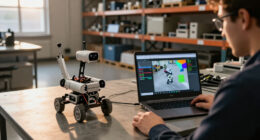
movement screening app for injury risk
As an affiliate, we earn on qualifying purchases.
As an affiliate, we earn on qualifying purchases.
Unconfirmed Effectiveness and Validation Results
It is not yet clear how accurately the AI app will match expert assessments or predict actual injury risk on the job. The pilot is ongoing, and results are expected in the coming months. The effectiveness of this method in diverse industrial settings and for different candidate populations remains to be validated.
Additionally, questions remain about the system’s ability to handle edge cases and whether it can be reliably deployed at scale across various industries.
As an affiliate, we earn on qualifying purchases.
Next Steps in Pilot Testing and Validation
The project team plans to complete pilot testing with the warehouse employer, analyzing the agreement between app scores and expert reviews. If results are promising, further validation studies and larger-scale trials will follow. The goal is to refine the system, establish industry benchmarks, and seek regulatory or industry approval for broader adoption.
In parallel, the developers aim to explore integration with existing hiring workflows and expand the range of movements assessed. The outcome of these next steps will determine whether this remote screening approach becomes a standard part of industrial hiring processes.
industrial worker injury risk assessment
As an affiliate, we earn on qualifying purchases.
As an affiliate, we earn on qualifying purchases.
Key Questions
How accurate is the phone-based movement screening compared to traditional assessments?
The accuracy is currently being tested in pilot projects; results are expected soon. The goal is to match or exceed expert assessments, but validation is still underway.
What movements are included in the screening process?
The screening involves 5-7 movements, such as squats, reaching, lift simulations, and balance holds, designed to assess injury risk mechanics.
How much does the remote screening cost per candidate?
The estimated cost is between $30 and $50 per candidate, significantly lower than clinic assessments.
When will this technology be available for widespread use?
Widespread adoption depends on pilot results and validation, which are expected in the next few months. If successful, broader rollout could follow within a year.
Can this method replace in-person assessments entirely?
It is too early to say whether it can fully replace in-person assessments. The pilot aims to determine if it can serve as a reliable, scalable screening tool, possibly complementing existing methods.
Source: IdeaNavigator AI
Halloween Picks
halloween
As an affiliate, we earn on qualifying purchases.