
📊 Full opportunity report: Data retention cleanup assistant for small law firms on IdeaNavigator AI — validation score, market gap, and execution plan.

Get business pricing on tech for your team
- Business-only prices and quantity discounts
- Tax-exempt purchasing
- Multiple users, one account, clear invoices
TL;DR
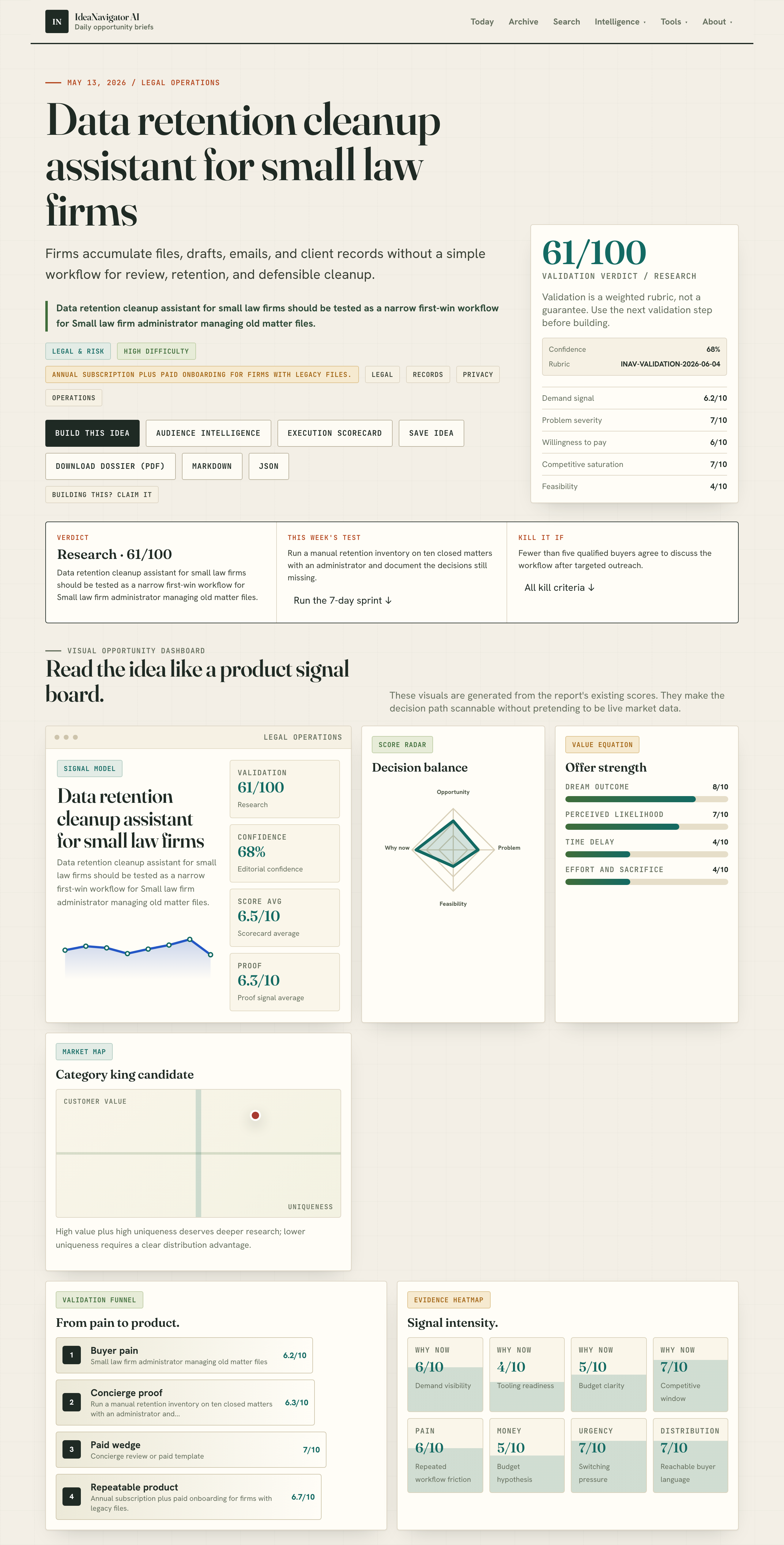
A new data retention cleanup assistant designed for small law firms is being tested to improve management of legacy files. It aims to simplify review, retention, and cleanup processes, with initial validation planned on ten closed matters.
Small law firms are preparing to test a new data retention cleanup assistant designed specifically for managing legacy matter files, aiming to address longstanding operational challenges related to document review and retention.
The new tool, developed by an unnamed provider, offers a matter-file review queue that labels files based on age, ownership, retention status, and missing decisions. It also provides exportable cleanup notes to support defensible data management practices.
This initiative targets small law firms that have been digitizing records faster than they have updated their operational cleanup routines, leading to accumulated files, drafts, emails, and client records with unclear retention statuses.
Validation of the tool involves running a manual retention inventory on ten closed matters, with a focus on documenting remaining decision gaps. The product will be available via annual subscriptions and paid onboarding for firms managing legacy files.
Why Small Firms Need Better Data Cleanup Tools
This development matters because small law firms often lack dedicated resources or workflows for managing old records, risking non-compliance with data retention laws and increased operational inefficiencies. A streamlined, automated review process could reduce legal risks and improve overall record management.
Products Worth Considering

Bose QuietComfort Wireless Noise-Cancelling Headphones, Cypress Green

Bose QuietComfort Headphones (2nd Gen), Wireless Over-Ear Noise-Cancelling Headphones, Black

Anker SOLIX C1000 Gen 2 Portable Power Station with 100W Solar Panel
As an affiliate, we earn on qualifying purchases.
Growing Digitization Outpaces Cleanup Practices in Small Firms
Many small law firms have accelerated their digitization efforts in recent years, resulting in large volumes of stored data without corresponding updates to retention policies. Currently, there are few tailored solutions for these firms to efficiently review and clean legacy files, which can lead to legal and operational vulnerabilities.
The proposed cleanup assistant aims to fill this gap by providing a simple, automated workflow for reviewing old matter files, labeling their status, and exporting notes for compliance purposes. The concept is still in testing, with validation planned on a small sample of closed cases.
“The tool aims to help small firms manage legacy files more efficiently and ensure compliance with data retention standards.”
— an anonymous researcher
Details of the Testing Phase and Future Deployment
It is not yet clear when the cleanup assistant will be available for broader rollout after testing, nor how widely it will be adopted by small law firms. Details about the final product features and pricing are still being finalized.
Next Steps for Validation and Product Launch
The initial validation will involve documenting the effectiveness of the manual retention inventory on ten closed matters. Based on these results, developers plan to refine the tool before a broader release, potentially within the next few months. Further user feedback and case studies are expected to shape future updates.
Key Questions
What is the main purpose of the data retention cleanup assistant?
The tool is designed to help small law firms review, label, and clean old matter files to improve compliance and operational efficiency.
How will the validation process work?
Validation involves running a manual retention inventory on ten closed cases, documenting missing decisions, and assessing the tool’s effectiveness in streamlining cleanup.
When might the tool be available for wider use?
After successful validation and refinement, a broader rollout could occur within the next few months, but specific dates have not been announced.
Is this solution suitable for all small law firms?
The initial focus is on firms managing legacy files and seeking a simple workflow for review and cleanup; suitability for all firms will depend on future updates and user feedback.
What are the costs associated with the tool?
The product is planned to be available via annual subscription and paid onboarding, but exact pricing details are still being determined.
Source: IdeaNavigator AI