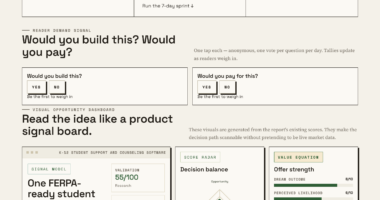

📊 Full opportunity report: Why AI Is A Game-Changer For Youth Mental Health And The APA’s Initiatives on ThorstenMeyerAI.com — validation score, market gap, and execution plan.

Get business pricing on tech for your team
- Business-only prices and quantity discounts
- Tax-exempt purchasing
- Multiple users, one account, clear invoices
TL;DR
OpenAI has announced a partnership with the American Psychological Association aimed at enhancing AI safety for young users. The collaboration seeks to develop responsible AI practices, but specific projects, funding, and evaluation methods are not yet public.
OpenAI has announced a partnership with the American Psychological Association focused on improving AI safety and responsible design for youth users as detailed in the original analysis. The collaboration aims to incorporate psychological expertise into AI development, particularly for systems like ChatGPT that are increasingly used by teenagers for information and emotional support. This development matters because it addresses growing concerns about the developmental effects of conversational AI on adolescents.
The partnership, announced in August 2026, involves joint efforts to enhance age-appropriate protections, conversation management, and parental tools as detailed in the original analysis. While OpenAI states that the collaboration seeks to improve shared knowledge and develop responsible AI guidelines, specific projects, funding, and timelines have not been publicly disclosed. The APA emphasizes that AI chatbots should not replace licensed mental health professionals, and OpenAI already employs measures such as behavioral principles for under-18 users and restrictions on harmful content.
It remains unclear how the partnership will influence product features, safety evaluations, or independent testing. No formal research protocols or success metrics have been announced, and the partnership does not imply an endorsement of ChatGPT as a mental health tool.
Potential Impact on Teen AI Safety Protocols
This partnership could shape future industry standards for AI safety concerning adolescent users. If successful, it might lead to improved risk mitigation features, better conversation boundaries, and enhanced parental controls. The collaboration signals a move toward integrating psychological expertise into AI development, which could influence regulatory expectations and public trust. However, until concrete results are published, the actual safety improvements and their impact on mental health outcomes remain uncertain.
As an affiliate, we earn on qualifying purchases.
As of 2026, teenagers increasingly use conversational AI systems like ChatGPT for information, companionship, and emotional support. While these tools offer benefits, concerns persist about their developmental effects and the potential for over-trust or misperception of AI capabilities. The American Psychological Association has issued guidance cautioning against replacing professional mental health services with AI chatbots and has called for privacy protections and rigorous testing.
OpenAI has already implemented measures such as behavioral principles for minors and restrictions on harmful content, but the long-term safety and efficacy of these measures are still under review. This partnership aims to address these gaps with expert input, but detailed plans are yet to be revealed.
“AI tools should complement, not replace, professional mental health care, and safety measures must be evidence-based.”
— APA representative
As an affiliate, we earn on qualifying purchases.
Unclear Details on Project Scope and Evaluation Methods
It is not yet known how the partnership will be governed, whether external researchers will be involved in independent evaluation, or how success will be measured. The funding, specific deliverables, and timelines remain undisclosed, leaving questions about the tangible impacts of this collaboration.
As an affiliate, we earn on qualifying purchases.
Monitoring for Public Disclosure of Project Milestones
Future updates are expected to include detailed project plans, evaluation protocols, and results from safety assessments. Stakeholders should watch for official reports on how the collaboration influences AI behavior, safety features, and youth mental health outcomes. The next steps will involve transparency on research findings and potential policy changes based on the partnership’s progress.
As an affiliate, we earn on qualifying purchases.
Key Questions
Does this partnership mean ChatGPT is now a mental health tool?
No. The partnership aims to improve safety and responsible use but does not establish ChatGPT as a substitute for professional mental health services.
Will this collaboration lead to new features for teen users?
Potentially, but no specific product changes have been announced. The focus is on developing guidelines and safeguards informed by psychological expertise.
Has OpenAI been certified or approved by the APA?
No. The partnership does not include formal certification or endorsement; it is an ongoing collaborative effort to guide responsible AI development.
When will we see results from this partnership?
Details about timelines and deliverables have not been disclosed. Future updates are expected as projects progress and findings become available.
Source: ThorstenMeyerAI.com
Fall Picks
fall essentials
As an affiliate, we earn on qualifying purchases.