
📊 Full opportunity report: How Daily Dental Imaging Supports Preventive Oral Care on IdeaNavigator AI — validation score, market gap, and execution plan.

Get tech for your team delivered free — and shop member deals
- Fast, free delivery on millions of items
- Access to Prime Big Deal Days deals on October 6–7
- Prime Video, Amazon Music and more included
TL;DR
A new approach uses daily smartphone photos to monitor gum health, enabling early detection of inflammation between dental visits. This supports preventive care and patient engagement.
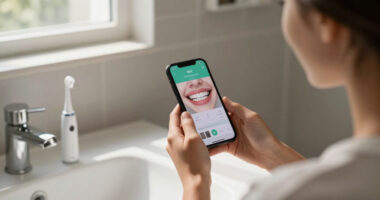
Dental practices are exploring the use of daily smartphone photos of the gum line, scored automatically to detect early signs of inflammation, in a move to support preventive oral care outside regular visits. This innovative approach aims to engage patients more actively in their oral health and catch issues sooner.
IdeaNavigator AI reports that the concept involves patients taking standardized photos of their gum line daily using their phone cameras. These images are then analyzed with on-device scoring algorithms that generate a trend score against general dental health benchmarks. The primary goal is to identify early signs of gum inflammation or plaque buildup, which are typically only detected during routine visits when problems have already worsened.
In a preliminary test, 20 patients of a single dental hygienist are asked to photograph their gums daily over three weeks. The hygienist will review whether the flagged cases of inflammation correspond to actual clinical signs at their next checkup. The approach is designed as an add-on subscription service sold through dental practices, aiming to improve patient engagement and preventive care outcomes.
Implications for Preventive Dental Care and Patient Engagement
This development could significantly enhance early detection of gum disease, potentially reducing the need for invasive treatments by catching issues at their inception. It also offers a new way to keep patients involved in their oral health routines between visits, which could lead to better long-term outcomes. The approach aligns with a broader market trend toward consumer-driven health monitoring, leveraging familiar technology like smartphones.
Dental practices adopting this workflow may see improved recall compliance and more proactive management of oral health issues, ultimately reducing costs and improving patient satisfaction. However, it remains to be seen how accurately the scoring system can detect early inflammation and how patients will respond to daily imaging routines.
As an affiliate, we earn on qualifying purchases.
Emerging Trends in Consumer Oral Health Monitoring
The idea of using smartphone technology for health monitoring has gained traction across various fields, including oral health. Previous efforts have focused on at-home whitening or brushing devices, but daily imaging for inflammation detection is a newer concept. The current initiative builds on advances in phone camera quality and on-device AI processing, making such monitoring feasible.
This approach is part of a broader shift where dental professionals seek scalable, patient-friendly tools to improve preventive care. Early pilots, as reported by IdeaNavigator AI, suggest that patients are willing to participate in daily health tracking if it is simple and provides meaningful feedback. The success of this model depends on validation studies confirming that flagged issues accurately reflect clinical conditions.
“Daily gum-line photo scoring could become a valuable tool for early detection of inflammation, supporting preventive care outside the dental office.”
— an anonymous researcher
oral inflammation detection camera
As an affiliate, we earn on qualifying purchases.
As an affiliate, we earn on qualifying purchases.
Validation and Accuracy of Photo Scoring Systems
It is not yet confirmed how accurately the automated scoring system can detect early gum inflammation compared to clinical examination. The initial pilot involves only 20 patients over three weeks, and larger, longer-term studies are needed to validate effectiveness and reliability.
Additionally, patient compliance with daily photo routines and their ability to follow standardized imaging procedures remain uncertain. The impact of variability in phone camera quality and user technique on scoring accuracy is also still under investigation.
As an affiliate, we earn on qualifying purchases.
Next Steps in Testing and Validation of the Workflow
The next phase involves analyzing the results from the initial pilot to determine if flagged cases correlate with clinical signs of inflammation. If successful, plans include expanding the study to larger patient groups and multiple practices. Researchers aim to refine the scoring algorithms and explore integration into routine dental care workflows. Further development will focus on user experience and ensuring consistent, reliable results across different devices.
As an affiliate, we earn on qualifying purchases.
Key Questions
How does daily gum-line photo scoring improve preventive care?
It enables early detection of inflammation or plaque buildup, allowing patients and hygienists to address issues before they worsen, potentially reducing invasive treatments and improving long-term oral health.
What is required from patients for this system to work?
Patients need to take standardized daily photos of their gum line using their smartphones, following simple instructions provided by their dental practice.
Will this replace regular dental checkups?
No, it is designed as an adjunct to routine visits, providing additional monitoring and early warning signs between appointments.
Are there privacy concerns with daily photos?
As with any health data, privacy measures must be in place, including secure storage and transmission of images, but specific protocols are still being developed.
When will this technology be widely available?
Initial testing is ongoing; broader availability depends on validation results and integration into dental practice workflows, which could take several years.
Source: IdeaNavigator AI
Halloween Picks
halloween
As an affiliate, we earn on qualifying purchases.