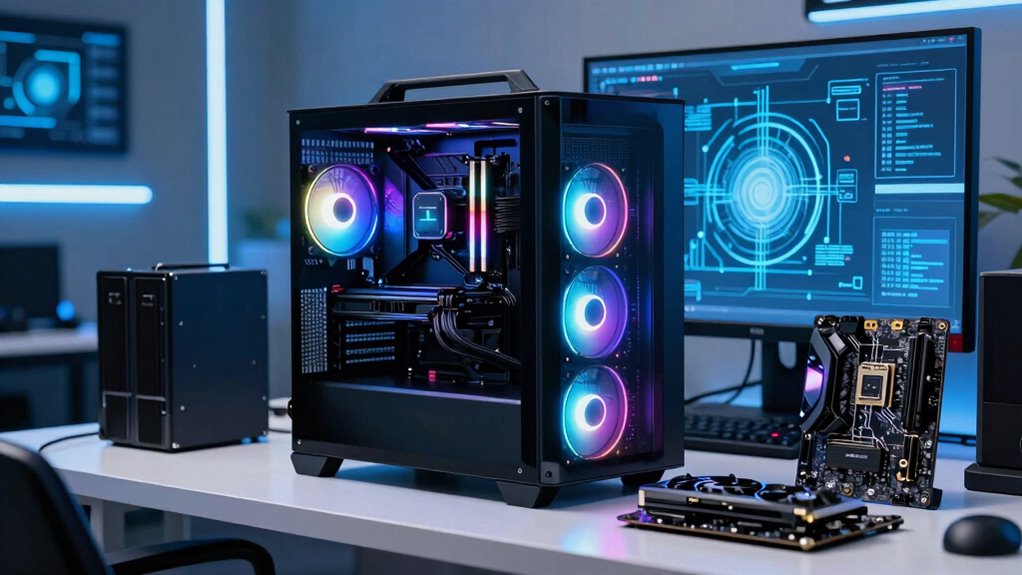

Hardware is cool again in the age of AI because it now powers groundbreaking innovations like quantum computers, smarter wearables, and faster processors. These advancements make AI more practical, accessible, and integrated into your daily life. With better sensors, miniaturized chips, and energy-efficient designs, hardware is no longer just support—it’s leading the way. If you want to discover how hardware is shaping the future of AI, keep exploring these exciting developments.
Key Takeaways
- Hardware innovations enable faster, more powerful AI processing, making AI applications more practical and accessible.
- Quantum computing hardware unlocks exponential speedups for complex simulations and cryptography.
- Smarter wearable devices integrate advanced sensors and AI, transforming daily health monitoring and user experiences.
- Hardware advancements drive the development of connected, intelligent systems across industries.
- The resurgence of hardware positions it as a central, “cool” element fueling AI’s technological breakthroughs.
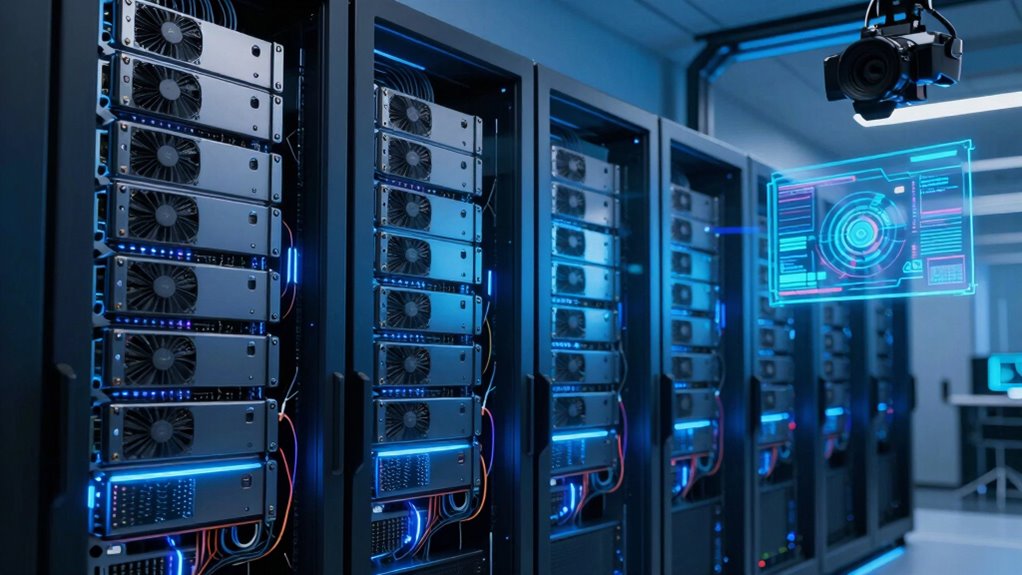
Have you noticed how hardware is suddenly back in the spotlight? It’s like a new wave of excitement is sweeping through the tech world, and it’s not just about sleek software updates or cloud services anymore. Instead, hardware innovations are taking center stage, driven by the rapid advancements in artificial intelligence. You’re seeing this shift everywhere—from powerful quantum computing systems pushing the boundaries of what’s possible to wearable technology becoming smarter and more integrated into your daily life. This resurgence isn’t accidental; it’s a direct response to AI’s insatiable demand for better, faster, and more efficient hardware to process complex tasks and handle enormous data loads. As quantum processors become more refined, they’re unlocking new potentials across industries and research fields.
Hardware is back in the spotlight, fueling AI breakthroughs and transforming everyday devices with smarter, faster, and more efficient technology.
Quantum computing, in particular, is transforming how you think about processing power. Unlike traditional computers, which rely on bits, quantum machines use qubits, allowing for exponentially faster calculations. This means AI applications that once seemed out of reach—like advanced simulations, cryptography, or drug discovery—are now within grasp. As hardware developers refine quantum processors, you’ll find yourself interacting with systems that can solve problems in seconds that would have taken centuries in the past. It’s a game-changer, and you’re at the forefront, witnessing hardware evolve into a *essential* enabler of AI breakthroughs.
On the consumer side, wearable technology has become a prime example of how hardware is reclaiming its cool factor. Devices like smartwatches and fitness trackers aren’t just about counting steps anymore—they’re becoming sophisticated health monitors, personalized assistants, and even augmented reality interfaces. These gadgets rely heavily on advanced sensors, miniaturized chips, and efficient power management—all hardware feats made possible by innovations driven by AI. You can now receive real-time health insights, track your sleep quality, or even get personalized workout recommendations, all through sleek, unobtrusive hardware that seamlessly integrates into your lifestyle.
The fascination with hardware in this AI age isn’t just about raw power; it’s about creating smarter, more intuitive devices that enhance your everyday experiences. Hardware breakthroughs are making AI more accessible and practical, propelling everything from quantum computing labs to your wristwatch. You’re living in a time when hardware isn’t just a supporting player but the star of the show, enabling the next generation of intelligent, connected systems. As these technologies continue to evolve, the hardware that powers them will remain a *fundamental*, exciting frontier—proof that, in the age of AI, hardware is truly cool again.
quantum computing hardware
As an affiliate, we earn on qualifying purchases.
As an affiliate, we earn on qualifying purchases.
Frequently Asked Questions
How Does Hardware Innovation Impact AI Development Speed?
Hardware innovation speeds up AI development by improving hardware scalability and chip optimization, allowing you to process larger datasets more efficiently. As hardware becomes more scalable, you can scale your AI models without hitting bottlenecks, and optimized chips reduce power consumption and latency. This means faster training, quicker deployment, and real-time AI applications, empowering you to push AI advancements further and faster than ever before.
What Role Do Quantum Computers Play in Future AI Hardware?
Quantum computers are set to revolutionize AI hardware by achieving quantum supremacy, enabling unprecedented processing power. You can imagine entanglement networks linking qubits like a web of interconnected minds, vastly accelerating complex calculations. This leap allows AI models to solve problems currently unreachable, paving the way for breakthroughs in machine learning and data analysis. As you explore future tech, quantum hardware’s role becomes clear—transforming AI capabilities beyond your wildest expectations.
Are New Hardware Materials Making AI Devices More Sustainable?
Yes, new hardware materials are making AI devices more sustainable. You’ll find sustainable materials like recycled plastics and biodegradable components being integrated into manufacturing processes. Eco-friendly manufacturing reduces environmental impact, using less energy and minimizing waste. These innovations help you access powerful AI tools without harming the planet, making AI development more responsible and aligned with global sustainability goals. As a result, AI becomes not just smarter but greener too.
How Does Hardware Design Influence AI Model Efficiency?
Ever imagined a race where hardware design determines who wins? Your understanding is spot-on—hardware design directly influences AI model efficiency. Optimizing chips for power efficiency and streamlined architecture reduces energy consumption and boosts performance. When you focus on chip optimization, you enable faster, more reliable AI models that use less power. This enhances overall efficiency, making AI more accessible and sustainable. So, your hardware choices truly shape AI’s future.
What Are the Biggest Challenges in Developing Ai-Specific Hardware?
You face challenges like optimizing AI chipsets and neural accelerators for speed and energy efficiency. Balancing performance with power consumption is tough, especially as AI models grow more complex. Additionally, designing hardware that adapts to rapid AI advancements and ensuring compatibility across systems adds layers of difficulty. Overcoming these hurdles requires innovative engineering and a deep understanding of both hardware architecture and AI workloads.

CCHEEN Smart Bracelet, Subscription-Free 24/7 Health Tracking, Heart Rate, SpO2, HRV & Sleep Tracker with IPX8 Waterproof, Wearable Activity & Fitness Tracker, 7-Day Battery, 2 Bands (Black)
Precision Health Tracking, No Monthly Fees: Get accurate, continuous monitoring of your heart rate, HRV, SpO2, and stress…
As an affiliate, we earn on qualifying purchases.
As an affiliate, we earn on qualifying purchases.
Conclusion
As you hold that sleek chip or powerful GPU, remember it’s more than just hardware—it’s the heartbeat of innovation. Like a sturdy anchor in turbulent waters, it grounds your dreams and fuels your ambitions. In this age of AI, hardware isn’t just a tool; it’s the vessel carrying your ideas across uncharted oceans. Embrace it, for in its strength, you find the power to shape a future limited only by your imagination.
miniaturized AI chips
As an affiliate, we earn on qualifying purchases.
As an affiliate, we earn on qualifying purchases.
energy-efficient processors
As an affiliate, we earn on qualifying purchases.
As an affiliate, we earn on qualifying purchases.