🔍 Read the full analysis: AI Computing In 2027: 10 NVMe SSDs For High-Performance Systems on ThorstenMeyerAI.com

Get business pricing on tech for your team
- Business-only prices and quantity discounts
- Tax-exempt purchasing
- Multiple users, one account, clear invoices
TL;DR
A buyer’s guide from ThorstenMeyerAI.com names 10 NVMe SSD options for high-performance systems, led by the Samsung 990 PRO 2TB and including lower-cost and laptop-focused alternatives. Its comparisons emphasize sustained performance, cooling, capacity and endurance, but the supplied material does not include independent benchmark results or full specifications for every model.
ThorstenMeyerAI.com has published its analysis of 10 NVMe SSDs for high-performance systems, naming the Samsung 990 PRO 2TB its best overall pick and the Kingston NV3 1TB its budget choice. The guide argues that buyers should weigh sustained transfer speed, heat, capacity and cost alongside headline performance, though the source material provided does not include full benchmark data for the rankings; these factors can also shape NVMe SSD choices for VR games.
The guide’s central distinction is between peak burst speeds and performance under extended workloads, a consideration also relevant to gaming storage upgrades. It says entry-level drives such as the Kingston NV3 can slow after their SLC cache is exhausted, a factor that may matter during large file transfers, game installations and other sustained writes. The source does not give measured transfer rates or specify the test conditions behind that comparison.
Among the named recommendations, the Samsung 9100 PRO is presented as a higher-cost option for laptops, with the guide describing its power efficiency as a generational improvement over the 990 PRO. The SanDisk Optimus 5100 is described as a DRAM-less option aimed at general use, while the Bestoss 1TB is singled out for an integrated heatsink suited to compact builds. Those characterizations are the guide’s assessments; detailed product specifications and comparative measurements were not included in the supplied material.
The author says the evaluation considered sequential throughput, random IOPS, thermal throttling, endurance ratings and warranty terms. Capacity is also part of the comparison: the guide says 1TB models can show more noticeable slowdowns on large transfers than 2TB or 4TB versions. It does not provide the full list of 10 models, individual rankings beyond the named examples, or the underlying test results in the material available here.
The 10 picks
- 1
 Samsung 990 PRO 4TB PCIe 4.0 NVMe M.2 2280 SSDView on Amazon →
- 2
 Gigastone Game Turbo 4TB M.2 NVMe PCIe 4.0 Internal SSDView on Amazon →
- 3
 Gigastone 1TB Game Turbo PCIe Gen4x4 M.2 NVMe SSD (2-Pack)View on Amazon →
- 4
 Samsung 9100 PRO 2TB Internal SSDView on Amazon →
- 5
 Samsung 990 PRO 2TB PCIe 4.0 M.2 2280 NVMe SSDView on Amazon →
- 6
 Bestoss 1TB PCIe 4.0 NVMe M.2 2280 SSD with HeatsinkView on Amazon →
- 7
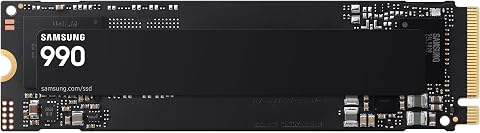 Samsung 990 1TB PCIe 4.0 NVMe Internal SSDView on Amazon →
- 8
 SanDisk Optimus 5100 1TB NVMe SSD, PCIe 4.0, M.2 2280View on Amazon →
- 9
 Kingston NV3 1TB M.2 2280 PCIe 4.0 NVMe SSDView on Amazon →
- 10
 SanDisk Optimus 5100 500GB NVMe SSD, PCIe 4.0, M.2 2280View on Amazon →
Why Sustained SSD Speed Matters
The guide addresses a practical buying issue: short benchmark bursts do not necessarily predict long transfers. A drive may advertise high peak speeds but slow once its cache fills or its controller reduces speed to manage heat. For people editing video, moving large project files or installing sizeable games, sustained behavior may affect how long routine tasks take.
That makes cooling and capacity relevant to performance, not just convenience. A heatsink or motherboard thermal pad can help limit heat-related slowdowns, while a larger-capacity model may offer more room for consistent writes, depending on its design. The recommendations provide a shortlist by use case, but buyers should check the exact model, system compatibility, warranty and independent test data before treating the rankings as a definitive comparison.
Products Worth Considering

Samsung 57 Odyssey Neo G9 (G95NC) Dual 4K UHD 1000R Curved Gaming Monitor

DJI Osmo 360 Road Cycling First-Person Combo Action Camera

Bose QuietComfort Wireless Noise-Cancelling Headphones, Cypress Green
As an affiliate, we earn on qualifying purchases.
The Guide’s Buying Criteria
The source frames PCIe 4.0 as a practical fit for many current systems and notes that a drive’s performance is limited by the interface supported by its M.2 slot. A newer or faster drive does not automatically deliver its advertised throughput in an older or incompatible system. The guide also notes that PCIe 5.0 products can require more cooling, but supplies no model-specific temperature measurements.
Another distinction is whether a drive has DRAM or uses Host Memory Buffer. The guide says DRAM can help with mapping data and responsiveness, while DRAM-less models may use some system memory and can suit lighter workloads. It recommends considering TBW endurance ratings and warranty coverage for write-heavy use. The supplied source does not list those ratings for each of the 10 picks, so readers cannot verify the relative durability claims from this material alone.
““The primary tradeoff in this category often lies between raw peak performance and sustained write consistency.””
— ThorstenMeyerAI.com guide
Benchmark Details Still Missing
The supplied material does not state when the testing took place, identify the review units or firmware, or publish benchmark tables and test methods. It also does not provide the full 10-drive list, exact prices, capacities for every pick, endurance figures or warranty terms. The guide’s recommendation labels and performance descriptions should therefore be read as its editorial conclusions, not as independently verified results in this article.
It is also unclear how the guide defines “generational leap” for the Samsung 9100 PRO, or what measurements support its power-efficiency comparison with the 990 PRO. Prices and product availability can change, and no regional market or price-check date was supplied. Readers should confirm current specifications and compatibility before buying.
Checks Before Choosing a Drive
Prospective buyers can use the named picks as starting points, then check the manufacturer’s current specifications, motherboard or laptop compatibility, and whether the system includes suitable M.2 cooling. For sustained workloads, look for tests that report performance after cache exhaustion and during long writes, rather than relying only on peak sequential speeds.
More detail from the publisher—particularly the complete 10-drive ranking, prices, benchmark results and test conditions—would allow readers to compare the recommendations directly. Until that information is available, the strongest confirmed development is the publication of the guide and its stated selection criteria, not a verified finding that one drive outperforms all alternatives.
Key Questions
Which SSD does the guide rank as its best overall choice?
The guide names the Samsung 990 PRO 2TB as its best overall pick, citing a balance of high sequential speeds and power efficiency. The supplied material does not include benchmark tables to independently assess that ranking.
What is the guide’s budget recommendation?
It identifies the Kingston NV3 1TB as a budget option for PCIe 4.0 systems. The guide warns that sustained writes may slow after its SLC cache is exhausted, but provides no measured speeds or test conditions in the material supplied.
Why does sustained write performance matter?
Long transfers can continue after a drive’s fast cache fills, so its speed during extended writes may differ from its short-burst peak. This can matter for large media files, game installations and other write-heavy tasks.
Does the source provide all 10 SSD models and their test results?
No. The supplied source names several models and says the guide evaluates 10 drives, but it does not include the complete list, full rankings or benchmark results.
Source: ThorstenMeyerAI.com