📊 Full opportunity report: Wholesale Sourcing For Retailers Who Need Smaller Orders on IdeaNavigator AI — validation score, market gap, and execution plan.

Get tech for your team delivered free — and shop member deals
- Fast, free delivery on millions of items
- Access to Prime Big Deal Days deals on October 6–7
- Prime Video, Amazon Music and more included
TL;DR
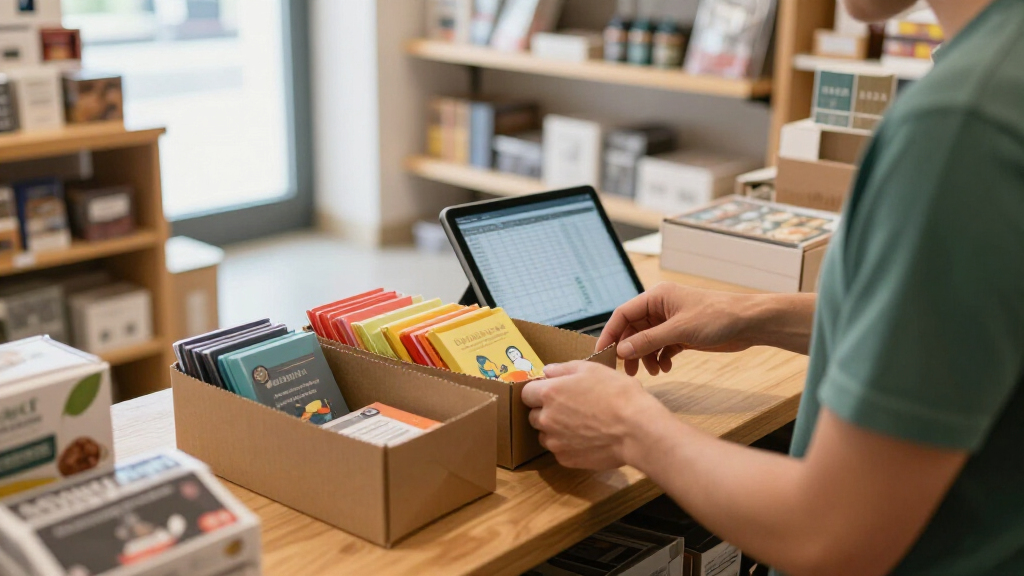
A proposal from IdeaNavigator AI outlines a wholesale marketplace lane for independent retailers that cannot meet distributor minimums. It would broker small trial orders and measure whether shops reorder at standard wholesale volumes, but no pilot results or operating platform are reported.
IdeaNavigator AI’s proposal describes a service that would let brands set micro-minimums and combine shipments so independent shops could buy trial assortments as small as five units. Retailers would track sell-through, or how quickly products sell to customers, and could move successful tests into regular wholesale relationships. The proposal does not specify how assortment size, unit mix or shipping charges would work for each order.
The proposed business model combines a commission on orders with subscriptions for brand analytics on trial performance. These are proposed revenue streams, not demonstrated economics: IdeaNavigator AI provides no pricing, cost estimates, retailer commitments or evidence that consolidated fulfillment can make five-unit orders commercially viable.
For initial validation, IdeaNavigator AI recommends arranging orders manually between 20 brands and 50 shops. The central measure would be conversion from a trial order to a standard reorder within one quarter. The proposal reports no launch, completed transactions or conversion rate.
A Lower-Cost Route to Product Tests
IdeaNavigator AI’s proposal says small trial orders could give independent retailers a way to test unfamiliar products while limiting the stock they must buy upfront. That may matter to shops whose budgets or storage capacity make distributor case minimums difficult to meet. The proposal frames the gap as one between conventional wholesale order sizes and the smaller quantities a single shop might want to test.
The model’s practical value depends on whether it can solve the shipping and handling costs that often accompany small orders. IdeaNavigator AI suggests consolidating shipments but provides no operating data to show that the approach lowers costs enough for both brands and retailers. Until a pilot measures order economics and reorders, the benefit remains a hypothesis.
For brands, trial data might indicate which products merit broader distribution. For retailers, sell-through tracking could inform whether to restock. These potential benefits, described in the proposal, would depend on reliable, comparable sales data and repeat participation; neither has been established.
As an affiliate, we earn on qualifying purchases.
The Proposed Trial Workflow
IdeaNavigator AI’s proposal says the idea builds on the wholesale marketplace model it attributes to Faire, while identifying very small trial orders as a possible underserved need. The material provides no market-size figures or evidence about how many independent retailers currently seek this service, so the scale of that gap is unclear.
The proposed workflow has three steps: brands set small minimums and coordinate consolidated fulfillment; shops buy limited assortments and track sales; successful tests lead to standard wholesale reorders. IdeaNavigator AI recommends testing that sequence through a manual pilot before building a dedicated marketplace. The proposal identifies no participating brands or stores and gives no pilot date.
As an affiliate, we earn on qualifying purchases.
Demand and Costs Remain Untested
IdeaNavigator AI’s proposal provides no evidence that retailers or brands have committed to the trial, or that the suggested group of 20 brands and 50 shops has been recruited. It reports no completed orders, customer demand, reorder rates or launch timeline.
Key operational questions also remain open: who would hold and pack inventory, how orders from multiple brands would be consolidated, what shipping would cost, and who would pay for unsold trial stock. The proposal does not define the analytics subscription, its price or which performance measures brands would receive. Its reference to five-unit tests is an example of the intended small scale, not a reported order size from a live service.
As an affiliate, we earn on qualifying purchases.
A Manual Pilot Would Test Reorders
IdeaNavigator AI proposes manually brokering trial orders between 20 brands and 50 shops and measuring whether those purchases convert to standard reorders within a quarter. That would provide an initial signal about repeat buying, though the proposal defines no target conversion rate or other success thresholds.
Further reporting would be needed to establish whether a pilot has begun, what it costs to fulfill small orders, and whether retailers and brands continue after the trial. Until those details emerge, IdeaNavigator AI’s marketplace remains a concept for validation rather than an operating service with demonstrated results.
Source: IdeaNavigator AI proposal
independent retailer product testing
As an affiliate, we earn on qualifying purchases.
As an affiliate, we earn on qualifying purchases.
Key Questions
Has the small-order sourcing platform launched?
No launch is reported. IdeaNavigator AI describes a proposal and recommends testing it through manually brokered orders.
How small would the trial orders be?
The proposal gives five-unit assortments as an example. It does not report actual orders or specify a standard assortment format.
How would the service make money?
The proposed model combines a commission on orders with subscriptions for brand analytics. No fees or revenue have been reported.
What would the suggested pilot measure?
It would track whether trial orders from a proposed group of 20 brands and 50 shops convert to standard wholesale reorders within a quarter. No results are available.
Source: IdeaNavigator AI
Fall Picks
fall essentials
As an affiliate, we earn on qualifying purchases.