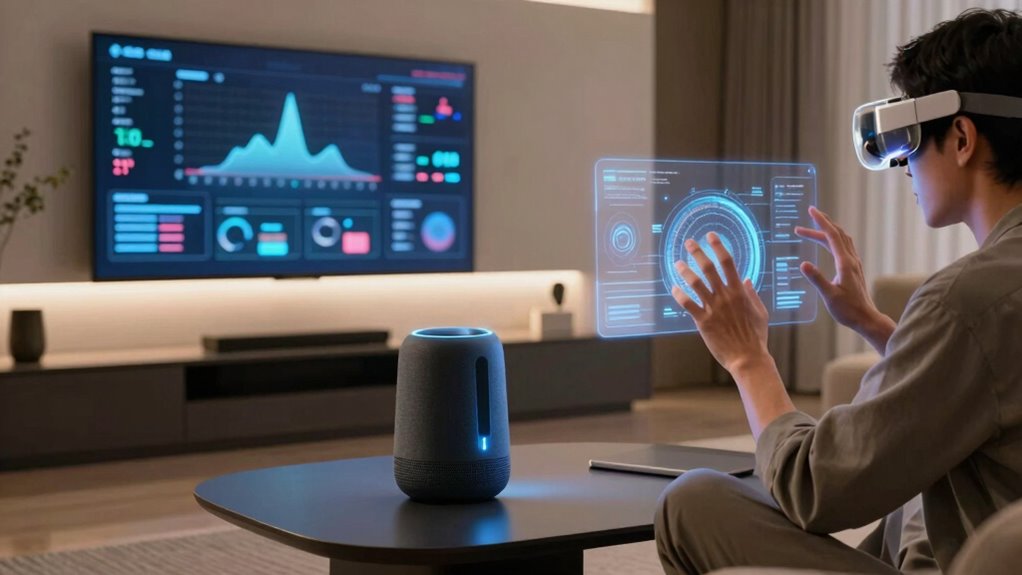
You might notice a divide forming where smart devices promise convenience but often fall short of creating truly personalized experiences. Privacy and security concerns hinder many from fully enjoying the benefits, as data collection rises and users feel less in control. Manufacturers sometimes prioritize ease of use over protection, making breaches more likely. To bridge this gap, understanding privacy policies and managing settings is key. Keep exploring to discover how you can regain control and enhance your smart experience.
Key Takeaways
- The gap arises from devices prioritizing data collection over user privacy, hindering truly personalized experiences.
- Privacy concerns and security risks can limit user trust and willingness to engage fully with smart ecosystems.
- Transparent policies and user control are essential to bridge the divide and foster meaningful smart experiences.
- Seamless, empowering interactions require balancing data sharing with robust security and privacy protections.
- Proactive measures like updates and privacy management are vital to aligning device capabilities with user expectations.
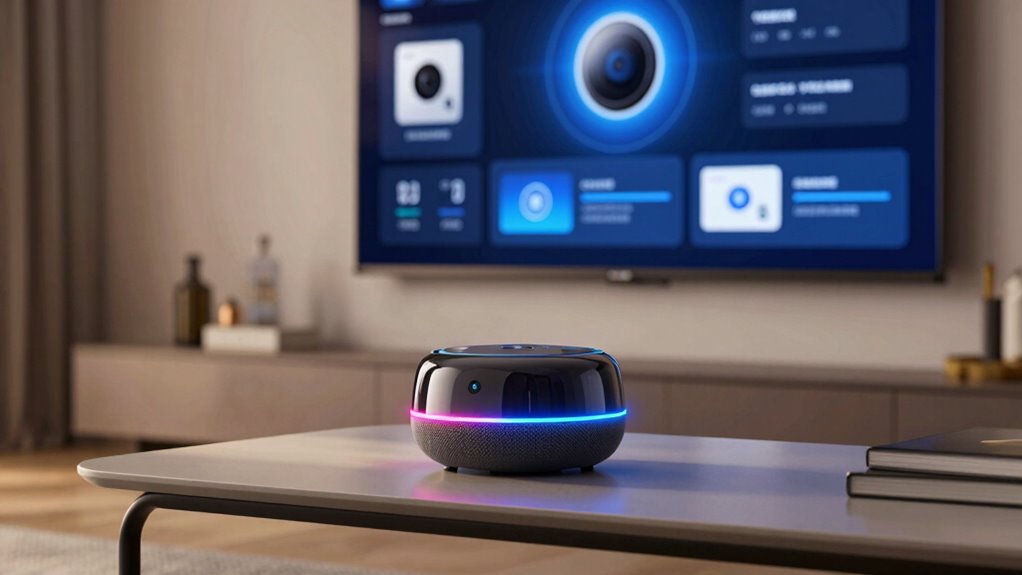
In today’s connected world, smart devices are transforming the way you live, work, and interact. They bring convenience and efficiency, offering personalized experiences that seem to anticipate your needs. Yet, as these devices become more integrated into your daily routine, a new concern emerges: the divide between smart devices and truly meaningful smart experiences. While technology promises seamless interactions, it also raises questions about user privacy and data security. You might enjoy the ease of voice commands or automated routines, but behind the scenes, your personal information is often collected and stored. This data fuels the smart ecosystem, but it also exposes you to risks if not properly managed. When your smart home learns your habits, it creates a detailed profile of your life, which could be vulnerable to breaches or misuse. The tension lies in balancing the benefits of personalization with the need to protect your privacy.
Many devices are designed to gather vast amounts of data to improve user experiences, but this can sometimes come at the expense of your security. If companies don’t implement robust data security measures, your sensitive information could be exposed to hackers or unauthorized third parties. It’s *essential* to understand what data is being collected and how it’s protected. You should also be aware of the privacy policies that govern your devices, ensuring you retain control over your information. Unfortunately, some manufacturers prioritize convenience over security, leaving gaps that malicious actors can exploit. This disconnect between device functionality and user privacy creates a chasm where your trust can be compromised. Additionally, the increasing adoption of smart home technology means that more aspects of your life are interconnected, heightening the importance of safeguarding your data. Recognizing the importance of data security can help you make informed decisions about your device use. Furthermore, understanding the scope of data collection can empower you to choose smarter, more secure devices. Being aware of privacy policies and their implications allows you to navigate the smart device landscape more confidently.
Smart experiences are meant to be intuitive and responsive, yet many users find themselves feeling uneasy about the extent of data sharing required to achieve this. A truly smart experience should empower you, not infringe on your rights or expose you to risks. The challenge is developing systems that respect user privacy while still delivering on the promise of personalization. This requires transparent data practices, strong encryption, and options for users to manage their privacy settings easily. When these elements are absent, the smart device feels more like a surveillance tool than an assistant. As you navigate this landscape, your awareness of data security and user privacy becomes *vital* to ensuring that smart devices enhance your life without compromising your security or autonomy. Taking proactive steps, such as regularly updating firmware and reviewing privacy settings, can significantly improve your overall safety and confidence in your smart ecosystem. Being proactive about privacy management helps maintain control over your personal information and ensures your smart device experience remains positive.

WiFi Door Alarm System, Wireless DIY Smart Home Security System, with Phone APP Alert, 8 Pieces-Kit (Alarm Siren, Door Window Sensor, Remote), Work with Alexa, for House, Apartment, by tolviviov
WIFI Network: WIFI connection, Only works on 2.4GHz WiFi network, does NOT support 5GHz WiFi networks.
As an affiliate, we earn on qualifying purchases.
As an affiliate, we earn on qualifying purchases.
Frequently Asked Questions
How Do User Privacy Concerns Influence Smart Device Development?
You realize that user privacy concerns considerably influence smart device development. Developers prioritize data security to protect your personal information, ensuring it’s safe from breaches. They also seek your consent before collecting or sharing data, giving you control over your privacy. This focus on transparency and security helps build trust, encouraging you to use smart devices confidently. As a result, privacy considerations shape smarter, more responsible innovation in the tech industry.
What Industries Are Most Impacted by the Smart Experience Revolution?
You’ll find the retail, healthcare, and entertainment industries most impacted by the smart experience revolution. Contextual personalization allows these sectors to tailor services, creating emotional engagement that deepens customer loyalty. Retailers, for instance, use smart devices to customize shopping, while healthcare providers personalize patient care. This shift proves that blending smart devices with meaningful experiences truly enhances user satisfaction, confirming the theory that emotional engagement drives long-term success.
How Can Companies Ensure Seamless Integration Between Devices and Experiences?
To guarantee seamless integration, you should focus on contextual design and user personalization. By understanding user behaviors and preferences, you can create intuitive interfaces that adapt to individual needs. Incorporate real-time data to make experiences more relevant, and assure your devices communicate smoothly through standardized protocols. Regularly gather feedback, refine your systems, and prioritize a cohesive user journey, making interactions feel natural and effortless.
What Are the Biggest Technical Challenges in Creating Smart Experiences?
Creating smart experiences is like solving a complex puzzle. You face big technical challenges, including delivering seamless contextual personalization and developing adaptive interfaces. These require advanced algorithms and real-time data processing, which can strain device capabilities and network stability. Ensuring smooth, intuitive interactions demands constant innovation, making it difficult to balance user privacy, security, and personalization without compromising performance. It’s a demanding but rewarding technological dance.
How Will AI Advancements Shape Future Smart Device Interactions?
AI advancements will transform your interactions with smart devices by making them more intuitive and personalized. With improved contextual awareness, your devices will better understand your environment and needs, responding seamlessly. Emotional intelligence will enable devices to recognize your mood and adapt accordingly, creating more engaging experiences. As AI evolves, expect smarter, more empathetic devices that anticipate your preferences, making everyday tasks effortless and interactions genuinely meaningful.

TensaOne Hidden Camera Detectors – Mini Security Device for Audio Video Wireless Threats, Hotel Safety, Home Privacy and GPS Tracker Detection, Pen RF Spy Cam Voice Recorder Bug Finder for Travelers
MULTI-MODE SWEEPER FOR FULL COVERAGE: 4-in-1 tool scans for Bluetooth, wireless, and radio frequency threats. Use RF mode,…
As an affiliate, we earn on qualifying purchases.
As an affiliate, we earn on qualifying purchases.
Conclusion
As you navigate this new nexus of smart devices and experiences, remember that technology’s true triumph lies in turning tools into tailored, transformative tales. Don’t let the divide diminish your digital dreams—dare to dive deeper, discover more, and design delightful, dynamic moments. Embrace the evolving ecosystem, empower your experience, and elevate every interaction. Because in this digital dance, your intentional involvement fuels the future of truly smart, seamless, and satisfying solutions.

Aqara Smart Home Hub M3 for Advanced Automation, Matter Controller, Thread Border Router, Features Zigbee, Bluetooth, Wi-Fi, PoE, IR, Supports Alexa, Apple HomeKit, SmartThings, Home Assistant, IFTTT
[Multi-Protocol Hub with Matter Bridge] The M3 is a versatile hub supporting Aqara Zigbee and Thread devices. It…
As an affiliate, we earn on qualifying purchases.
As an affiliate, we earn on qualifying purchases.
TensaOne Hidden Camera Detectors – Mini Security Device for Audio Video Wireless Threats, Hotel Safety, Home Privacy and GPS Tracker Detection, Pen RF Spy Cam Voice Recorder Bug Finder for Travelers
MULTI-MODE SWEEPER FOR FULL COVERAGE: 4-in-1 tool scans for Bluetooth, wireless, and radio frequency threats. Use RF mode,…
As an affiliate, we earn on qualifying purchases.
As an affiliate, we earn on qualifying purchases.