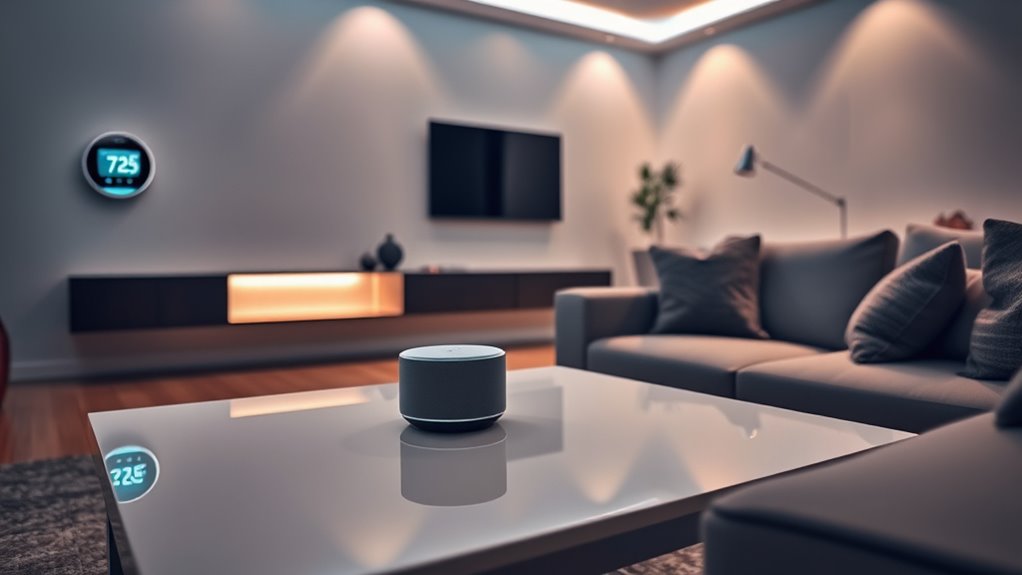

Meet Matter, the new smart-home standard that helps your devices talk effortlessly across brands and protocols. It uses a single IP-based system that allows direct, local communication, making your smart home more reliable, secure, and easy to set up. Whether it’s lights, locks, or appliances, Matter simplifies control and reduces troubleshooting. If you keep exploring, you’ll discover how this universal standard shapes the future of smarter, more connected homes.
Open a free Amazon Business account
Business pricing, bulk buying and tax-exempt orders.
As an affiliate, we earn on qualifying purchases.
Key Takeaways
- Matter is an open, IP-based standard that enables smart home devices from different brands to communicate seamlessly.
- It supports local device communication, ensuring faster response times and reliability even without internet.
- Compatibility has expanded to include appliances, routers, and new device types, promoting a more integrated smart home ecosystem.
- Matter simplifies setup and management, reducing troubleshooting and increasing interoperability across devices.
- It enhances security by keeping data within the home network and reduces development costs for manufacturers.
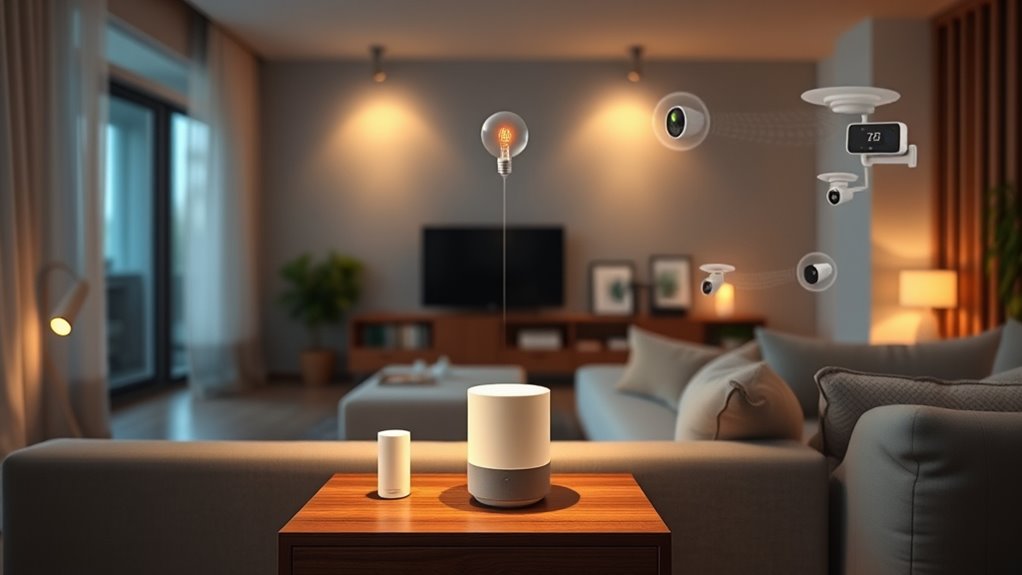
Ever wonder how your smart home devices can work together more seamlessly? That’s where Matter comes in. It’s an open, manufacturer-independent connectivity standard designed to make smart home devices communicate effortlessly. Developed by the Connectivity Standards Alliance, dozens of companies have joined forces to unify the smart home ecosystem. Instead of juggling different protocols like Zigbee, Z-Wave, or Thread, Matter uses a single IP-based protocol, allowing devices to connect smoothly across various ecosystems.
Matter unifies smart home devices with a single, open IP-based protocol for seamless, reliable connectivity across ecosystems.
The beauty of Matter lies in its focus on local connectivity. Devices communicate directly on your home network, which means lower latency, higher reliability, and the ability to control your devices even if your internet goes down. This setup guarantees your smart home remains responsive, whether you’re adjusting your thermostat, unbolt a door, or turning on a light. You won’t have to worry about cloud dependency for everyday functions, making your smart home more resilient. Standardized commands over local networks help ensure compatibility and ease of use. Additionally, this local-first approach enhances your overall data security by minimizing reliance on external servers.
Initially, in 2022, Matter 1.0 supported core device categories like light bulbs, switches, smart plugs, locks, sensors, thermostats, HVAC controllers, blinds, media devices, and bridges for Zigbee or Z-Wave. But the standard didn’t stop there. In 2023, with Matter 1.2, support expanded to include appliances like refrigerators, dishwashers, washing machines, robot vacuums, smoke and CO alarms, air purifiers, fans, air quality sensors, and room air conditioners. The newer versions, such as 1.3 and 1.4, continue broadening compatibility to cover microwaves, tumble dryers, electric vehicle chargers, solar systems, and battery storage. They even introduce features for home routers and access points to optimize your network. Manufacturers can update existing Thread, Zigbee, or Z-Wave devices to become Matter-compatible, provided they support firmware updates, making adoption easier.
For you, this means a more straightforward, reliable setup process. Devices on the same primary network can communicate directly, reducing setup failures and simplifying management. Since devices can talk directly to each other, your smart home becomes more responsive, with commands executed locally rather than relying solely on cloud services. This local control not only improves speed but also enhances security, as your data stays within your home network. The adoption of interoperability standards ensures that new devices will integrate seamlessly with your existing setup, reducing frustration and time spent troubleshooting.
Technically, Matter leverages an IP-based protocol, so devices connect over Wi-Fi, Thread, or Ethernet—whatever your home supports. This standardization reduces development costs for manufacturers, encouraging more products to adopt Matter. While cloud services can still provide advanced features if needed, your primary controls stay operational locally, guaranteeing your smart home remains functional even during internet outages.
In essence, Matter aims to streamline your smart home experience, making device setup, management, and control simpler, faster, and more reliable. By unifying how devices communicate, it promises a future where your smart home is truly smarter—more integrated, secure, and user-friendly.
Frequently Asked Questions
Will Existing Devices Be Compatible With Matter?
You might wonder if your current smart devices will work with Matter. Compatibility depends on their hardware and whether manufacturers offer firmware updates. Some Wi-Fi devices can be upgraded, while Zigbee devices need compatible hubs. Devices without upgrades stay functional on their original platforms and can coexist with Matter devices. Keep in mind, full compatibility will take time as manufacturers gradually support Matter and update their products.
How Secure Is Matter for Smart Home Data?
You might wonder how secure Matter is for your smart home data. Rest assured, it’s built with strong security features like device attestation, encrypted communication, and end-to-end encryption. These measures protect your data from unauthorized access and cyber threats. Plus, its open standards allow ongoing community auditing and updates. While no system is perfect, Matter provides a high level of security to keep your smart home safe and private.
Can Developers Create Custom Matter Devices?
Yes, you can create custom Matter devices. You’ll use predefined clusters or develop your own, but creating custom clusters requires CSA membership for broader interoperability. You’ll need a chip tool for commissioning and communication, along with the Matter SDK for development. This process lets you design devices like sensors or switches that work seamlessly across ecosystems, ensuring your innovations are secure, reliable, and compatible with the latest smart home standards.
Is Matter Compatible With Voice Assistants?
Think of Matter like a universal translator for smart devices. It’s designed to work seamlessly with major voice assistants like Alexa, Google, Apple, and Samsung. You’ll need a compatible hub or speaker to control your devices via voice, and many devices can be upgraded to Matter. While basic functions are supported now, advanced features may take time to fully integrate. Overall, Matter aims to make your smart home more unified and voice-controlled.
When Will Matter Support All Major Smart Home Brands?
You’re wondering when Matter will support all major smart home brands. Currently, many leading brands support Matter, and adoption is growing rapidly. As more companies embrace the standard and complete certification, you’ll see broader compatibility across devices. While there’s no exact date for full support from every brand, industry support and ongoing updates suggest that most major players will adopt Matter soon, making your smart home more seamless and unified.
Conclusion
Now that you’ve met Matter, think of your smart home as a symphony where every device plays in perfect harmony. No more tangled wires or silent neighbors—you’re the conductor, guiding a chorus of seamless communication. With Matter, your home transforms into a well-oiled machine, ready to respond at your command. Embrace this new standard, and watch your connected world bloom into a vibrant, effortless oasis—where everything talks, and you’re in control.
NFL season / tailgating Picks
team gear
As an affiliate, we earn on qualifying purchases.