
TL;DR

Get business pricing on tech for your team
- Business-only prices and quantity discounts
- Tax-exempt purchasing
- Multiple users, one account, clear invoices
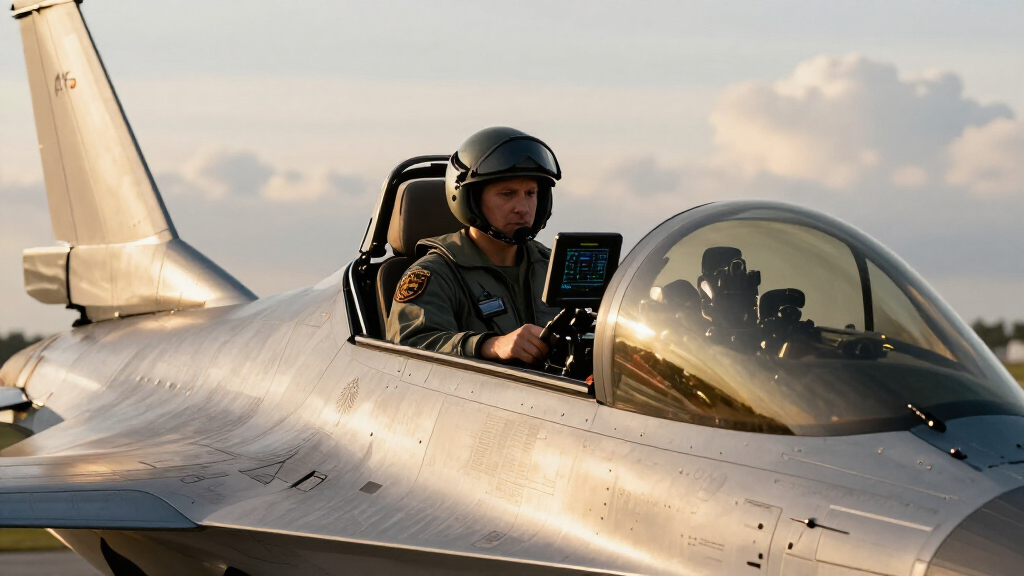
DARPA and the U.S. Air Force have flown an F-16 fighter jet controlled entirely by AI. This development signals progress toward autonomous combat systems, though full operational capabilities are still under evaluation.
DARPA and the U.S. Air Force have completed a successful flight of an F-16 fighter jet controlled entirely by artificial intelligence. This marks a significant milestone in autonomous military aviation, with potential implications for future combat operations and pilot safety. The flight, conducted on March 2026, was part of ongoing research into AI-driven aircraft control systems.
The flight took place at an undisclosed military testing range, with the aircraft operated by an AI system developed by DARPA in collaboration with the U.S. Air Force. Officials confirmed that the AI managed all aspects of flight, including takeoff, navigation, combat maneuvers, and landing, without human intervention.
According to DARPA spokesperson Dr. Lisa Chen, the AI system used advanced machine learning algorithms trained on extensive flight data. She stated, “This flight demonstrates the potential for autonomous systems to operate complex fighter aircraft safely and effectively.” The aircraft reportedly performed a series of simulated combat maneuvers designed to test the AI’s decision-making and responsiveness.
While the flight was successful, officials emphasized that this is an early step in a broader research program aimed at integrating autonomous technology into military aviation. No weapons or live munitions were used during the test, and the aircraft was remotely monitored throughout the flight.
Potential Impact on Future Combat Operations
This achievement highlights the potential for AI to transform military aviation by reducing pilot workload, enhancing operational safety, and enabling autonomous combat capabilities. If further developed, such systems could lead to a new class of fighter jets capable of executing missions with minimal human oversight, potentially reshaping air combat strategies.
Experts caution, however, that fully autonomous combat systems raise ethical and strategic concerns, including decision-making authority and reliability in complex environments. Nonetheless, this flight represents a critical step toward integrating AI into active military systems.
AI flight simulator for military training
As an affiliate, we earn on qualifying purchases.
As an affiliate, we earn on qualifying purchases.
Background on AI in Military Aviation Development
Over the past decade, military agencies have invested heavily in AI research, aiming to augment or replace human pilots in certain scenarios. DARPA’s Air Combat Evolution program and other initiatives have tested autonomous drones and pilot-assist systems.
The recent flight of an AI-controlled F-16 is part of a broader trend toward autonomous systems, driven by advancements in machine learning, sensor technology, and computing power. Previous demonstrations have included drone swarms and semi-autonomous aircraft, but a fully AI-operated fighter jet marks a new milestone in this progression.
It is not the first time an AI has flown a military aircraft, but it is among the most complex and high-profile tests to date, signaling a shift toward more ambitious autonomous capabilities.
“This flight demonstrates the potential for autonomous systems to operate complex fighter aircraft safely and effectively.”
— Dr. Lisa Chen, DARPA spokesperson
As an affiliate, we earn on qualifying purchases.
Unanswered Questions About AI Combat Readiness
It is not yet clear how well the AI system would perform in actual combat conditions involving real threats, live munitions, and unpredictable scenarios. The long-term reliability, ethical considerations, and strategic implications of fully autonomous fighter jets remain under evaluation. Details about the AI’s decision-making processes and safety protocols are still emerging, and officials have not disclosed whether further testing with live weapons is planned.
fighter jet pilot training simulator
As an affiliate, we earn on qualifying purchases.
As an affiliate, we earn on qualifying purchases.
Next Steps in Autonomous Fighter Jet Development
DARPA and the U.S. Air Force plan to conduct additional tests to evaluate the AI system in more complex scenarios, including simulated combat environments. Researchers aim to improve the AI’s decision-making capabilities, safety features, and integration with existing military systems. A timeline for potential deployment in operational settings has not been announced, but ongoing development suggests further testing over the coming years.
advanced machine learning flight software
As an affiliate, we earn on qualifying purchases.
As an affiliate, we earn on qualifying purchases.
Key Questions
Can AI-controlled F-16s replace human pilots?
While AI-controlled fighters could augment or assist human pilots in the future, full replacement is still under research and development. Many technical, ethical, and strategic challenges remain before such systems could operate independently in combat.
What are the main risks of autonomous fighter jets?
Risks include system malfunction, decision-making in complex environments, ethical concerns about autonomous combat, and potential vulnerabilities to hacking or cyber attacks.
Will AI-controlled fighters be used in combat soon?
It is unlikely that fully autonomous fighters will see combat deployment in the immediate future. Current efforts focus on testing, safety validation, and integration with existing systems before operational use can be considered.
Source: hn
Halloween Picks
halloween
As an affiliate, we earn on qualifying purchases.