

When cameras become context-aware, they can analyze their surroundings in real time, recognizing people, objects, and activities. They automatically adjust focus, lighting, and framing for better images or videos. These cameras can enhance security, tracking, and daily interactions, but they also raise privacy concerns as they gather detailed data without explicit consent. If you keep exploring, you’ll uncover more about how this technology impacts privacy, ethics, and regulation.

Get tech for your team delivered free — and shop member deals
- Fast, free delivery on millions of items
- Access to Prime Big Deal Days deals on October 6–7
- Prime Video, Amazon Music and more included
Key Takeaways
- Cameras automatically adjust settings based on environmental analysis, enhancing image quality and interaction efficiency.
- Increased surveillance capabilities may lead to privacy invasions and intrusive monitoring without consent.
- Ethical concerns arise around bias, discrimination, and the interpretation of emotional or behavioral data.
- Transparency and regulation are essential to inform individuals and prevent misuse of context-aware camera data.
- Continuous oversight is needed to balance technological benefits with safeguarding individual rights and privacy.
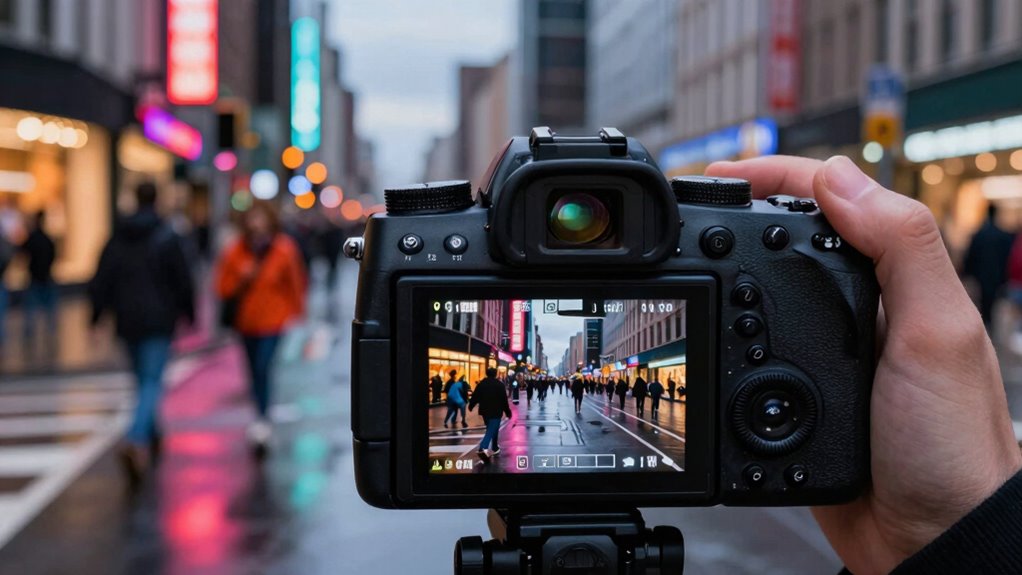
As cameras become increasingly sophisticated, they’re now able to understand their surroundings and adapt in real time. This evolution transforms how we experience surveillance, photography, and even daily interactions. Instead of just capturing static images or recording videos blindly, these context-aware cameras analyze the environment, recognizing objects, people, and activities instantly. They can adjust focus, lighting, or framing automatically, making the process seamless and intuitive. But with this newfound awareness comes a set of challenges, especially around privacy concerns and ethical implications.
As cameras become smarter, they analyze surroundings and adapt instantly, raising privacy and ethical concerns.
You might worry about the level of surveillance these cameras enable. As they become more capable of identifying individuals and interpreting behaviors, the potential for intrusive monitoring grows. Suddenly, your movements, expressions, and even intentions could be tracked and analyzed without your explicit consent. This raises serious privacy concerns because people often underestimate how much data is collected and how it might be used or misused. For example, in public spaces, cameras that recognize faces and track individuals’ paths could infringe on personal privacy, leading to a feeling of constant monitoring. This can erode trust and make people feel uncomfortable or even unsafe, knowing their actions are under constant scrutiny. Additionally, the development of privacy-preserving techniques can help mitigate some of these concerns by balancing security needs with individual rights.
On the ethical front, questions arise about the responsible deployment and use of these cameras. As they become more context-aware, developers and organizations face the challenge of balancing technological advancement with respect for individual rights. Should cameras be allowed to interpret emotional states or predict behaviors? If so, what safeguards are necessary to prevent misuse or bias? There’s also the risk of discrimination if the technology misidentifies or disproportionately targets specific groups. These ethical implications push us to consider whether the benefits of smarter, more adaptable cameras outweigh the potential harm they could cause when misused or poorly regulated. Additionally, understanding the impact of pollution on fabric and sustainable practices can help guide responsible technological development in this field. Moreover, ensuring that these advancements are regulated effectively is crucial to prevent abuse and protect civil liberties. As technology advances, implementing ethical standards and transparent policies becomes essential to maintain public trust and uphold human rights.
Furthermore, as you start to rely on these intelligent cameras for security, marketing, or social purposes, it’s crucial to recognize the importance of transparency. People should know when they’re being watched and understand what data is being collected and for what purpose. Without clear policies and regulations, the line between helpful technology and invasive surveillance blurs dangerously. It’s not just about what these cameras can do today but also about how they’re governed in the future. As they become more context-aware, you need to stay alert to the ethical and privacy issues that come with this technological leap, ensuring that innovation doesn’t come at the expense of fundamental rights. Additionally, ongoing technological development must prioritize ethical standards and incorporate safeguards to protect individual privacy and prevent bias, which are crucial for maintaining public trust.
privacy-preserving security camera
As an affiliate, we earn on qualifying purchases.
As an affiliate, we earn on qualifying purchases.
Frequently Asked Questions
How Do Context-Aware Cameras Recognize Different Environments Accurately?
You can see that context-aware cameras recognize environments accurately through a combination of machine learning algorithms and environmental sensors. The sensors gather real-time data about lighting, temperature, or movement, while machine learning models analyze this information to identify patterns and classify different settings. This synergy allows the camera to adapt dynamically, ensuring precise recognition of environments, whether indoors, outdoors, or in specific scenarios like crowded places or low-light conditions.
What Privacy Concerns Arise With Context-Aware Camera Technology?
Did you know that 78% of people worry about privacy with smart devices? With context-aware cameras, privacy concerns grow because they collect sensitive data based on surroundings. You might worry about unauthorized access or misuse of your images. To address this, companies should implement data encryption and seek user consent before capturing or analyzing footage, ensuring your privacy stays protected as technology advances.
Can Context-Aware Cameras Function Effectively in Low-Light Conditions?
Yes, your context-aware cameras can function effectively in low-light conditions. They use advanced night vision technology, which amplifies available light, and rely on sensor calibration to optimize image quality. This means they can detect motion, identify objects, and interpret surroundings even in darkness. Proper calibration guarantees the sensors work seamlessly together, providing clear, reliable images in low-light environments, enhancing security and monitoring capabilities without sacrificing accuracy.
How Do These Cameras Adapt to Rapidly Changing Contexts?
Swiftly sensing shifting scenes, your camera adapts through sophisticated sensor fusion and adaptive algorithms, seamlessly changing settings as circumstances change. These intelligent tools analyze multiple data streams, instantly recalibrating focus, exposure, and other parameters. This dynamic dance of data and decision-making guarantees the camera stays sharp and responsive, even in rapid, unpredictable transitions. You gain consistent clarity, capturing moments accurately regardless of how quickly the environment evolves.
What Are the Potential Security Risks of Deploying Context-Aware Cameras?
You face security risks with context-aware cameras, especially if data encryption isn’t robust, leaving sensitive footage vulnerable. Unauthorized access could occur if user consent isn’t properly managed, risking privacy breaches. Additionally, improper handling of data might lead to misuse or leaks. To mitigate these risks, guarantee strong data encryption protocols are in place and obtain clear user consent before deploying these intelligent cameras, protecting both privacy and security.
As an affiliate, we earn on qualifying purchases.
Conclusion
As cameras grow smarter and become context-aware, they transform from mere observers into vigilant guardians, like watchful eyes in a bustling city. They seamlessly adapt, capturing moments with an intuitive touch, turning everyday scenes into a symphony of understanding. With this evolution, you’re stepping into a world where technology doesn’t just see, but perceives—painting a vivid mosaic of life’s details, ensuring nothing slips through the cracks, and every shot tells a story with newfound clarity.
face recognition home security camera
As an affiliate, we earn on qualifying purchases.
As an affiliate, we earn on qualifying purchases.
As an affiliate, we earn on qualifying purchases.
Halloween Picks
halloween
As an affiliate, we earn on qualifying purchases.