

AI wearables can substantially improve your daily decision-making by analyzing your habits, health, and mood in real time to offer personalized suggestions for workouts, hydration, and meals. They help you move from relying on intuition to making data-driven choices, boosting your confidence and health outcomes. However, privacy concerns and security are key considerations that influence trust and adoption. Keep exploring to discover how these devices can seamlessly integrate into your routine and transform your lifestyle.
Key Takeaways
- AI wearables provide real-time, personalized insights to improve health, productivity, and lifestyle choices.
- They enable data-driven decision-making, reducing reliance on intuition for daily activities.
- Seamless integration into routines offers quick, tailored recommendations for meals, hydration, and exercise.
- Privacy considerations influence user trust, affecting widespread adoption and effective decision support.
- Future advancements could revolutionize daily life by continuously optimizing decisions through personalized data.
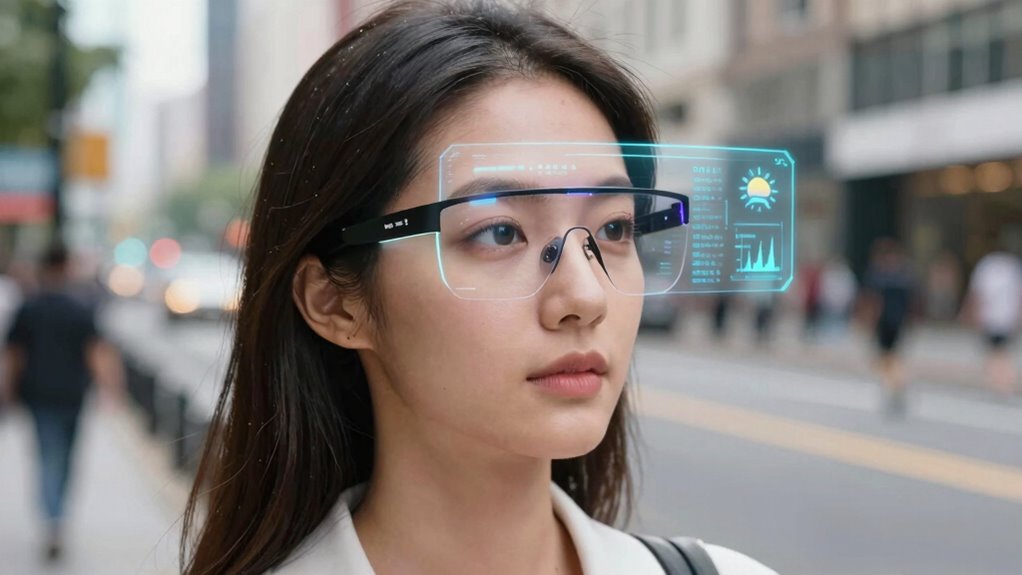
AI wearables are transforming the way you make everyday decisions by providing real-time insights and personalized recommendations. Imagine a device that knows your habits, health status, and even mood, then uses that information to guide your choices—whether it’s adjusting your workout plan, reminding you to stay hydrated, or suggesting healthier meal options. These gadgets can streamline your daily routines, making decisions quicker and more informed. But as powerful as AI wearables are, their success hinges on user adoption and addressing privacy concerns. Many people hesitate to fully embrace these devices because they worry about how their personal data is collected, stored, and used. If you’re concerned about privacy, you might resist sharing sensitive health information or location data, which could limit the device’s effectiveness. Overcoming this barrier requires manufacturers to prioritize transparent data practices and offer robust security measures, so users feel confident in using the technology without fearing breaches or misuse.
As more people start using AI wearables, their impact on daily decision-making becomes increasingly evident. You’ll find that these devices can adapt to your unique lifestyle, offering tailored recommendations that align with your goals. For example, if you’re trying to improve sleep quality, your wearable might analyze your sleep patterns and suggest adjustments to your bedtime routine or recommend relaxation techniques. Over time, this personalization can lead to better habits and healthier choices, seamlessly woven into your routine. Additionally, understanding the ethical implications of data sharing can help users make more informed decisions about their privacy. Incorporating privacy-conscious design is crucial for fostering trust and encouraging wider adoption. Moreover, the integration of well-drained soil requirements ensures that these devices can perform optimally in various environments, further increasing their versatility. A clear understanding of sustainable practices in manufacturing and disposal can also influence user trust and acceptance. However, for widespread user adoption, the technology must be accessible, easy to use, and trustworthy. If users find the interface complicated or the data management opaque, they might be discouraged from integrating AI wearables into their daily lives. Manufacturers who focus on clear communication, user-friendly design, and privacy assurances will likely see higher adoption rates.
Additionally, as AI wearables become more integrated into everyday life, you’ll notice a shift in how you approach decision-making. Instead of relying solely on intuition or external advice, you’ll have data-driven insights guiding you. This can boost confidence in your choices, whether it’s managing your health, optimizing productivity, or making smarter financial decisions. Still, balancing convenience with privacy remains vital. If privacy concerns aren’t properly addressed, it could hinder user adoption, no matter how advanced the technology is. Trust is essential; without it, many might stick with traditional methods rather than risk exposing personal information. Overall, AI wearables have the potential to revolutionize daily decision-making, but their success depends on transparent privacy policies and convincing users of their safety and benefits.
As an affiliate, we earn on qualifying purchases.
Frequently Asked Questions
How Secure Is My Data on AI Wearable Devices?
Your data security on AI wearables depends on the device’s security measures. Many devices use data encryption to protect your information from unauthorized access. However, it’s crucial to review privacy policies to understand how your data is stored and shared. Stay cautious by choosing reputable brands that prioritize security and transparency, and regularly update your device’s software to guard against vulnerabilities.
Can AI Wearables Learn and Adapt to My Personal Preferences?
Yes, AI wearables can learn and adapt to your personal preferences through their impressive learning capabilities. This personalization potential allows them to better understand your habits, needs, and patterns, making daily decisions smoother and smarter. As you use the device, it continuously refines its recommendations, creating a customized experience. So, the more you wear and interact, the more these devices evolve, ensuring your preferences are prioritized and precisely understood.
What Are the Cost Implications of Adopting AI Wearables?
Adopting AI wearables involves investment costs, but they can lead to significant cost savings over time. While initial expenses for devices and setup might be high, improved health monitoring, productivity, and personalized insights can reduce healthcare bills and enhance efficiency. You’ll need to weigh these investment costs against long-term benefits, which often make AI wearables a worthwhile financial decision for better daily management.
Are AI Wearables Suitable for All Age Groups?
AI wearables aren’t suitable for all age groups, and you’ll find usability challenges vary widely. Kids and seniors often face difficulties due to size, complexity, or safety concerns, making them less ideal for universal use. Age suitability depends on design and features, so manufacturers must tailor devices to different needs. If you’re considering one, evaluate usability challenges and verify the wearable aligns with the user’s age and comfort.
How Do AI Wearables Impact Mental Health and Well-Being?
AI wearables can positively impact your mental health by encouraging mindfulness techniques and helping with emotional regulation. They track your mood and stress levels, giving you real-time insights to manage emotions better. By providing personalized prompts, these devices remind you to breathe or practice meditation, fostering a calmer mind. Over time, this support can boost your overall well-being, making it easier to handle daily stress and maintain emotional balance.
As an affiliate, we earn on qualifying purchases.
Conclusion
As AI wearables become more integrated into your daily routine, the way you make decisions could change forever. Imagine a future where your device predicts your needs before you even realize them. Will you trust these insights, or will you resist the technology? The line between human intuition and machine intelligence blurs, leaving you on the edge of a new era. Are you ready to see what’s next? The choice is yours.
As an affiliate, we earn on qualifying purchases.
As an affiliate, we earn on qualifying purchases.