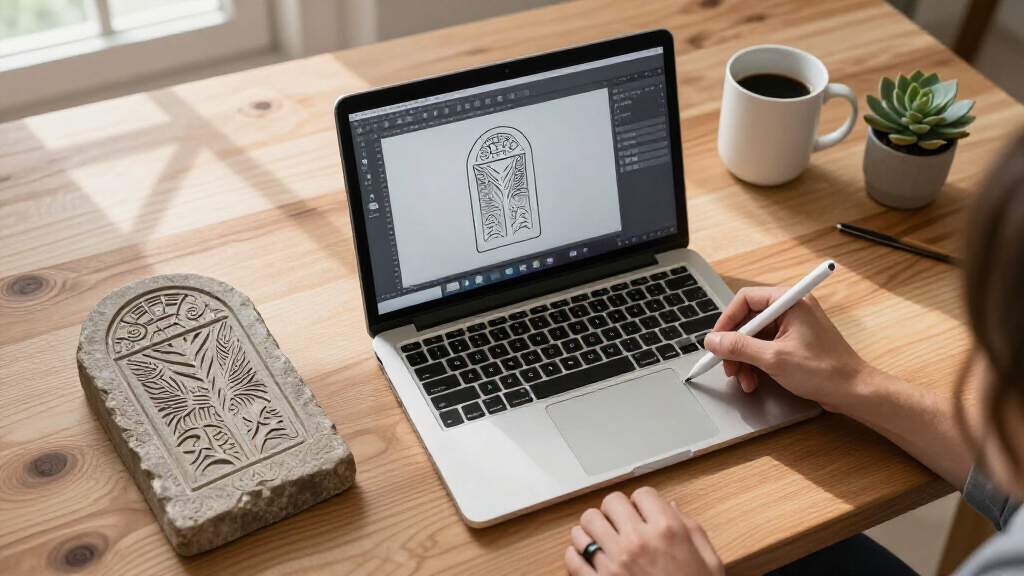

🔍 Read the full analysis: Inside AI-Driven SVG Carving: 'The Runestone Field' Animation Explored on ThorstenMeyerAI.com

Get business pricing on tech for your team
- Business-only prices and quantity discounts
- Tax-exempt purchasing
- Multiple users, one account, clear invoices
TL;DR
An innovative project uses AI-driven SVG carving animation to animate ‘The Runestone Field,’ merging ancient storytelling with modern digital techniques. This development highlights new possibilities in visual storytelling and automation.
Digital artist Thorsten Meyer has unveiled a new project that animates ‘The Runestone Field’ using AI-driven SVG carving techniques, creating an immersive visual experience that bridges ancient storytelling and modern technology. This development demonstrates how automation and precision in SVG animation can revitalize historical art forms, offering a new way to explore and interpret traditional runic carvings.
The project, titled ‘The Runestone Field,’ leverages advanced SVG (Scalable Vector Graphics) techniques combined with artificial intelligence to animate intricate runic carvings across a digital landscape. By meticulously scripting SVG paths and integrating fluid animation algorithms, the creator has produced a dynamic scene where stones appear to speak and shift, almost as if the carvings themselves are alive. This approach not only emphasizes artistic craftsmanship but also highlights the potential of automation to elevate storytelling in digital art.
According to Thorsten Meyer, the process involved detailed analysis of historical runic patterns, which were then translated into vector paths suitable for SVG animation. The project faced technical challenges related to achieving both precision and fluidity, but breakthroughs in scripting and AI-assisted refinement allowed for highly detailed and seamless animations. The result is a piece that invites viewers to explore every carved detail, with stones that animate and respond as if they are narrating stories from the past.
Live demonstrations of ‘The Runestone Field’ are now accessible online, offering an interactive experience that merges craftsmanship with automation in digital art. The project aims to showcase how digital artisans can reinterpret traditional art forms through emerging technologies, prompting questions about the future of storytelling and visual design.
Inside AI-Driven SVG Carving: ‘The Runestone Field’ Explored
Digital artist Thorsten Meyer animates ‘The Runestone Field’ using AI-driven SVG carving techniques — merging ancient runic storytelling with precise, fluid vector animation to make centuries-old stones speak anew.
By combining precise SVG techniques with AI, we’ve created an immersive experience that makes ancient runic carvings speak anew.
— Thorsten Meyer, Digital ArtistFrom Ancient Stone to Living Vector
Analyze Runes
Detailed study of historical runic patterns and carving structures.
Translate to Paths
Symbols are converted into precise, animatable SVG vector paths.
AI Refinement
AI-assisted scripting resolves precision and fluidity challenges.
Fluid Animation
Animation algorithms make stones shift, glow, and narrate.
Live Experience
Interactive online demos invite viewers to explore every carved detail.
Three Dimensions of Impact
Preserving Artistry
Automation honors the detail of traditional carvings rather than flattening it — each stroke retains its historical integrity while gaining motion.
Immersive Narratives
Stones appear to speak and shift as if alive, opening new avenues for narratives rooted in history, culture, and myth.
From Months to Moments
Manual animation of runic carvings was labor-intensive. AI and SVG techniques deliver rich detail at a fraction of the traditional effort.
Manual Effort vs. AI-Driven SVG Carving
Illustrative estimates based on project reporting · Automation scales detail while reducing production effort
The Digital Preservation Chain
Runic carvings historically conveyed myths, laws, and histories across centuries. This pipeline signals a new chapter in the digital preservation and reinterpretation of cultural artifacts — making them accessible and engaging for contemporary audiences.
Old Methods vs. AI-Driven SVG Carving
| Criteria | Manual / Static Digital | AI-Driven SVG Carving |
|---|---|---|
| Production effort | ✗ Labor-intensive, slow | ✓ Streamlined by AI scripting |
| Detail & precision | ~ Limited by hand | ✓ Intricate, lossless vectors |
| Scalability to other artifacts | ✗ Restricted scope | ~ Promising, still early |
| Interactivity | ✗ Static reproductions | ✓ Live, responsive demos |
| Long-term preservation | ✓ Established archives | ~ Under exploration |
Unresolved Challenges & Future Horizons
Technical & Artistic Uncertainty
Scalability across artifact types, long-term preservation of digital animations, integration into cultural archives, and debates over artistic authenticity all remain unresolved. The approach is still in early development.
Expansion Plans
Applying the technique to other cultural artifacts and historical sites, building interactive platforms for viewer customization, and integrating animations into educational tools, virtual museums, and preservation initiatives.
Frequently Asked
How does AI improve SVG carving animation?
AI enables precise analysis and scripting of intricate patterns, allowing fluid, detailed animations that would be difficult and time-consuming to produce manually.
Can this technique be used for other artifacts?
Yes. The method is adaptable and can potentially animate a wide range of cultural artifacts, provided they can be digitally modeled and translated into SVG paths.
What are the limitations?
Scalability for complex artifacts, preservation of digital animations, and ensuring artistic authenticity when using AI-generated content.
Will it replace traditional craftsmanship?
No — it is seen as a complementary tool that enhances storytelling rather than replacing manual craftsmanship.
How accessible is the project?
Live demonstrations are available online, letting viewers explore the animated ‘Runestone Field’ interactively, with potential for broader educational use.
What comes next?
Collaborative efforts with historians and technologists to refine and scale the approach, plus improved AI algorithms for greater detail and realism.
Why AI-Driven SVG Carving Transforms Digital Art
This project illustrates the expanding role of artificial intelligence in creative processes, particularly in automating complex visual tasks like SVG carving. It demonstrates that automation can preserve the artistry of traditional carvings while adding new layers of dynamism and interactivity. For digital artists and storytellers, this approach opens avenues for creating immersive narratives rooted in history, culture, and art, all enhanced by precise, fluid animation techniques. As technology continues to evolve, such projects suggest that future storytelling may increasingly blend craftsmanship with automation, making historical art accessible and engaging for modern audiences.
As an affiliate, we earn on qualifying purchases.
Historical Roots and Digital Innovation in Runic Art
Traditional runic carvings date back centuries, serving as both artistic expressions and storytelling devices in ancient cultures. Historically, these stones conveyed myths, laws, and histories through meticulously carved symbols. In recent years, digital artists have sought to reinterpret these artifacts, but animation has largely remained static or limited to simple digital reproductions. The advent of AI-driven SVG carving marks a significant shift, enabling detailed, automated animations that bring these carvings to life. Thorsten Meyer’s recent project builds upon this trend, combining historical reverence with cutting-edge technology to create a new form of storytelling that is both educational and artistically innovative.
Prior to this, efforts to animate runic carvings were often manual and labor-intensive, limiting scope and scale. The integration of AI and SVG techniques streamlines this process, allowing for rich, detailed animations at a fraction of the traditional effort. This development signals a new chapter in digital preservation and reinterpretation of cultural artifacts, making them more accessible and engaging for contemporary audiences.
“By combining precise SVG techniques with AI, we’ve created an immersive experience that makes ancient runic carvings speak anew.”
— Thorsten Meyer
As an affiliate, we earn on qualifying purchases.
Unresolved Technical and Artistic Challenges
While the project successfully demonstrates the potential of AI-driven SVG carving, several questions remain. It is not yet clear how scalable or adaptable this technique is for different types of carvings or historical artifacts. Additionally, the long-term preservation of such digital animations and their integration into broader cultural archives are still under exploration. There is also ongoing debate about the artistic authenticity and how AI-generated animations might influence traditional craftsmanship perceptions. These uncertainties suggest that while promising, the approach is still in early development stages with further refinement needed.
As an affiliate, we earn on qualifying purchases.
Future Developments and Broader Applications
Moving forward, the creator plans to expand the project by applying the AI-driven SVG carving technique to other cultural artifacts and historical sites. There is also interest in developing interactive platforms where viewers can customize or manipulate the animations, enhancing engagement. Researchers and digital artists are exploring ways to improve AI algorithms for even greater detail and realism. Additionally, discussions are underway about integrating such animations into educational tools, virtual museums, and cultural preservation initiatives. The next phase will likely involve collaborative efforts with historians and technologists to refine and scale this innovative approach.
As an affiliate, we earn on qualifying purchases.
Key Questions
How does AI improve SVG carving animation?
AI enables precise analysis and scripting of intricate patterns, allowing for fluid, detailed animations that would be difficult and time-consuming to produce manually.
Can this technique be used for other types of artifacts?
Yes, the method is adaptable and can potentially animate a wide range of cultural artifacts, provided they can be digitally modeled and translated into SVG paths.
What are the limitations of this technology?
Current limitations include scalability for complex artifacts, preservation of digital animations, and ensuring artistic authenticity when using AI-generated content.
Will this replace traditional craftsmanship?
While it automates certain aspects of animation, it is seen as a complementary tool that enhances storytelling rather than replacing manual craftsmanship.
How accessible is this project to the public?
Live demonstrations are available online, allowing viewers to explore the animated ‘Runestone Field’ interactively, with potential for broader educational use in the future.
Source: ThorstenMeyerAI.com
Fall Picks
fall essentials
As an affiliate, we earn on qualifying purchases.