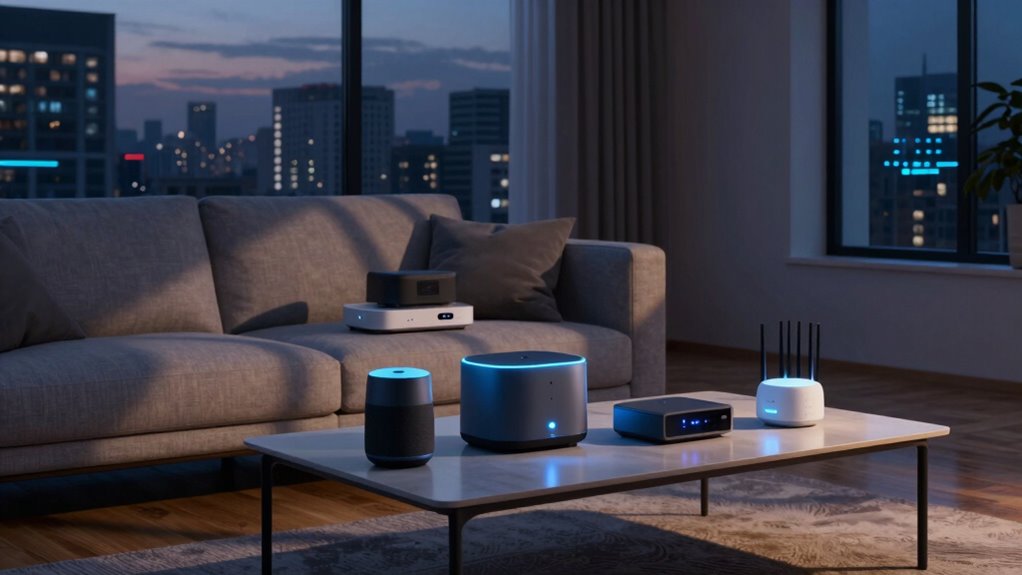

Always-on AI devices quietly impact your privacy, energy use, and security. They continuously collect data from your voice commands, routines, and preferences, often without clear consent. This constant operation wastes electricity and adds to environmental harm, while interconnected devices increase hacking risks. The infrastructure behind them also consumes significant resources. If you’re concerned about these hidden costs, understanding more can help you make smarter choices and protect what matters most.
Key Takeaways
- Continuous data collection by AI devices raises privacy risks, including potential third-party access and data exploitation.
- Always-on devices consume power constantly, significantly increasing electricity use and environmental impact.
- Interconnected AI devices create security vulnerabilities, making personal data more susceptible to hacking and cyberattacks.
- The energy demands of supporting infrastructure, like data centers, amplify the environmental footprint of AI ecosystems.
- Many users are unaware of the privacy and energy costs, making it difficult to make informed, sustainable choices.

As more AI devices stay constantly connected and online, many users overlook the hidden costs behind their convenience. While it’s easy to appreciate the ease of voice assistants, smart thermostats, and connected appliances, you might not realize the toll this continuous connectivity takes on your privacy and the environment. Every time you ask your device a question or give it a command, data is being collected, stored, and analyzed. This ongoing data collection raises serious concerns about data privacy. Your conversations, preferences, and routines are all potentially accessible to companies that use this information for targeted advertising or even more invasive purposes. Without strict controls or transparent policies, your personal data could be exploited, sold, or compromised without your knowledge.
Constantly connected AI devices silently compromise privacy and environmental health through data collection and energy use.
Beyond privacy issues, there’s the matter of energy consumption. These always-on devices are designed to be ready at a moment’s notice, which means they’re constantly drawing power, often in the background. The cumulative energy used by millions of such devices is significant, contributing to higher electricity bills and increased environmental impact. Even when you’re not actively using them, they remain in a state of readiness, consuming power that adds up over time. This continuous energy drain is not only wasteful but also accelerates the depletion of natural resources and fuels pollution. You might think that your single device doesn’t make much difference, but when scaled across millions of households, the impact becomes substantial.
Furthermore, the interconnected nature of these devices amplifies both privacy and energy concerns. As they communicate with each other and with cloud servers, they create a web of data exchanges that can be vulnerable to hacking or interception. This interconnectedness makes it harder to secure your personal information and increases the risk of cyberattacks. On the energy front, the infrastructure supporting this network—servers, data centers, and transmission lines—also consumes vast amounts of power, much of which is generated from fossil fuels. Additionally, urban areas with high device density tend to have a larger environmental footprint due to increased energy demands. Recognizing the energy footprint of these devices can motivate more sustainable choices and policies. Being aware of the privacy risks associated with these connected devices helps you make more informed decisions about your digital habits.
A growing concern is also the technological complexity, which can make it difficult for users to fully understand or control how their data is being used. You may not see these costs immediately, but they’re there, quietly accumulating beneath the surface of your daily convenience. Being aware of how your devices work behind the scenes helps you make smarter choices. You can opt to turn off devices when not in use, adjust privacy settings, or select products with better energy efficiency ratings. Taking these steps reduces your indirect contribution to data privacy risks and energy waste. Remember, even small actions can add up, helping you protect your personal information and lessen your environmental footprint in this always-on digital age.
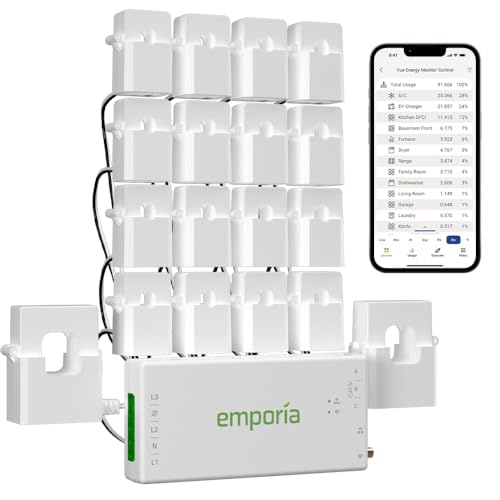
Emporia Vue 3 Home Energy Monitor – Smart Home Automation Module and Real Time Electricity Usage Monitor, Power Consumption Meter, Solar and Net Metering for UL Certified Safe Energy Monitoring
SAFETY YOU CAN TRUST WITH UL CERTIFICATION: With Emporia Energy, your home energy monitoring is safe, reliable, and…
As an affiliate, we earn on qualifying purchases.
As an affiliate, we earn on qualifying purchases.
Frequently Asked Questions
How Do Always-On AI Devices Impact User Privacy?
Like an open book, always-on AI devices reveal more than you think, impacting your privacy. They continuously collect data, risking breaches if data security isn’t exceptional. You might not realize it, but your user consent is often assumed rather than explicitly given. This constant monitoring can feel intrusive and erodes trust, making it essential to stay informed and vigilant about how your information is used and protected.
What Are the Energy Consumption Differences Among Various AI Devices?
You’ll notice that different AI devices vary in power consumption, affecting their energy efficiency. High-performance devices like smart speakers or AI-enabled gadgets tend to use more energy due to their complex processing power. In contrast, simpler devices, such as basic sensors, consume less power and are more energy-efficient. Choosing devices with better energy efficiency can reduce overall power consumption, helping you save energy and lower your environmental impact.
How Can Consumers Reduce the Environmental Impact of AI Devices?
You can reduce your AI devices’ environmental impact by prioritizing energy efficiency and supporting sustainable design. Turn off devices when not in use, adjust settings for lower power consumption, and choose products with eco-friendly certifications. While it might seem inconvenient, these small actions add up. Opt for devices that emphasize energy efficiency, helping to lower overall energy use and promote greener technology. Your choices make a meaningful difference for the planet.
Are There Regulations Governing the Energy Use of AI Technology?
Regulatory frameworks are gradually establishing energy standards for AI technology, but many regulations are still in development. You should stay informed about local and international policies that aim to regulate AI device energy consumption. These standards intend to encourage companies to design energy-efficient AI systems and reduce environmental impact. By supporting policies that promote sustainable practices, you can help push for stronger regulations and contribute to a greener, more responsible tech industry.
What Future Innovations Could Mitigate the Hidden Costs of Always-On AI?
Innovations like energy-efficient models and decentralized processing could be game changers. You’ll see advances in Data privacy and Ethical AI, making devices smarter without draining resources. These solutions help you stay connected while keeping costs in check. As technology evolves, you can expect smarter algorithms that adapt to your needs, reducing energy use. It’s a win-win, helping you enjoy AI’s benefits without tipping the scales on hidden costs.

DEWENWILS Matter Smart Plug, Work with Apple Home, Alexa, Google, SmartThings, Smart Outlet with Schedule and Timer, FFS Easy Setup, 100% Privacy 15A/1800W, APP Voice Control, 2.4G Wi-Fi Only, 2 Pack
[Matter-Certified Smart Plug] Connect directly to your existing Matter platform—no extra apps needed; control devices through Apple Home,…
As an affiliate, we earn on qualifying purchases.
As an affiliate, we earn on qualifying purchases.
Conclusion
So, next time you marvel at your always-on AI device, remember it’s quietly draining resources and privacy in the background. You get convenience, but at what hidden cost? Ironically, the very technology designed to make life easier might be the one silently complicating it—costly, unseen, and unstoppable. Perhaps the real upgrade isn’t in your device, but in your awareness, before this invisible drain becomes your new normal.

Electricity Saving Box Energy Saving Device Smart Save Plug Power Saver Voltage Optimization Surge Protection Thermoregulation Outlet Home Office Compact Plug and Play Energy Efficiency(4PCS)
Smart Voltage Monitoring for Stable Power: Continuously detects voltage fluctuations and helps stabilize current flow to support smoother…
As an affiliate, we earn on qualifying purchases.
As an affiliate, we earn on qualifying purchases.

X-Sense Smart Home Security System, Wireless Security System 5-Piece Set, Supports Mobile App Alerts, Compatible with Alexa, Includes 1 Base Station, 2 Door Sensors, 1 Motion Sensor, 1 Keypad, AS05
Note: Compatible only with 2.4 GHz Wi-Fi (incompatible with 5.0 GHz); connects to the X-Sense Home Security App…
As an affiliate, we earn on qualifying purchases.
As an affiliate, we earn on qualifying purchases.