
Living in a 24-hour digital city offers you constant opportunities to innovate, connect, and pursue flexible lifestyles. You can access markets anytime, work remotely, and participate in a global community around the clock. However, it also brings challenges like burnout, privacy concerns, and information overload. Staying adaptable, setting boundaries, and understanding digital trends help you thrive. If you look closer, you’ll discover how to balance these opportunities and risks effectively.
Key Takeaways
- Continuous digital connectivity boosts economic activities, remote work, and global participation but risks burnout and work-life imbalance.
- Constant social engagement fosters community and support networks but can lead to information overload and privacy concerns.
- The digital environment offers flexible opportunities for education, innovation, and new career paths, enhancing accessibility.
- Challenges include rapid misinformation spread, privacy vulnerabilities, and managing digital boundaries for well-being.
- Staying adaptable, vigilant, and setting boundaries are essential strategies to thrive amid constant digital interactions.
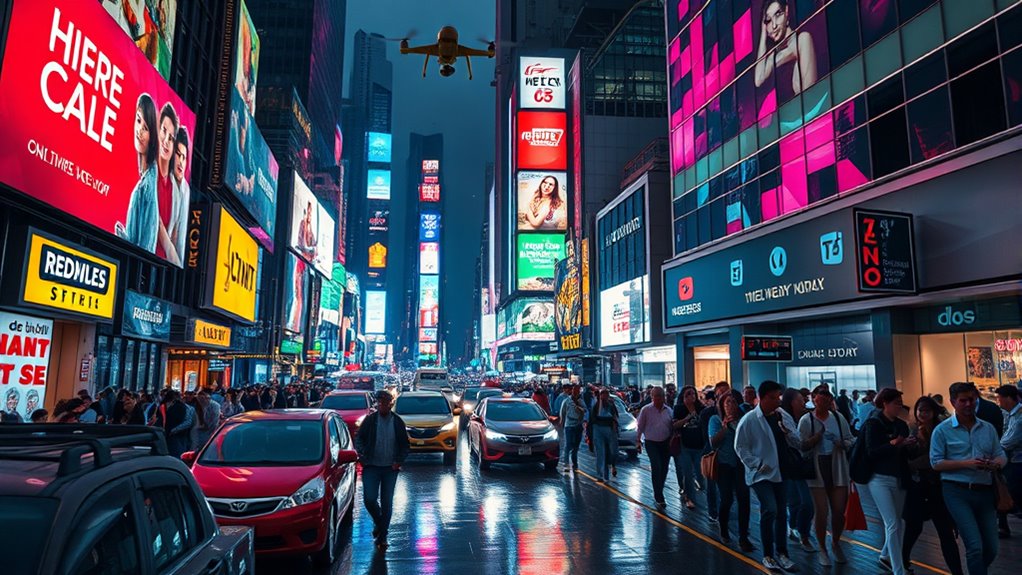
In today’s digital city, the boundaries between day and night blur as connectivity keeps everything running around the clock. As you navigate this environment, you quickly realize that the digital economy shapes how businesses operate and how opportunities unfold. With instant access to markets, you can buy, sell, and innovate at any hour, breaking free from traditional schedules. This continuous flow of commerce fuels growth and allows you to participate in a global marketplace from your device. The digital economy isn’t just about transactions; it’s also about the rapid exchange of ideas, knowledge, and services, making innovation more accessible than ever. You can collaborate with colleagues across continents, launching projects that harness diverse perspectives and expertise, all within seconds. This seamless integration of digital tools boosts productivity and opens doors to new ventures that were unimaginable before.
Social connectivity becomes a fundamental aspect of your daily life in this city. You stay connected with friends, family, and colleagues through social media, messaging apps, and virtual communities that operate nonstop. This constant connectivity offers a sense of belonging and immediacy, allowing you to share experiences, seek support, or simply stay informed. But it also means you’re always “on,” which can be both empowering and overwhelming. You might find yourself caught in a cycle of notifications and updates, feeling the pressure to respond promptly. The digital city’s social fabric is dynamic, constantly evolving with trends, memes, and online movements. While it fosters a sense of community, it also demands your attention and adaptability. You learn to navigate information overload, discerning relevant updates from noise, and maintaining boundaries to preserve your well-being.
Living in this environment presents remarkable opportunities. You can work remotely, access education anytime, or participate in global conversations without leaving your home. The digital economy provides new streams of income and career paths, while social connectivity keeps you engaged and informed. However, these advantages come with challenges. The relentless pace of digital interactions can lead to burnout, and the blurred lines between personal and professional life make it hard to disconnect. Privacy concerns grow as your data circulates endlessly online, and the risk of misinformation spreads just as rapidly as accurate information. Additionally, advancements in AI-driven security systems offer new methods for safeguarding your digital presence but also raise questions about privacy and surveillance. In this digital city, your ability to adapt, stay informed, and set boundaries becomes vital. You’re part of an interconnected ecosystem that offers unprecedented opportunities for growth and connection, but it also requires vigilance and balance to truly thrive in this 24-hour digital landscape.

COLAMY Ergonomic Executive Office Chair, High Back Desk Chair with Adjustable Lumbar Support, Flip-Up Armrests & Thick Seat Cushion, 90°–110° Reclining Computer Chair for Home Office
ERGONOMIC SUPPORT FOR ALL-DAY WORK Designed with a full-back padded backrest and adjustable lumbar support, this ergonomic office…
As an affiliate, we earn on qualifying purchases.
As an affiliate, we earn on qualifying purchases.
Frequently Asked Questions
How Does Constant Connectivity Impact Mental Health?
Constant connectivity can harm your mental health by increasing digital overload, which leaves you feeling overwhelmed and anxious. It also fosters social isolation, as you might substitute online interactions for real-world connections. You may struggle to find balance, leading to stress and burnout. To protect your mental well-being, set boundaries around screen time, take breaks, and prioritize face-to-face relationships to combat these negative effects of constant digital engagement.
What Measures Ensure Data Privacy in Digital Cities?
You can guarantee data privacy in digital cities by implementing strong data encryption, which protects your information from unauthorized access. Additionally, adhering to privacy regulations, like GDPR or CCPA, sets clear standards for data handling and user rights. Regularly updating security protocols and staying informed about privacy policies also help maintain your data’s security, giving you peace of mind in this always-connected environment.
How Do Digital Cities Support Underserved Communities?
Oh, sure, digital cities love to claim they support underserved communities—while often missing the point. You can leverage digital inclusion programs and targeted community engagement to bridge gaps. By providing affordable internet access, tech training, and involving locals in decision-making, you actually make a difference. Ironically, it’s these efforts that turn digital cities into true hubs of equality, rather than just high-tech playgrounds for the privileged.
What Are the Environmental Impacts of 24-Hour Digital Infrastructure?
You might notice that 24-hour digital infrastructure increases energy consumption, which can lead to higher carbon emissions if not managed sustainably. Additionally, electronic waste accumulates as devices become obsolete or break down, posing environmental hazards. To mitigate these impacts, you can support initiatives that promote energy efficiency and responsible recycling, helping reduce the environmental footprint of our digital city and making it more sustainable for everyone.
How Do Digital Cities Influence Social Interactions and Relationships?
Digital cities transform your social interactions by enabling virtual networking, so you can connect with others anytime, anywhere. This constant accessibility fosters diverse relationships and collaborations. However, you must build digital trust to guarantee these connections are genuine and secure. While digital cities expand your social reach, they also require cautious engagement to maintain meaningful relationships and protect your privacy in an online environment.

SightPro Magnetic Laptop Privacy Screen 14 Inch 16:9 – Patented Removable Laptop Privacy Filter Shield and Protector
【Instant Snap-on Magnetic Attachment】- The Patented Magnetic Privacy Screen – Protected by U.S. Patents 9,829,669 and D844,012. Simply…
As an affiliate, we earn on qualifying purchases.
As an affiliate, we earn on qualifying purchases.
Conclusion
Living in a 24-hour digital city offers endless opportunities—connectivity, convenience, and innovation at your fingertips. Yet, it also brings challenges like constant distraction and digital fatigue. As you navigate this vibrant, always-on environment, remember that balance is key. Embrace the benefits, but stay mindful of the risks. In a city that never sleeps, your awareness can turn endless possibilities into a fulfilling, sustainable experience.

Soundcore P30i by Anker Noise Cancelling Earbuds, Strong and Smart Noise Cancelling, Powerful Bass, 45H Playtime, 2-in-1 Case and Phone Stand, IP54, Wireless Earbuds, Bluetooth 5.4 (Black)
2-in-1 Charging Case and Phone Stand: Enjoy hands-free viewing without the hassle. Simply open the back panel of…
As an affiliate, we earn on qualifying purchases.
As an affiliate, we earn on qualifying purchases.

How to Break Up with Your Phone, Revised Edition: The 30-Day Digital Detox Plan
As an affiliate, we earn on qualifying purchases.
As an affiliate, we earn on qualifying purchases.