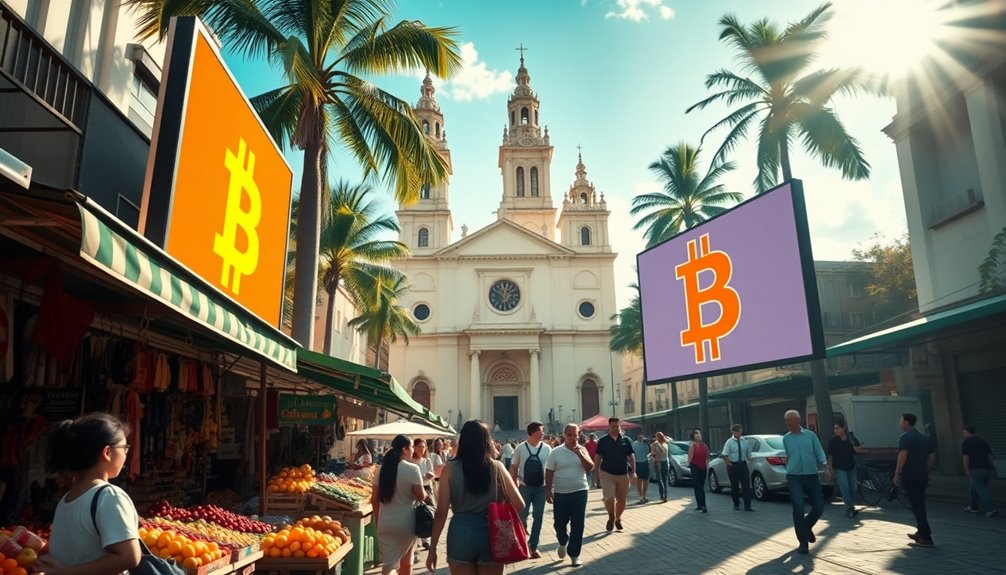

You might find it intriguing that El Salvador has officially enacted a Bitcoin Law to meet its obligations to the IMF. This move is intended to boost financial inclusion in a country where many lack banking access. Yet, as the nation embraces this digital currency, it's facing hurdles like technical challenges and regulatory needs. What does this mean for El Salvador's economy and its citizens? The unfolding implications could be significant.

Get business pricing on tech for your team
- Business-only prices and quantity discounts
- Tax-exempt purchasing
- Multiple users, one account, clear invoices
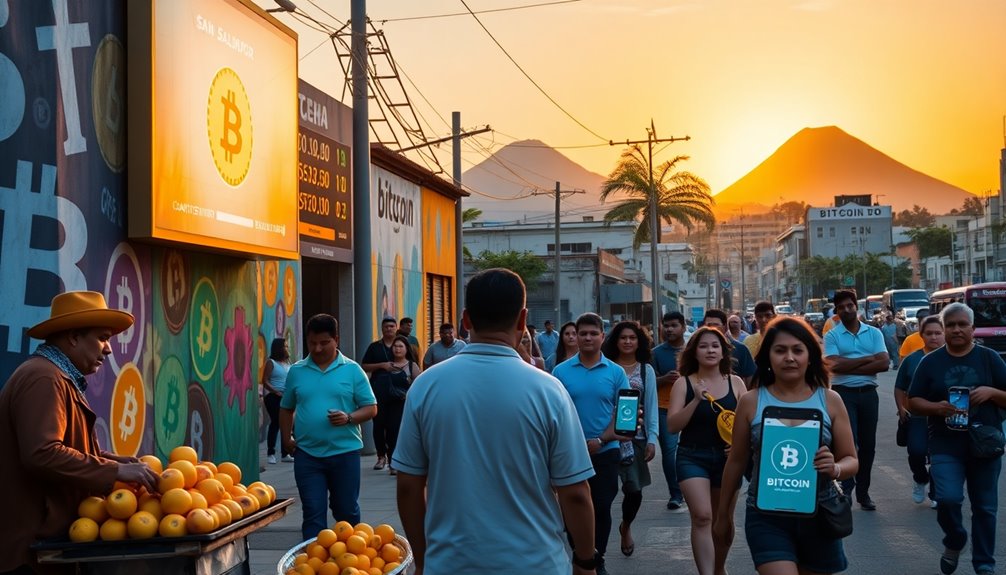
In a groundbreaking move, El Salvador became the first country to make Bitcoin legal tender when its Legislative Assembly passed the Bitcoin Law on June 9, 2021. This law officially took effect on September 7, 2021, allowing Bitcoin to be used alongside the US dollar for all transactions. The primary purpose behind this radical legislation was to regulate Bitcoin as unrestricted legal tender, making it easier for citizens to engage in digital transactions and potentially boosting the country's economy.
The government aimed to enhance the efficiency of remittances, which account for over 20% of El Salvador's GDP. By adopting Bitcoin, they sought to lower transaction costs for the millions of Salvadorans who rely on money sent from abroad. Furthermore, with about 70% of the population lacking access to traditional banking, Bitcoin is seen as a way to increase financial inclusion. Additionally, the IMF's Extended Fund Facility agreement indicates that the government is expected to mitigate Bitcoin-related risks to ensure economic stability.
However, you should be aware that the inherent volatility of Bitcoin raises concerns about macroeconomic stability, a point highlighted by the IMF.
To encourage widespread adoption, the Salvadoran government offered $30 in Bitcoin to each citizen through the Chivo wallet, a government-sponsored platform designed to facilitate transactions. Chivo also supports the Lightning Network, enabling faster and cheaper transactions. Additionally, over 200 ATMs were established to allow for easy Bitcoin-to-cash conversions, making it accessible for everyday users.
Although participation from the private sector is voluntary, the government hopes that this initiative will inspire businesses to accept Bitcoin.
Despite the enthusiasm, the implementation faced challenges, particularly in the early days due to high demand and technical issues. To address these challenges, El Salvador needs to develop a comprehensive regulatory framework that ensures stability and transparency. Recent agreements with the IMF indicate a need to limit public sector involvement in Bitcoin activities, highlighting the balancing act the government must perform.
On an international scale, the World Bank initially declined to assist El Salvador with Bitcoin implementation, citing concerns over environmental impact and transparency. Financial authorities worldwide are closely monitoring this unprecedented experiment, as the long-term implications of Bitcoin's legal status remain uncertain.
As El Salvador navigates this uncharted territory, the global community watches to see if this bold move can lead to meaningful economic growth and increased financial access for its citizens.
Top picks for "salvador enact bitcoin"
As an affiliate, we earn on qualifying purchases.
Halloween Picks
halloween
As an affiliate, we earn on qualifying purchases.