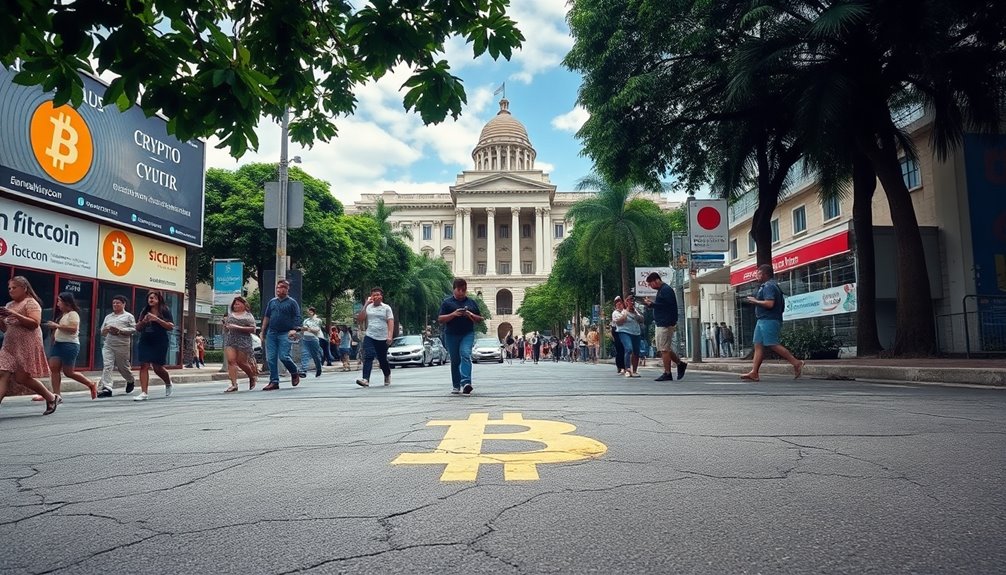

You might find it surprising that Bitcoin is no longer recognized as legal tender in El Salvador. This decision comes after significant public dissent, with a large majority of citizens opposing its adoption. The government's shift reflects a focus on economic stability and regulatory oversight. With such a dramatic change, you may wonder what led to this reversal and how it will impact the country's future.

Get business pricing on tech for your team
- Business-only prices and quantity discounts
- Tax-exempt purchasing
- Multiple users, one account, clear invoices
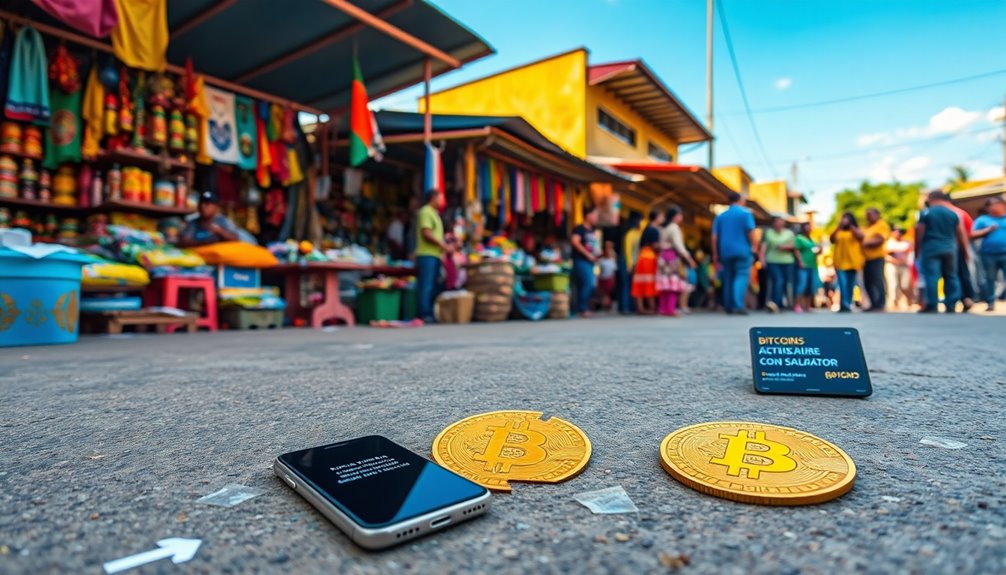
As El Salvador moves away from its controversial experiment with Bitcoin, the government has officially stripped the cryptocurrency of its legal tender status. This significant shift marks the end of a bold initiative that began in 2021 when President Nayib Bukele first introduced Bitcoin as a means of payment. The decision to embrace the cryptocurrency faced intense criticism, particularly from the International Monetary Fund (IMF), which warned of financial risks associated with Bitcoin's inherent volatility.
Initially, the public reaction was overwhelmingly negative. Over 70% of Salvadorans opposed the adoption of Bitcoin as legal tender, and by 2024, only about 8% of the population actually used it for payments. This limited adoption, coupled with ongoing economic challenges, led the government to negotiate with the IMF for financial support. In return for a $1.4 billion loan, El Salvador had to approve reforms that would ultimately eliminate Bitcoin's legal tender status.
Public opposition to Bitcoin soared, with over 70% against its adoption, leading to significant reforms after limited usage.
Now, Bitcoin's use is entirely voluntary. Businesses are no longer required to accept it, and you can't use Bitcoin for tax payments or settling government debts. This shift allows for more stability in the economy, as the US dollar remains the primary currency for official transactions. The government is also stepping back from its involvement in the Chivo Wallet, a digital wallet it created to facilitate Bitcoin transactions, further solidifying its retreat from the cryptocurrency landscape. Bitcoin's status as legal tender has been officially revoked, marking a fundamental change in the nation's approach to digital currencies. Additionally, such reforms highlight the government's need to enhance regulatory oversight of digital currencies to protect the economy from potential risks.
Despite these changes, the government continues to hold a significant amount of Bitcoin, with over 6,000 units valued at approximately $577 million. This indicates a commitment to Bitcoin as an investment strategy, even as it moves away from its use as a currency. The IMF's concerns about financial risks remain relevant, and the reforms aim to enhance regulatory oversight, limiting public sector exposure to Bitcoin's volatility.
Public skepticism toward Bitcoin has lingered, fueled by corruption allegations and the cryptocurrency's limited real-world use. Nonetheless, the government's ongoing investment in Bitcoin keeps investor interest alive, even amidst widespread criticism.
As El Salvador navigates this complex economic landscape, the recent legislative changes signal a newfound caution regarding cryptocurrency, marking a pivotal moment in the nation's financial journey. You've witnessed a significant transformation, shifting from an ambitious Bitcoin experiment to a more cautious and regulated approach.
Top picks for "bitcoin officially longer"
As an affiliate, we earn on qualifying purchases.
Fall Picks
fall essentials
As an affiliate, we earn on qualifying purchases.