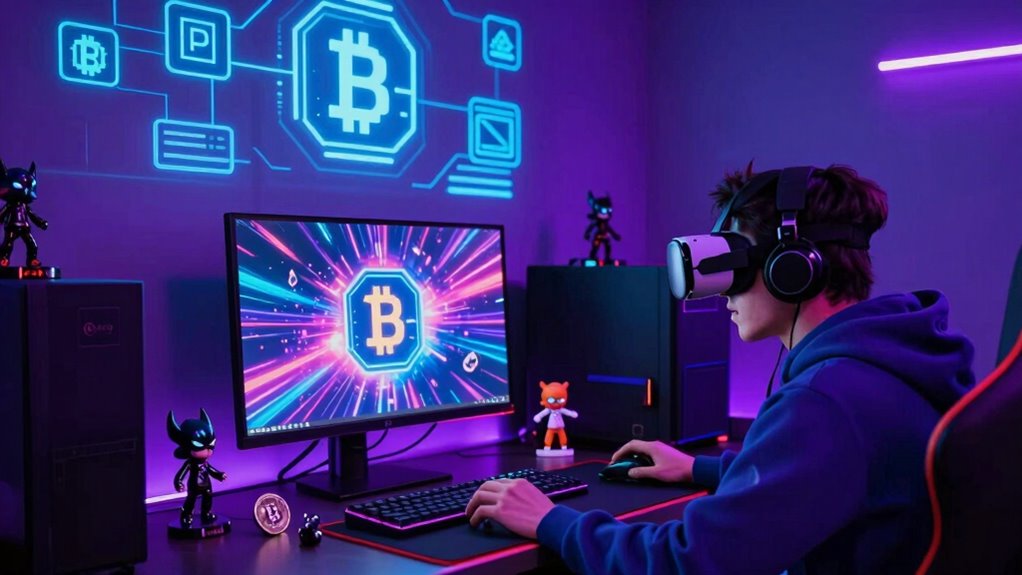

Crypto culture borrows from gaming more than finance because it emphasizes ownership, transparency, and community, much like gaming communities do. You see this through NFTs, in-game assets, and digital marketplaces that turn virtual items into real assets. Esports sponsorships and crypto rewards foster engagement, just like gaming achievements. This approach creates a participatory economy that values decentralization and player control, making crypto feel more like a gaming universe than traditional finance. If you want to explore how this shift shapes digital culture, keep exploring.

Get business pricing on tech for your team
- Business-only prices and quantity discounts
- Tax-exempt purchasing
- Multiple users, one account, clear invoices
Key Takeaways
- Gaming introduces ownership and tradability of digital assets like NFTs, which are central to crypto culture.
- Virtual economies in gaming foster tokenization, similar to blockchain-based financial systems.
- Esports sponsorships and branded NFTs promote crypto adoption through gaming communities.
- Gaming emphasizes community-driven innovation, decentralization, and transparent transactions, mirroring crypto values.
- Digital identity and reputation systems in gaming influence trust and engagement in crypto culture.
Cryptocurrency and gaming are increasingly intertwined, shaping a new culture that blurs the lines between digital entertainment and financial innovation. This fusion is more than just about buying and selling digital assets; it’s about creating communities, identities, and economies rooted in shared interests. One way this is evident is through NFT collaborations, where game developers and artists team up to produce unique, tradable digital collectibles. These collaborations give gamers a new way to own a piece of the gaming universe—whether it’s rare skins, characters, or artwork—turning in-game items into valuable assets that can be bought, sold, or traded on blockchain platforms. This shift transforms the traditional gaming economy, making it more dynamic and financially engaging. You’re no longer just playing for fun; you’re participating in a digital marketplace where your virtual possessions have real-world value.
Gaming now integrates digital assets and communities, turning virtual items into valuable, tradable assets on blockchain platforms.
Esports sponsorships serve as another bridge between crypto culture and gaming. Major brands and crypto companies see the immense potential in sponsoring tournaments and teams, injecting cryptocurrency into mainstream competitive gaming. These sponsorships often include branded tokens, exclusive NFTs for fans, or blockchain-powered platforms that support transparent and decentralized tournament operations. As a player or spectator, you might notice that your favorite esports team now accepts cryptocurrency for merchandise or offers special NFT collectibles tied to their victories. These sponsorships blur the lines between traditional sports marketing and innovative blockchain applications, making the scene more accessible and exciting for crypto enthusiasts.
What’s more, the gaming community readily adopts blockchain-based innovations because they align with the core values of ownership, transparency, and decentralization. You’re encouraged to explore and earn through gameplay, thanks to crypto rewards or NFT incentives. This creates a culture where gaming achievements are also investments, and your participation can have tangible financial benefits. The crossover extends to social platforms and streaming services, where influencers promote crypto projects through their gaming content, further embedding digital currencies into gaming’s fabric. Additionally, the integration of digital ownership within gaming environments fosters a sense of authenticity and trust among players, reinforcing the importance of blockchain in shaping gaming’s future. Moreover, the development of digital economies within gaming communities exemplifies how these virtual worlds are evolving into robust, participatory markets. Furthermore, the decentralized nature of blockchain technology ensures that players retain control over their digital assets, promoting a more equitable gaming environment. Recognizing the significance of secure and transparent transactions, blockchain’s security features are increasingly integrated into gaming platforms to build trust and reliability. In fact, this emphasis on security and trustworthiness is what makes blockchain-powered gaming ecosystems appealing to a broad audience, from casual players to hardcore enthusiasts.
In essence, crypto culture borrows from gaming not just for financial tools but for its community-centric, innovative, and immersive spirit. NFT collaborations and esports sponsorships exemplify how the ecosystem is evolving—making gaming more than just a pastime, but a vibrant, participatory economy. This blending not only changes how you game but also how you perceive digital ownership and the value of your virtual experiences.
As an affiliate, we earn on qualifying purchases.
Frequently Asked Questions
How Do Gaming Communities Influence Crypto Project Adoption?
Gaming communities influence crypto project adoption by actively engaging with virtual economies and digital collectibles. You’re likely to see gamers embracing blockchain-based assets, which enhances project visibility and credibility. As they trade, showcase, and compete using digital collectibles, your community becomes more invested. This enthusiasm spreads quickly, encouraging others to join and participate. Ultimately, gaming communities help crypto projects gain momentum by fostering trust and familiarity through shared experiences with virtual economies.
What Are the Most Popular Gaming-Inspired Crypto Tokens?
The most popular gaming-inspired crypto tokens include Axie Infinity (AXS), Decentraland (MANA), and The Sandbox (SAND). You’ll find these tokens often tied to virtual economies and digital collectibles, allowing players to buy, sell, and trade assets within immersive worlds. They leverage gaming mechanics to increase engagement, giving you opportunities to earn while participating in vibrant virtual communities, reflecting the deep influence of gaming culture on crypto projects.
How Does In-Game Achievement Translate to Crypto Rewards?
In-game achievements often translate to crypto rewards through blockchain integration, where your accomplishments release digital assets or tokens. You earn in-game rewards that are tokenized on the blockchain, making them tradable or valuable outside the game environment. This system incentivizes players to engage more deeply, as your progress directly translates into real-world crypto value. Blockchain guarantees transparency and security, allowing your achievement-based rewards to hold genuine worth beyond the game itself.
Are There Specific Gaming Platforms That Integrate Crypto Seamlessly?
You’ll find platforms like Decentraland and The Sandbox integrate crypto seamlessly with virtual economies and avatar customization. These platforms enable you to buy, sell, and trade virtual land, assets, and digital items using cryptocurrencies. They create immersive experiences where your avatar’s appearance and possessions can be truly unique, all powered by blockchain technology. As you explore, you’ll notice how crypto enhances virtual economies, making in-game achievements more meaningful and financially rewarding.
How Do Gaming Aesthetics Impact Crypto Branding Strategies?
Think of gaming aesthetics as your secret weapon; they shape your crypto branding strategy by tapping into emotions like nostalgia and enthusiasm. You leverage NFT collectibles and avatar customization to create a cohesive visual identity that resonates with gamers. This approach makes your brand more memorable, fostering loyalty and community engagement. Just as games build immersive worlds, your branding becomes a digital universe where users feel personally connected and excited to participate.
As an affiliate, we earn on qualifying purchases.
Conclusion
You see, crypto culture isn’t just about numbers; it’s about community, competition, and identity—much like gaming. Just like every game has its loyal fans, crypto’s world thrives on shared experiences and passion. Remember, “the more you play, the more you learn,” and in this space, that’s especially true. Embrace the parallels, stay curious, and you’ll find that crypto and gaming together create a vibrant, ever-evolving universe you’ll want to be part of.
As an affiliate, we earn on qualifying purchases.
As an affiliate, we earn on qualifying purchases.
Halloween Picks
halloween
As an affiliate, we earn on qualifying purchases.