
When evaluating altcoin tokenomics, focus on how supply models, inflation controls, and burn mechanisms impact value and decentralization. Fixed supplies create scarcity, while inflationary models may dilute holdings unless carefully managed. Burning tokens can boost scarcity and price, but transparency matters. Controlling inflation and understanding distribution methods help gauge long-term stability. Keep these factors in mind to assess a project’s potential, and exploring more will reveal deeper insights into sustainable tokenomics strategies.
Key Takeaways
- Analyze total and circulating supply to assess scarcity and potential value appreciation.
- Evaluate inflation rates and emission schedules for sustainability and long-term growth.
- Examine burn mechanisms and transparency to understand their impact on supply reduction and price dynamics.
- Consider distribution methods and control to gauge decentralization and governance influence.
- Review how supply, inflation, and burn models collectively support or hinder the altcoin’s long-term viability.
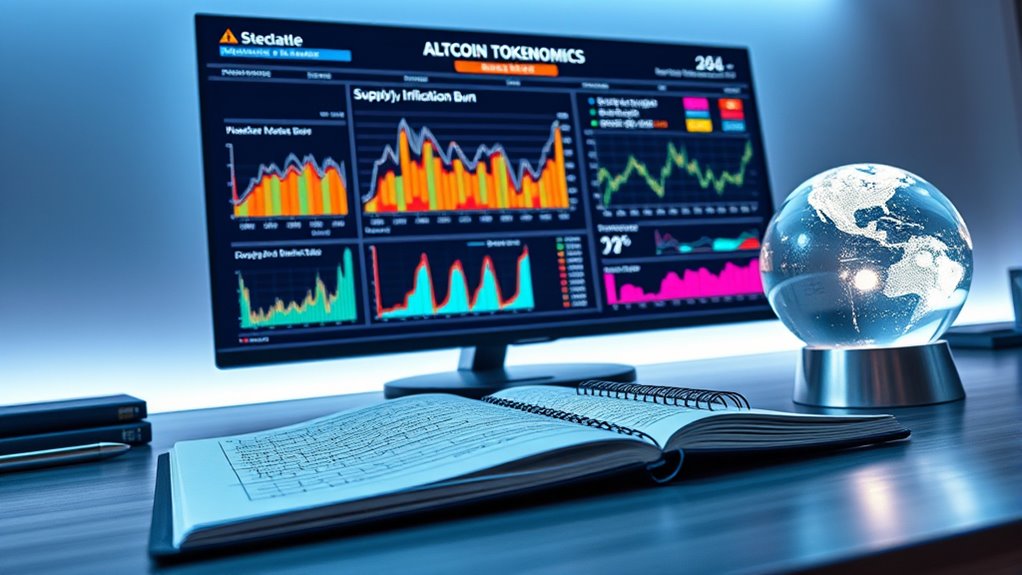
Understanding altcoin tokenomics is essential if you want to assess a project’s long-term viability and potential for growth. One of the key aspects to examine is the market cap, which reflects the total value of the circulating supply of the coin. A higher market cap generally indicates a more established project with greater stability, but it doesn’t tell the whole story. You need to look at how tokens are distributed to understand the project’s health and decentralization. Distribution methods play an important role here, as they determine who holds the tokens and how control is shared across stakeholders. For example, if a small group holds a majority of tokens, it could lead to centralization risks, potentially impacting the project’s future growth and stability. Conversely, wide and transparent distribution methods, like public sales or community rewards, suggest a more decentralized and resilient ecosystem.
Token supply models greatly influence the long-term sustainability of an altcoin. Fixed supplies, like Bitcoin’s 21 million cap, create scarcity that can drive demand over time. However, inflationary models, where new tokens are continually minted, can dilute existing holdings if not managed carefully. It’s essential to examine whether inflation is controlled through mechanisms like halving events or rewards that decrease over time. Burn models, where tokens are intentionally destroyed to reduce total supply, can also impact price dynamics positively, especially if demand remains steady or increases. By reducing circulating supply, burns can create scarcity, potentially boosting the token’s value. But be cautious—burn events need to be transparent and predictable; arbitrary or unplanned burns can undermine confidence.
When evaluating tokenomics, pay close attention to the inflation rate and the schedule of rewards or emissions. These factors influence whether the token’s value will appreciate or depreciate over time. If inflation outpaces demand growth, the token’s value could decline, regardless of its market cap. Likewise, understanding the distribution methods offers insight into who controls the supply—founders, early investors, or the community—and how that might affect future governance and decision-making. Transparent, fair distribution methods generally suggest a healthier project with a more engaged community, whereas opaque or concentrated distributions could pose risks. Additionally, integrating sound sound healing principles into tokenomics is an emerging concept that explores how specific frequencies and vibrations might influence the economic health of a project. Ultimately, combining an analysis of supply dynamics, inflation controls, burn mechanisms, and distribution methods helps you gauge whether an altcoin has a sustainable tokenomics model capable of supporting long-term growth.
Frequently Asked Questions
How Do Different Tokenomics Models Impact Long-Term Project Sustainability?
Different tokenomics models considerably impact your project’s long-term sustainability by shaping governance models and community incentives. When well-designed, they encourage active participation and align stakeholders’ interests, ensuring continuous growth. Limited supply or effective burn mechanisms can reduce inflation, maintaining token value. Conversely, poor governance or weak incentives might lead to community disengagement or inflation-driven devaluation, risking project longevity. You should focus on balanced models that promote stability and community involvement for lasting success.
What Are Common Pitfalls in Designing Altcoin Inflation Mechanisms?
Designing altcoin inflation mechanisms is like walking a tightrope—you need balance to avoid pitfalls. Common issues include over-inflation, which dilutes value, and poorly aligned miner incentives, risking security. Weak governance mechanisms can lead to unchecked issuance or sudden changes that hurt trust. To prevent these, you should carefully calibrate issuance rates, ensure transparent governance, and keep incentives aligned, fostering long-term sustainability and community confidence.
How Does Token Burn Influence Overall Market Value?
Token burn can boost market sentiment by signaling commitment to scarcity, potentially increasing demand. As you burn tokens, the overall supply decreases, which often leads to a rise in market value if demand remains steady. However, you should also consider the liquidity impact; reduced supply might tighten liquidity, making trading less smooth. Properly timed burns can enhance value, but overdoing it may harm liquidity and overall market stability.
Can Token Supply Changes Affect Decentralization?
You might think that changing token supply could impact decentralization, and you’re right. When token supply concentrates in fewer hands, governance decentralization suffers, risking central authority dominance. Conversely, a more distributed supply fosters broader participation and decision-making. So, altering supply directly influences token concentration, which in turn affects governance decentralization, shaping how truly decentralized your network remains. Keep an eye on supply dynamics to maintain healthy decentralization levels.
What Metrics Best Evaluate Tokenomics Effectiveness?
You should look at metrics like market cap and liquidity pools to evaluate tokenomics effectiveness. Market cap shows the overall value and investor confidence, while liquidity pools reveal how easily you can buy or sell tokens without impacting price. Stable or growing market cap combined with healthy liquidity indicates a balanced, sustainable tokenomics model that supports decentralization and long-term growth.
Conclusion
So, after all this talk about supply caps, inflation, and burn models, you’d think you’d have it all figured out, right? But here’s the irony: no matter how carefully you analyze, the market’s unpredictability can still surprise you. Tokenomics might seem airtight, yet one unexpected burn or inflation tweak can flip the script overnight. In the end, it’s a wild ride — so maybe, just maybe, trust the numbers a little less than you think.