
🔍 Read the full analysis: Unveiling Claude’s Contribution To Biomolecular Modeling Via AI Technologies on ThorstenMeyerAI.com

Get business pricing on tech for your team
- Business-only prices and quantity discounts
- Tax-exempt purchasing
- Multiple users, one account, clear invoices
TL;DR
Anthropic’s Claude AI is being used by researchers to support biomolecular modeling, including coding, literature review, and data analysis. The company claims it accelerates workflows, but independent verification is pending.
Anthropic has publicly detailed how its Claude AI models are being employed by researchers in biomolecular modeling, supporting tasks such as code development, literature review, and data structuring. This development highlights AI’s expanding role in laboratory-adjacent research activities, with potential to accelerate scientific workflows.
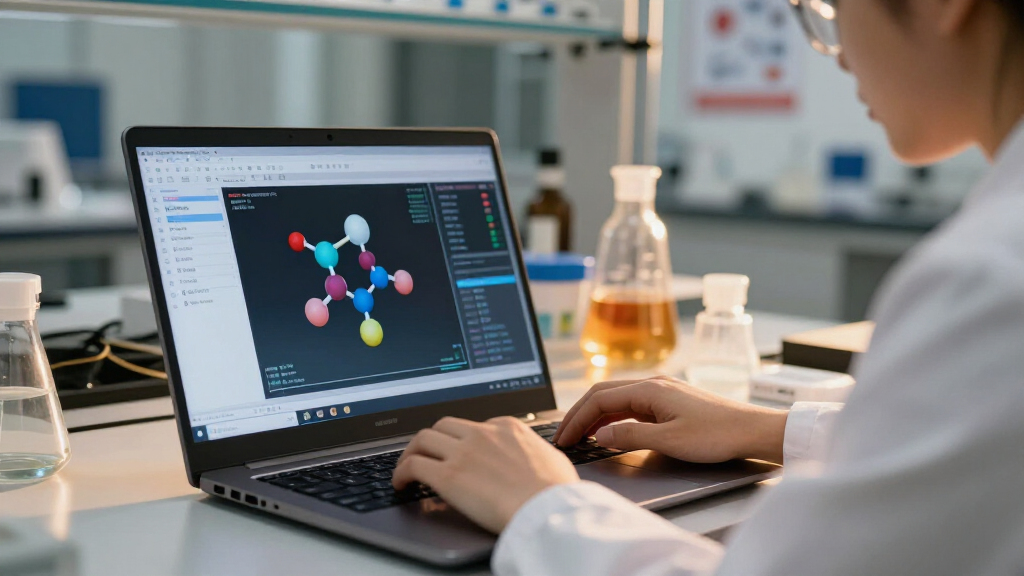
According to Anthropic, researchers are deploying Claude AI to generate and debug scripts used in molecular dynamics simulations and structural biology pipelines. The AI assists in writing bespoke code, explaining complex scripts, and troubleshooting errors, thereby reducing time spent on routine programming tasks. For more details, see the original analysis. Additionally, Claude is used to digest large volumes of scientific literature and experimental data, helping researchers stay current in fast-moving fields where thousands of papers are published annually.
Further, Anthropic reports that Claude helps scientists interpret complex molecular data, such as protein structures and binding sites, through conversational interfaces rather than solely relying on specialized software. The company emphasizes that these applications serve to streamline intermediate steps between hypothesis formulation and experimental results, rather than replacing core scientific methods. The claims are based on Anthropic’s own account, with no independent verification available at this stage. Insights into AI’s role in scientific research can be found in this detailed report.
Potential Impact of AI on Biomolecular Research Efficiency
The reported integration of Claude AI into biomolecular workflows could significantly shorten research cycles in drug discovery, enzyme engineering, and fundamental biology. By automating routine coding, literature review, and data interpretation tasks, AI tools like Claude may allow scientists to focus more on experimental design and analysis, potentially accelerating scientific breakthroughs. The broader adoption of such AI assistants also signals a shift toward more AI-augmented laboratory practices, which could influence industry standards, research productivity, and competitive advantage in biotech and pharmaceutical sectors.
molecular dynamics simulation coding software
As an affiliate, we earn on qualifying purchases.
As an affiliate, we earn on qualifying purchases.
Biomolecular Modeling and AI: From Prediction to Workflow Assistance
Biomolecular modeling has experienced a paradigm shift with the advent of machine learning systems like AlphaFold, which demonstrated near-experimental accuracy in predicting protein structures. This breakthrough, recognized with the 2024 Nobel Prize in Chemistry, established AI as a core component of structural biology. However, AlphaFold and similar tools primarily focus on prediction tasks, leaving a gap in supporting the broader research workflow. Anthropic’s approach aims to complement these systems by providing an AI assistant that helps with coding, literature synthesis, and data interpretation, thus integrating into the entire research pipeline rather than replacing specific predictive functions.
While the industry has seen rapid adoption of specialized AI tools, Anthropic’s claim is that Claude serves as a general-purpose assistant, helping researchers manage the complex, multi-step process of scientific discovery. The company’s account aligns with a growing trend of AI tools becoming integral to laboratory workflows, but independent validation of these claims remains pending.
biomolecular modeling data analysis tools
As an affiliate, we earn on qualifying purchases.
As an affiliate, we earn on qualifying purchases.
Lack of Independent Evidence and Quantitative Benchmarks
Currently, there is no peer-reviewed or independently verified data quantifying how much time or accuracy improvements Claude provides in biomolecular workflows. The claims are based solely on Anthropic’s internal account, and specific research groups, benchmarks, or error rates have not been disclosed. It remains unclear whether these applications are widespread or limited to early adopter labs, or how Claude’s performance compares to existing manual or semi-automated practices.
scientific literature review software
As an affiliate, we earn on qualifying purchases.
As an affiliate, we earn on qualifying purchases.
Awaiting Peer-Reviewed Validation and Broader Adoption Data
The next steps involve independent validation through peer-reviewed studies or detailed case reports from research laboratories. Monitoring how pharmaceutical and biotech companies incorporate Claude into their workflows will also be indicative of its practical impact. Additionally, future versions of Claude may demonstrate enhanced capabilities, which could further influence biomolecular research practices.
protein structure visualization software
As an affiliate, we earn on qualifying purchases.
As an affiliate, we earn on qualifying purchases.
Key Questions
How is Claude AI currently being used in biomolecular research?
According to Anthropic, Claude assists with code generation and debugging, literature synthesis, and data interpretation, aiming to streamline various steps in biomolecular modeling workflows.
Are there independent studies confirming Claude’s effectiveness?
No, at this time, all claims are based on Anthropic’s own account. Independent verification and peer-reviewed data are not yet available.
What are the main benefits claimed for Claude in biomolecular modeling?
Claims include faster code development, easier literature review, and improved data interpretation, which could reduce research cycle times.
What are the limitations or risks of relying on Claude for scientific work?
Potential risks include errors in AI-generated code or summaries, and the lack of independent validation means the actual benefits and accuracy are uncertain.
Primary source: Anthropic · via ThorstenMeyerAI.com
Halloween Picks
halloween
As an affiliate, we earn on qualifying purchases.