
TL;DR

Get business pricing on tech for your team
- Business-only prices and quantity discounts
- Tax-exempt purchasing
- Multiple users, one account, clear invoices
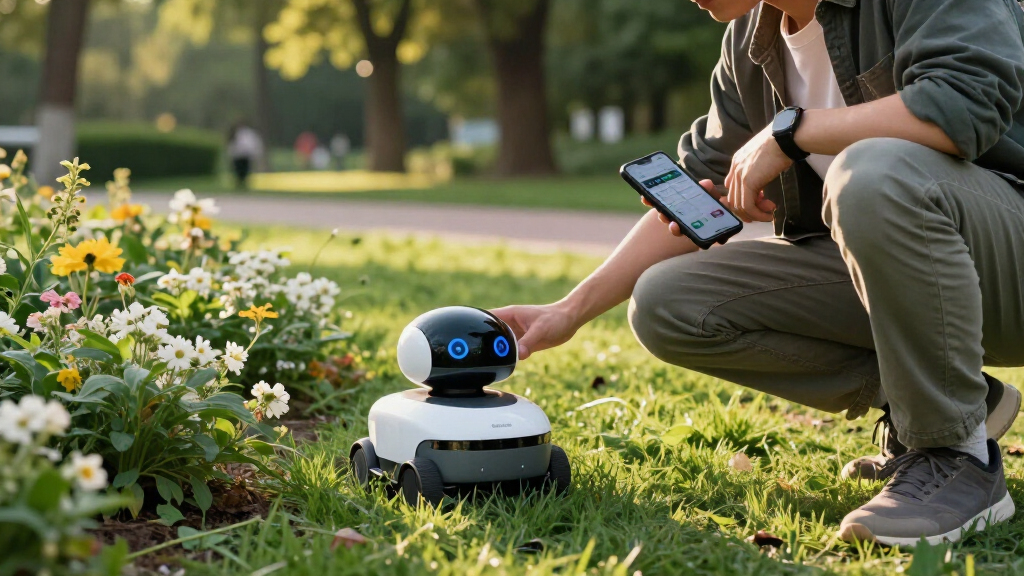
Pollen Robotics has introduced Microduck, an AI-powered robot, via Hugging Face. This marks a significant step in robotics and AI collaboration, with potential applications in various fields.
Pollen Robotics, in partnership with Hugging Face, has announced the release of Microduck, an AI-powered robotic platform designed for versatile applications. The launch was made public on March 15, 2024, and marks a notable development in the integration of robotics with advanced AI frameworks. This new platform aims to enhance robotics capabilities across industries such as logistics, education, and research, making it a significant step forward in autonomous systems.
According to Pollen Robotics, Microduck is a compact, adaptable robot equipped with machine learning capabilities that allow it to perform a variety of tasks with minimal human intervention. The robot is built on an open-source architecture, leveraging Hugging Face’s AI models and tools, which facilitates customization and scalability for developers and organizations. The platform includes sensors, cameras, and onboard processing units designed to support navigation, object recognition, and interaction in complex environments.Hugging Face, known for its AI model repository and community-driven approach, has partnered with Pollen Robotics to embed its models directly into Microduck’s operating system. This integration aims to accelerate development cycles and enable rapid deployment of AI functionalities, such as natural language understanding and computer vision, directly on the robot. The initial rollout focuses on use cases in warehouse automation, educational robotics, and research projects.
Impact of Microduck on Robotics and AI Development
The launch of Microduck signifies a meaningful advancement in how AI and robotics are combined, particularly through open-source platforms like Hugging Face. This development could democratize access to sophisticated robotic systems, enabling smaller companies, educational institutions, and researchers to develop customized solutions without the need for extensive proprietary hardware or software. It also demonstrates a growing trend toward modular, AI-enhanced robots capable of operating in dynamic, real-world environments, which could influence future automation strategies across multiple sectors.
As an affiliate, we earn on qualifying purchases.
Previous Advances in AI-Integrated Robotics
Over the past few years, there has been a steady increase in the deployment of AI in robotics, with notable examples including autonomous drones, service robots, and industrial automation systems. Companies like Boston Dynamics and SoftBank have showcased robots with advanced mobility and interaction capabilities. However, many of these systems remain proprietary and expensive, limiting widespread adoption. The collaboration between Pollen Robotics and Hugging Face aims to address these barriers by providing an open-source, AI-enhanced platform that is accessible to a broader audience.
Hugging Face has established itself as a leader in democratizing AI through its model hub and developer community, which now extends into robotics with Microduck. The platform’s emphasis on transparency, community support, and ease of integration makes it a promising foundation for future robotic innovations. Pollen Robotics, known for its research and development in autonomous systems, sees Microduck as a step toward more flexible, intelligent robots that can adapt to various operational environments.
As an affiliate, we earn on qualifying purchases.
Unanswered Questions About Microduck’s Capabilities and Deployment
While Pollen Robotics has provided details about Microduck’s hardware and AI integration, it is still unclear how well the robot performs in real-world, unstructured environments over extended periods. Specifics about its durability, battery life, and ability to handle complex tasks remain undisclosed. Additionally, the extent of customization available to end-users and the potential for commercial scaling are still being evaluated. Industry observers are awaiting further demonstrations and field tests to assess its practical viability.
As an affiliate, we earn on qualifying purchases.
Next Steps for Microduck Development and Adoption
Pollen Robotics plans to release detailed technical documentation and begin pilot programs with select partners in logistics and education sectors in the coming months. The company also intends to gather user feedback to refine Microduck’s AI models and hardware design. Broader availability to developers and organizations is expected later in 2024, alongside updates that could expand its functionalities and improve robustness based on initial testing outcomes.
As an affiliate, we earn on qualifying purchases.
Key Questions
What makes Microduck different from other robots?
Microduck is distinguished by its open-source architecture, AI integration via Hugging Face models, and versatility in performing various tasks, making it accessible for customization and diverse applications.
Can Microduck be used outside controlled environments?
While designed for adaptability, its performance in complex, unstructured environments is still under evaluation. Further testing will determine its suitability for outdoor or highly dynamic settings.
Is Microduck available for commercial purchase now?
Not yet. Pollen Robotics plans to start pilot programs soon, with broader commercial availability expected later in 2024.
What industries could benefit most from Microduck?
Potential applications include warehouse automation, educational robotics, research projects, and possibly service industries, depending on its development and deployment success.
Source: hn
Halloween Picks
halloween
As an affiliate, we earn on qualifying purchases.