
📊 Full opportunity report: Thrymvault: A System Around Your Content on ThorstenMeyerAI.com — validation score, market gap, and execution plan.

Get business pricing on tech for your team
- Business-only prices and quantity discounts
- Tax-exempt purchasing
- Multiple users, one account, clear invoices
TL;DR
Thrymvault launches as a self-hosted content workspace, integrating documents, databases, AI prompts, and client portals. It aims to reduce scattered workflows and streamline content management.
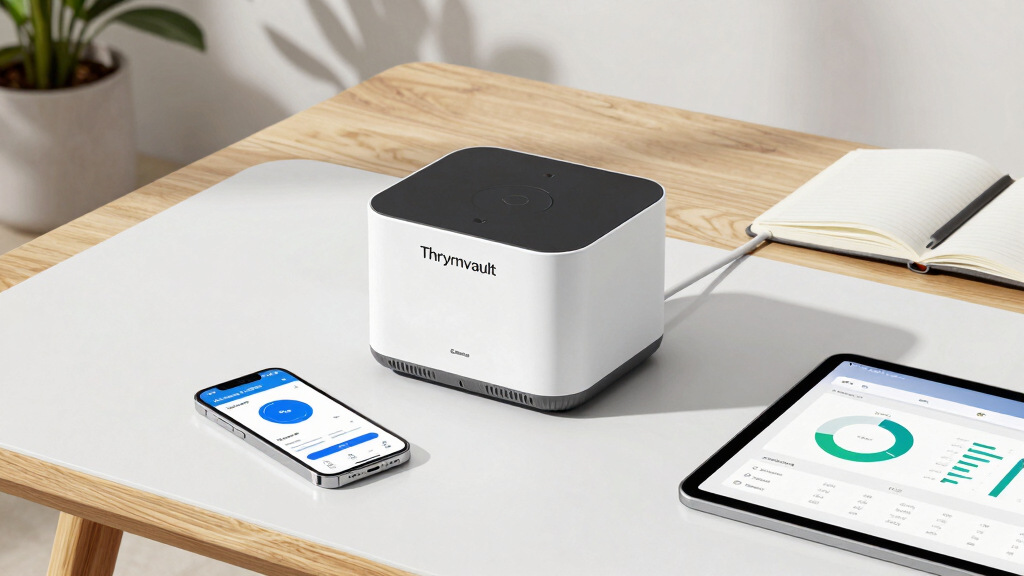
Thrymvault has unveiled a new self-hosted content management system that consolidates ideas, drafts, assets, feedback, and workflows into a single workspace. This development aims to address the widespread problem of scattered content tools and improve efficiency for creators and agencies.
The platform combines the functionalities of documents and databases, allowing users to manage long-form content, structured data, and workflows within one environment. It features rich pages, flexible databases, public portals, threaded comments, file libraries, and full-text search, all hosted privately by the user.
Thrymvault’s core innovation is integrating long-form documents with structured data, enabling content pieces to move seamlessly from idea to publication without duplication or disjointed tools. Its AI layer is built around saved prompts, providing consistent workflows for tasks like summarization, rewriting, and content transformation, which can be reused across multiple records.
One of its notable features is portals — read-only, customizable views shared via secure links, allowing clients or stakeholders to see polished work without access to the internal process or messy drafts. Feedback remains attached to specific content, with threaded comments and role-based permissions ensuring efficient collaboration and review.
A System Around Your Content
One self-hosted workspace where ideas, drafts, assets, clients, feedback, and reusable AI prompts finally know about each other — instead of scattered across notes, sheets, folders, and chat threads.
Typed properties, relations, and saved views mean the same records become a writing queue, a kanban board, a calendar, or a searchable archive — and each record carries a rich-text body, so the plan and the draft live together.
+ token
+ passphrase
- This is the capability set. Drawn from Thrymvault’s own product documentation — what the workspace is for and how its pieces fit.
- Early-stage, in active build. Some surfaces are more settled than others; treat described capabilities as design, not a finished-product guarantee.
- No deploy-and-verify story yet. Unlike the shipped products in this series, there’s no public-launch writeup attached here — when there is, it gets the same treatment.
- The promise is “lose less.” Not “do more” — less time hunting, copying, asking, and rebuilding, because the pieces share one roof you own.
Independent commentary, produced with AI assistance under human editorial oversight. The views are the author’s own and may change. This is not business, financial, legal, or technical advice. Thrymvault is an early-stage, self-hosted product in active development; described capabilities reflect its design and may change. Product, model, and company names are trademarks of their respective owners; mention does not imply endorsement.
Why Thrymvault’s Unified System Matters for Content Teams
This development matters because it addresses a common pain point for content creators, agencies, and teams: the fragmentation of tools and scattered workflows. By consolidating drafts, assets, prompts, and feedback into one private workspace, Thrymvault can reduce time spent searching, copying, and managing multiple platforms. This streamlining could lead to increased productivity, better version control, and more consistent content quality.
Furthermore, its portal feature offers a new way to share polished outputs securely without exposing internal drafts or private data, improving client collaboration and reducing the need for multiple versions or external tools. The AI layer’s reuse of prompts ensures consistency and efficiency in repetitive tasks, saving time and mental effort.
Overall, this integrated approach could shift how content workflows are structured, emphasizing a centralized, flexible, and secure environment tailored for modern content needs.
self-hosted content management system
As an affiliate, we earn on qualifying purchases.
As an affiliate, we earn on qualifying purchases.
Background on Fragmented Content Workflows
Many content teams rely on a mix of tools: document editors for drafts, spreadsheets or CRMs for planning, file storage for assets, and separate feedback channels. This fragmentation causes inefficiencies, version confusion, and delays, especially in collaborative environments. Existing solutions often require manual syncing or duplicate work, which hampers productivity and increases error risk.
While some platforms have attempted to integrate parts of these workflows, none have fully unified documents, structured data, AI prompts, and client-facing portals in a private, self-hosted environment. Thrymvault’s approach seeks to fill this gap by providing a comprehensive, all-in-one workspace that respects privacy and customization needs.
The concept builds on ongoing trends toward integrated content management and AI-assisted workflows, but emphasizes user control and security through self-hosting and role-based access.
“Our goal is to eliminate the scattered chaos of content workflows by creating a single, private environment where everything from drafts to feedback to client portals lives in harmony.”
— Thorsten Meyer, founder of Thrymvault
private document collaboration software
As an affiliate, we earn on qualifying purchases.
As an affiliate, we earn on qualifying purchases.
Unanswered Questions About Thrymvault’s Adoption and Integration
It is not yet clear how widely Thrymvault will be adopted by different types of organizations or how it will integrate with existing tools and workflows. Details about pricing, deployment options, and compatibility with other platforms are still emerging, and user feedback will be critical to assess its practical effectiveness.As an affiliate, we earn on qualifying purchases.
Next Steps for Thrymvault and User Adoption
Thrymvault plans to open beta testing in the coming months, inviting early adopters to evaluate its features and integration capabilities. The company will likely gather user feedback to refine workflows, expand AI functionalities, and improve portal customization options. Monitoring adoption rates and user experiences will be key to understanding its impact on content management practices.
Additionally, Thrymvault may develop integrations with popular tools and platforms based on user demand, further enhancing its utility as a central content hub.
As an affiliate, we earn on qualifying purchases.
Key Questions
How does Thrymvault differ from existing content management tools?
Thrymvault combines documents, databases, AI prompts, and client portals into one self-hosted environment, reducing tool fragmentation and streamlining workflows. Its focus on private hosting and integrated features sets it apart.
Can Thrymvault be used with existing tools?
While designed as a standalone system, Thrymvault may offer future integrations with popular platforms. Currently, it emphasizes self-contained workflows within its environment.
Is Thrymvault suitable for small teams or individual creators?
Yes, its flexible structure can accommodate both small teams and individual content creators seeking a unified workspace tailored to their needs.
What security features does Thrymvault offer?
Thrymvault is self-hosted, giving users control over data privacy, with role-based permissions, item-level sharing, and optional password-protected portals for external sharing.
When will Thrymvault be generally available?
The company plans to launch its beta testing phase soon, with broader availability expected after initial feedback and refinement.
Source: ThorstenMeyerAI.com
Fall Picks
fall essentials
As an affiliate, we earn on qualifying purchases.