Quantum sensors dramatically improve precision navigation in space and defense by using quantum effects like entanglement and atomic interferometry. They allow you to navigate accurately even without GPS signals, detecting tiny gravitational and inertial changes. This technology is essential for space exploration and military operations, ensuring reliability in challenging environments. As you explore further, you’ll uncover how these innovations are transforming navigation capabilities beyond traditional limits.
Key Takeaways
- Quantum sensors use entanglement and atomic interferometry to achieve ultra-sensitive measurements of gravitational, magnetic, and inertial forces.
- They enable precise navigation in GPS-denied environments, especially in deep space and underground operations.
- Quantum technologies improve the accuracy and resilience of inertial navigation systems against environmental noise.
- Applications include detecting gravitational anomalies, supporting military operations, and enhancing space exploration missions.
- Advancements in quantum sensing are driving the development of robust, high-precision navigation solutions for defense and space applications.

Have you ever wondered how navigation systems can become more accurate than ever before? The answer lies in cutting-edge quantum technologies that harness phenomena like quantum entanglement and atomic interferometry. These advances are transforming the way we pinpoint locations, especially in environments where traditional GPS signals are weak or unavailable, such as deep space or behind dense structures. Quantum sensors leverage the principles of quantum mechanics to achieve unprecedented sensitivity and precision, giving you the ability to detect minuscule variations in gravitational fields, magnetic forces, or inertial movements.
Quantum entanglement plays a fundamental role in enhancing the capabilities of these sensors. By linking particles such as photons or atoms in entangled states, scientists can create measurement systems that are more resilient to noise and environmental disturbances. This means that the information obtained from entangled particles is correlated in ways classical systems can’t replicate. As a result, sensors utilizing quantum entanglement can deliver more accurate readings of position, velocity, or gravitational anomalies. This is especially essential in space navigation, where even tiny measurement errors can lead to significant deviations over vast distances. Entanglement allows for synchronization of quantum clocks and sensors across large scales, improving the precision of navigation data.
Atomic interferometry is another key technology underpinning advanced quantum sensors. It involves splitting atomic wavefunctions into separate paths and then recombining them to produce interference patterns. These patterns are highly sensitive to external influences like gravitational gradients or accelerations. In practice, atomic interferometers act like incredibly precise accelerometers or gravimeters, capable of detecting minute changes in gravitational pulls caused by underground structures or celestial bodies. This sensitivity enables navigation systems to operate independently of satellite signals, making them ideal for space missions or military operations in GPS-jammed or denied environments. Additionally, advancements in quantum technology continue to push the boundaries of what is possible in inertial sensing.
Both quantum entanglement and atomic interferometry contribute to creating navigation solutions that are more robust, accurate, and reliable than traditional methods. They allow you to maintain precise positioning even in the most challenging conditions, such as deep space exploration or covert military operations. As these quantum technologies continue to evolve, expect to see their integration into future navigation systems, providing a new level of precision that was once thought impossible. You’ll benefit from navigation tools that are faster, more accurate, and capable of functioning seamlessly in environments where classical systems falter, opening new frontiers in space and defense applications.

Davis Instruments Celestial Navigation Quick Reference Card
- Product Quality: Great product
As an affiliate, we earn on qualifying purchases.
As an affiliate, we earn on qualifying purchases.
Frequently Asked Questions
How Do Quantum Sensors Compare to Traditional Navigation Systems?
Quantum sensors outperform traditional navigation systems by leveraging quantum entanglement for heightened accuracy and sensitivity. You’ll find they require less sensor calibration over time, making them more reliable in challenging environments. Unlike classical systems, quantum sensors detect minute changes in physical properties, delivering precise data vital for space and defense applications. This advanced technology ensures you get better navigation performance, especially where conventional systems struggle or are limited.
What Are the Main Challenges in Deploying Quantum Sensors in Space?
You face significant challenges deploying quantum sensors in space, mainly due to quantum decoherence caused by environmental factors like radiation and temperature fluctuations. Payload integration also proves complex, as these delicate systems need robust protection and precise alignment within spacecraft. Overcoming these issues requires advanced shielding, miniaturization, and rigorous testing to make certain of reliable operation in harsh space conditions.
How Secure Are Quantum Navigation Signals Against Cyber Threats?
Imagine your quantum navigation signals are like a locked safe, highly resistant to cyber threats. They are generally very secure due to quantum principles like entanglement and superposition. However, threats like quantum spoofing could trick the system, and without robust signal encryption, malicious actors might intercept or manipulate signals. While highly secure, ongoing advancements are vital to stay ahead of potential cyber threats and guarantee the integrity of quantum navigation systems.
What Is the Cost of Implementing Quantum Sensors for Defense Applications?
The cost of implementing quantum sensors for defense applications varies widely, depending on system complexity and technology maturity. You need to contemplate budget constraints, as these sensors can be expensive due to advanced materials and research. While initial investments are high, the benefits in precision and security might justify costs. Planning carefully and exploring funding options can help you manage expenses while integrating cutting-edge quantum technology into your defense strategies.
When Will Quantum Navigation Become Commercially Available?
Quantum navigation is expected to become commercially available within the next 3 to 5 years. Advances in quantum accuracy and sensor miniaturization are accelerating this timeline, making these highly precise systems more practical for everyday use. As technology continues to improve, you’ll likely see quantum navigation integrated into consumer devices and commercial applications, providing unprecedented accuracy and reliability. Keep an eye on industry developments for the latest breakthroughs.

LSCCLMKJ IG-028 Interferometer Sensor Head
- User-Friendly Interface: Quick and efficient setup
- Durable Construction: Withstands harsh industrial environments
- High Temperature Resistance: Operates up to 105℃
As an affiliate, we earn on qualifying purchases.
As an affiliate, we earn on qualifying purchases.
Conclusion
Quantum sensors are revolutionizing navigation in space and defense, offering unprecedented accuracy. Did you know that these sensors can detect changes as small as a trillionth of a meter? This incredible precision means you can navigate even in GPS-denied environments, like deep space or underground. As technology advances, expect quantum sensors to become essential tools, ensuring safer, more reliable missions and defense strategies. Embrace this exciting frontier where science meets practical innovation.

SteelSeries Rival 650 Quantum Wireless Gaming Mouse – Rapid Charging, 12,000 Cpi Dual Sensor, 256 Weight Configs, 8 Zone RGB Lighting
- Wireless Technology: Lag-free Quantum Wireless connection
- Battery Life: 24+ hours or 10-hour rapid charge
- Optical Sensor: TrueMove3 Plus for precise tracking
As an affiliate, we earn on qualifying purchases.
As an affiliate, we earn on qualifying purchases.
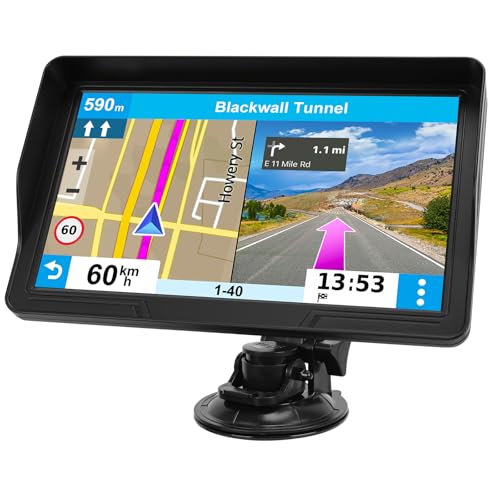
GPS Navigator for Car Truck RV, 9-Inch HD Touchscreen GPS for Car with 2026 Maps Free Lifetime Updates, Voice Turn-by-Turn Guidance, Speed & Red Light Camera Alerts, Custom Truck Routing
- Large HD Touchscreen: 9-inch high-definition display for clear view
- Lifetime Map Updates: Pre-loaded with 2026 North America maps, free updates
- Voice Turn-by-Turn Guidance: Clear voice prompts for confident navigation
As an affiliate, we earn on qualifying purchases.
As an affiliate, we earn on qualifying purchases.