Generative AI is reshaping creative jobs by enabling artists and designers to produce innovative work faster, but it also raises ethical questions about originality, ownership, and bias. While AI enhances creative possibilities, it challenges traditional notions of authorship and may impact employment in some areas. Responsible use and transparency are key to balancing AI’s benefits with ethical concerns. If you want to understand how these changes will influence your industry, keep exploring these evolving issues.
Key Takeaways
- Generative AI enhances creative output but raises concerns about job displacement and the devaluation of human craftsmanship.
- Ethical issues include questions of originality, authorship, and ownership of AI-generated works.
- Bias in AI training data can perpetuate stereotypes, affecting fairness and diversity in creative representations.
- Transparency about AI involvement and responsible use are essential for maintaining trust and integrity.
- Balancing AI capabilities with human creativity ensures sustainable innovation and preserves artistic diversity.
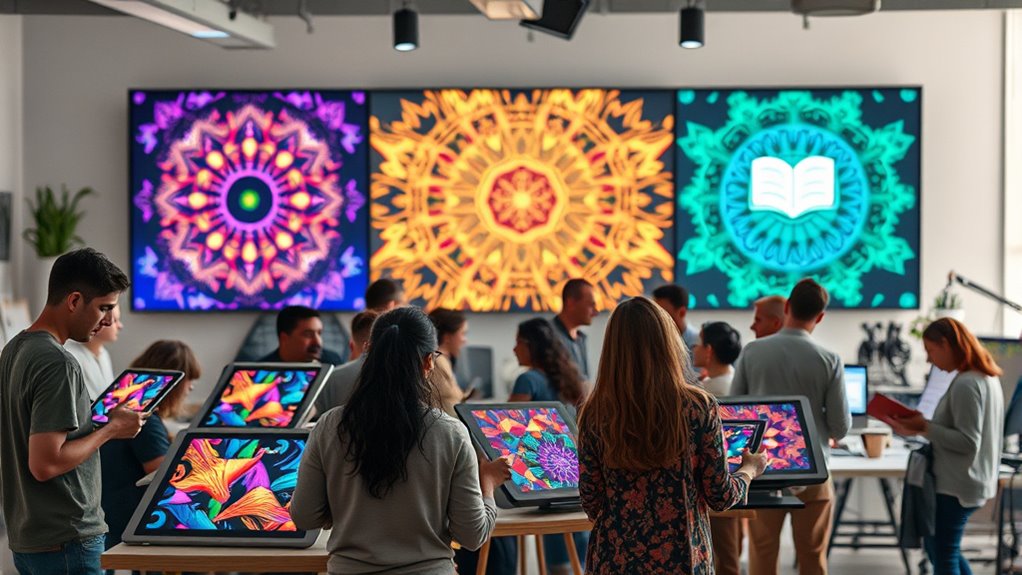
Generative AI is transforming creative industries by enabling artists, designers, and content creators to push boundaries and explore new possibilities. One of the most exciting developments is AI generated art, which allows you to produce complex, unique visuals with minimal effort. This technology opens doors to new styles and concepts that might have been difficult or time-consuming to create manually. You can experiment with different algorithms, colors, and compositions, giving you fresh ways to express your ideas. However, with this innovation comes essential ethical considerations. As you utilize AI generated art, questions about originality, authorship, and ownership arise. Who truly owns a piece created partly or entirely by AI? Is it the programmer, the user, or the machine? These are issues that challenge traditional notions of creativity and copyright. You need to navigate these ethical waters carefully, especially as AI tools become more sophisticated and capable of producing highly realistic images or designs. It’s vital to consider the impact on human artists and the value of human touch in the creative process. Some worry that widespread use of AI generated art could devalue human craftsmanship or lead to a flood of generic content that stifles originality. Others argue that AI is just another tool—like a camera or a paintbrush—that amplifies your creative potential. Still, the ethical considerations extend beyond ownership. Biases embedded in training data can influence AI outputs, leading to questions about representation and fairness. If you rely on AI to generate art, you must be vigilant about these biases and make sure your work promotes diversity rather than perpetuating stereotypes. Transparency is also key. When sharing AI generated art, it’s important to disclose the role AI played in the creation process. This honesty helps maintain trust with your audience and fosters a responsible approach to using these powerful tools. As you embrace AI in your creative endeavors, remember that it’s not about replacing human ingenuity but enhancing it. The technology serves as a collaborator, expanding your capabilities while posing new ethical challenges. Additionally, understanding the ethical hacking principles such as maintaining security and avoiding malicious use of AI technology can help ensure responsible innovation. By staying informed about these considerations, you can harness the full potential of AI generated art responsibly. Overall, generative AI is a game-changer, offering incredible opportunities to innovate and create. But it also demands that you think critically about the ethical implications—making sure your work respects both the art community and the broader societal values. Embracing this technology with awareness and integrity will help you shape a future where AI and human creativity coexist harmoniously.

AI Art Playbook: How to Easily Create and Use AI-Generated Art in Your Projects
As an affiliate, we earn on qualifying purchases.
As an affiliate, we earn on qualifying purchases.
Frequently Asked Questions
How Does Generative AI Influence Intellectual Property Rights?
Generative AI complicates intellectual property rights by raising copyright concerns and ownership disputes. When AI creates content, you might struggle to determine who owns the rights—whether it’s the AI developer, user, or the original creator. This ambiguity leads to legal uncertainties, potentially causing disputes. You need clear guidelines to navigate these issues, ensuring that creators’ rights are protected while embracing AI’s innovative potential.
What Are the Long-Term Societal Impacts of Ai-Driven Creativity?
You might find that AI-driven creativity could lead to a 30% increase in global content, but it risks cultural homogenization, reducing diverse perspectives. This shift might challenge human creativity by favoring algorithmic outputs over unique, human insights. Long-term, society could see a loss of cultural richness, making it harder to preserve local identities. Embracing AI responsibly helps guarantee technology supports, rather than replaces, human creativity.
Can Ai-Generated Art Achieve Genuine Emotional Authenticity?
AI-generated art can evoke emotional depth, but achieving genuine artistic authenticity remains challenging. You might feel that the algorithms mimic human emotion, yet they lack true consciousness and personal experience. While AI can produce compelling visuals and sounds, it often falls short of conveying the nuanced authenticity that human artists bring through their unique perspectives and emotional journeys. Ultimately, AI can complement creativity but may never fully replace authentic emotional expression.
How Will AI Reshape Traditional Roles Within Creative Teams?
AI will reshape traditional roles within creative teams by fostering more collaborative workflows, where you work alongside AI tools to enhance your ideas. You’ll need to focus on skill adaptation, learning how to harness AI’s capabilities effectively. This shift allows you to concentrate on higher-level creative thinking while AI handles repetitive tasks, ultimately transforming your role into a more innovative and strategic contributor in the creative process.
What Regulations Are Needed to Govern Ai-Created Content?
You need clear regulations addressing copyright disputes and licensing frameworks for AI-created content. Implement laws that define ownership rights and responsibilities, ensuring creators retain control over their work. Establish licensing standards that specify how AI-generated content can be used and shared. These measures will protect intellectual property, prevent misuse, and foster innovation, giving creators confidence and clarity in steering AI’s evolving role in creative industries.

Drawing Tablet, UGEE M708 10 x 6 inch Large Drawing Tablet with 8 Hot Keys, Passive Stylus of 16384 Levels Pressure, Digital Graphics Art Tablet for PC Paint, Design, Art Creation Sketch
【Large Active Drawing Space】: UGEE M708 V3 graphic drawing tablet, features 10 x 6 inch large active drawing…
As an affiliate, we earn on qualifying purchases.
As an affiliate, we earn on qualifying purchases.
Conclusion
As you navigate the evolving landscape of creative industries, remember that generative AI gently reshapes the canvas of your craft. It’s like a whispering breeze, subtly guiding your brushstrokes and ideas, offering new horizons to explore. Embrace this delicate shift, knowing it’s not about replacement but about adding a soft glow of innovation. With mindful steps, you’ll find harmony between tradition and technology, painting a future filled with endless possibilities.
FREE AI Image Generators: Empowering Artists & Photographers with @ImagingAI
As an affiliate, we earn on qualifying purchases.
As an affiliate, we earn on qualifying purchases.

AI For Students: Your Academic Writing Assistant: Ethical Tools, Prompts & Workflows to Write Stronger Papers in High School, College & Beyond (AI for Academic Success)
As an affiliate, we earn on qualifying purchases.
As an affiliate, we earn on qualifying purchases.