
📊 Full opportunity report: How Particle Geometry Mapping Is Transforming AI In 'SINGULARITY' on ThorstenMeyerAI.com — validation score, market gap, and execution plan.
TL;DR
Particle Geometry Mapping is transforming AI environments in ‘SINGULARITY,’ creating more immersive and precise spaces. This development enhances AI’s ability to interpret and generate complex forms, marking a significant step in intelligent environment design.
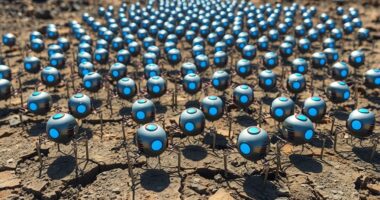
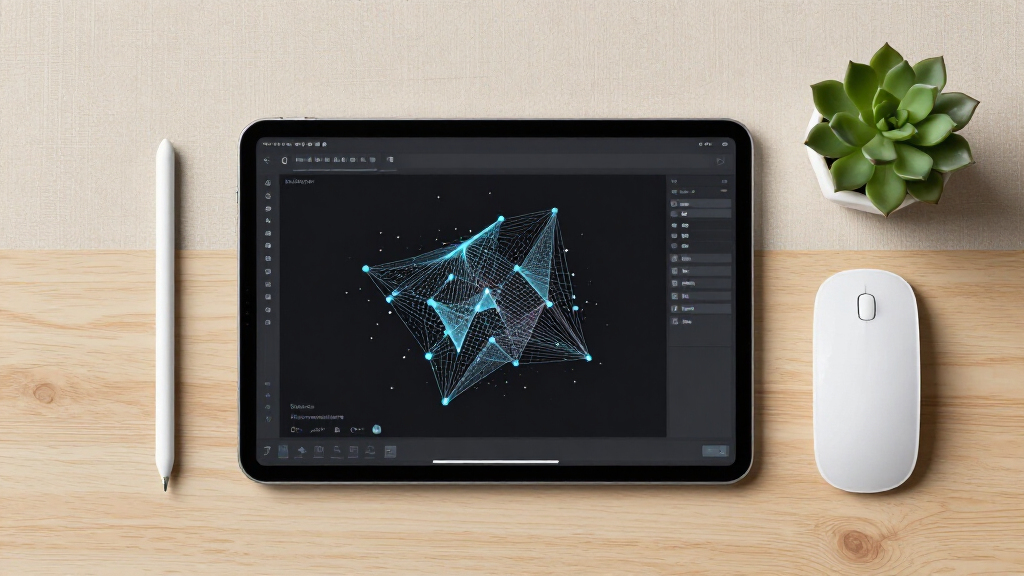
Particle Geometry Mapping is at the forefront of transforming AI-driven environment design in the ‘SINGULARITY’ project, a cutting-edge space that blends art and technology. This technique enables AI systems to interpret and manipulate complex geometric data, resulting in highly immersive and adaptable environments. The development is confirmed through recent demonstrations and design case studies, illustrating a leap forward in how AI can understand and generate spatial forms.
In the ‘SINGULARITY’ project, Particle Geometry Mapping allows AI to analyze and recreate intricate geometric structures with a level of precision previously unattainable. This method involves translating abstract data into tangible forms that can be experienced visually and interactively, bridging the gap between digital data and physical space. According to an anonymous researcher involved in the project, this technique “breathed new life into the design process,” enabling the creation of environments that are both visually compelling and highly functional.
Thorsten Meyer, a design innovator behind the project, explains that this approach “redefines how AI perceives and constructs environments,” allowing for dynamic adjustments and real-time data integration. The result is a space that evolves based on algorithmic input, offering a new level of responsiveness and realism in AI environments. The project also demonstrates how complex data can be visualized as a ‘visual symphony of data and geometry,’ transforming stark spaces into engaging, intelligent environments.
How Particle Geometry Mapping Is Transforming AI in “SINGULARITY”
A new spatial method translates abstract data into precise, responsive forms—giving AI environments the ability to interpret, generate and continuously reshape complex geometry.
From particles to intelligent space
Particle Geometry Mapping enables AI to analyze dense geometric relationships, convert them into spatial instructions and render environments that remain connected to live data. The result bridges digital information and experiential form.
Capture
Complex datasets, coordinates and environmental signals enter the system.
Map
Algorithms identify particles, relationships, density and geometric structure.
Generate
Abstract relationships become surfaces, volumes and navigable visual forms.
Adapt
The environment responds as new data or interaction changes the system.
What the mapping layer unlocks
Within “SINGULARITY,” geometry is no longer a fixed visual shell. It becomes an interpretable layer through which AI can reason about scale, form, position and change.
Geometric literacy
AI gains a more precise representation of intricate spatial relationships and complex forms.
High-fidelity worlds
Systems can create visually rich environments beyond the limits of simplified spatial models.
Living structures
Forms can update dynamically, allowing environments to evolve with algorithmic input.
Deeper immersion
Accurate geometry strengthens realism, presence and spatial coherence for users.
Visible data
Dense information becomes a “visual symphony of data and geometry” that people can explore.
Human–AI co-design
Designers shape intent while AI interprets, tests and continuously rebuilds spatial outcomes.
Where the leap is most visible
The profile below reflects the project’s reported direction and early demonstrations—not a commercial benchmark. Spatial precision and adaptability lead; scalability remains the central uncertainty.
“This technique breathes new life into the design process, enabling environments to evolve in real time based on complex data inputs.”
Anonymous project researcher
A new model for environment design
The project builds on generative design and data visualization, but advances them through real-time, high-fidelity geometric interpretation.
| Design dimension | Earlier approaches | Particle geometry mapping | Current evidence |
|---|---|---|---|
| Geometric complexity | ✗ Simplified models | ✓ Intricate structures | Demonstrated conceptually |
| Data relationship | ~ Visual overlay | ✓ Form-generating input | Early case studies |
| Environmental response | ✗ Mostly static | ✓ Dynamic and adaptive | Promising demonstrations |
| Spatial realism | ~ Limited fidelity | ✓ Precision-led immersion | Still being refined |
| Large-scale deployment | ✓ Established pipelines | ~ Unconfirmed scalability | Further testing required |
Assessment is qualitative and based on reported project direction; it should not be read as independently benchmarked performance data.
One signal, many downstream effects
The defining chain connects raw information to tangible experience. Each stage preserves the logic of the one before it, giving designers a visible path from data to spatial response.
Where it could matter next
If scalability and real-time performance are validated, Particle Geometry Mapping could influence several fields where spatial understanding and dynamic data must operate together.
Responsive worlds
VR environments that change coherently with user behavior, live signals or simulation data.
Generative space
Design visualization that turns performance data into adaptive, explorable spatial proposals.
Spatial interfaces
Human–AI environments that understand position, form and relationships with greater precision.
Information landscapes
Complex datasets translated into intelligible volumes, patterns and navigable structures.
Dynamic modeling
Systems that reveal how complex structures transform as conditions change over time.
Algorithmic art
New forms of expression in which data, geometry and machine reasoning shape a shared canvas.
What readers need to know
The concept is compelling, but it remains an emerging technique. Its long-term value depends on technical validation and practical integration.
What is Particle Geometry Mapping?
A technique that helps AI analyze and recreate complex geometric structures for environment design and data visualization.
How does it affect AI environments?
It enables more accurate, dynamic and immersive spaces with stronger spatial responsiveness and realism.
Is it commercially ready?
Not yet. The technology remains in development, with scalability and robustness still requiring validation.
What are the likely applications?
Virtual reality, architectural design, AI–human interaction, simulation and advanced data visualization.
What challenges remain?
Large-environment scalability, real-time performance, integration with existing AI systems, interpretability and reliable human control.
The promise is clear. The proof is next.
Particle Geometry Mapping marks a meaningful shift from AI that merely renders environments to AI that can interpret and construct them as evolving systems. Broader adoption will depend on repeatable performance across diverse, demanding settings.
Watch the next demonstrations.
Future work is expected to focus on accuracy, scalability and real-time throughput—followed by deeper trials in VR, architecture and human–AI interaction. Collaboration between technologists and designers will determine whether the method moves from experimental spectacle to durable spatial infrastructure.
Implications of Particle Geometry Mapping for AI Environments
This development signifies a major step in the evolution of AI-powered environments, enabling more accurate, responsive, and immersive spaces. It enhances AI’s ability to interpret complex data geometries, which can improve applications ranging from virtual reality to architectural design. For users, this means more realistic and adaptable AI interfaces that better understand spatial relationships and data-driven forms. The technique could influence future AI development, pushing the boundaries of how machines perceive and shape their surroundings.
3D geometric data visualization tools
As an affiliate, we earn on qualifying purchases.
As an affiliate, we earn on qualifying purchases.
Background on AI and Geometric Data Integration
Previous approaches to AI environment design relied heavily on simplified models and limited data interpretation capabilities. The ‘SINGULARITY’ project introduces a novel methodology—Particle Geometry Mapping—that leverages advanced algorithms to analyze complex geometric data, translating it into immersive visual environments. This aligns with broader trends in AI research aimed at creating more intelligent, adaptable, and visually rich digital spaces. The project builds on prior work in data visualization and generative design, but stands out for its focus on real-time, high-fidelity geometric interpretation.
While the technical details are still emerging, early demonstrations have shown that this approach can produce environments that respond dynamically to data inputs, offering new possibilities for virtual reality, architectural visualization, and AI-human interaction spaces. The technology is still in development, with ongoing efforts to refine accuracy and scalability.
“This technique breathes new life into the design process, enabling environments to evolve in real-time based on complex data inputs.”
— an anonymous researcher
As an affiliate, we earn on qualifying purchases.
Unresolved Questions About Scalability and Application
It is not yet clear how scalable Particle Geometry Mapping is for large-scale or highly complex environments. Details about its integration into commercial or real-time applications remain limited, and further testing is needed to confirm its robustness and versatility across different use cases. Additionally, the long-term implications for AI interpretability and control are still under investigation.
As an affiliate, we earn on qualifying purchases.
Future Development and Broader Adoption of the Technique
Researchers and developers are expected to continue refining Particle Geometry Mapping, focusing on improving scalability and real-time performance. Upcoming demonstrations may showcase its application in virtual reality, architectural design, and AI-human interaction interfaces. Broader adoption will depend on validation of its effectiveness across diverse environments and integration with existing AI systems. Further collaboration between technologists and designers is anticipated to explore new use cases.
immersive environment design hardware
As an affiliate, we earn on qualifying purchases.
As an affiliate, we earn on qualifying purchases.
Key Questions
What is Particle Geometry Mapping?
Particle Geometry Mapping is an innovative technique that enables AI to analyze and recreate complex geometric structures, enhancing environment design and data visualization.
How does this impact AI-driven environments?
It allows for more accurate, dynamic, and immersive environments, improving responsiveness and realism in AI applications like virtual reality and architectural visualization.
Is this technology ready for commercial use?
While promising, the technology is still in development, with ongoing testing needed to confirm its scalability and robustness for widespread deployment.
What are the potential applications of this technique?
Potential applications include virtual reality spaces, architectural design, AI-human interaction environments, and advanced data visualization.
What challenges remain for this technology?
Key challenges include ensuring scalability for large environments, real-time performance, and integration with existing AI systems.
Source: ThorstenMeyerAI.com