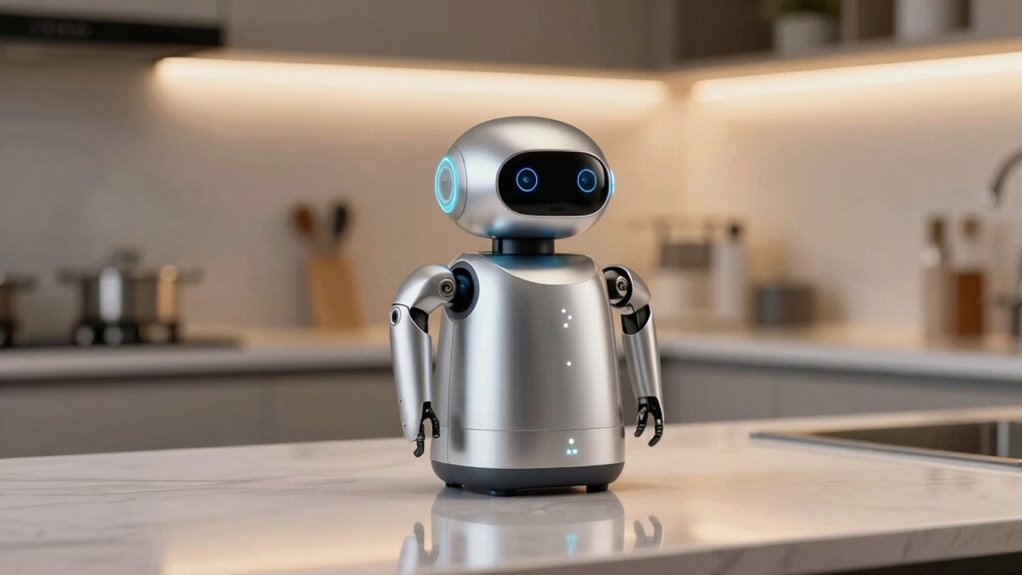

The future of consumer robotics is all about smaller, smarter devices that blend seamlessly into your daily routine. You’ll see compact robots designed for specific tasks like companionship, smart home control, and assistance — all unobtrusive and discreet. Thanks to advances in miniaturization and AI, these devices will be more intuitive and reliable, quietly making life easier. If you’re curious about how tiny robots could transform your world, continue exploring what’s coming next.
Key Takeaways
- Advances in miniaturization allow consumer robots to become smaller, more discreet, and seamlessly integrated into daily environments.
- Smaller robots are designed for specific tasks, enhancing convenience without occupying significant space.
- Compact devices foster personalized companionship and emotional support, creating meaningful human-robot interactions.
- Miniaturization improves affordability and accessibility, encouraging widespread adoption of consumer robotics.
- Future robots will serve as central hubs for smart home automation, blending effortlessly into everyday life.
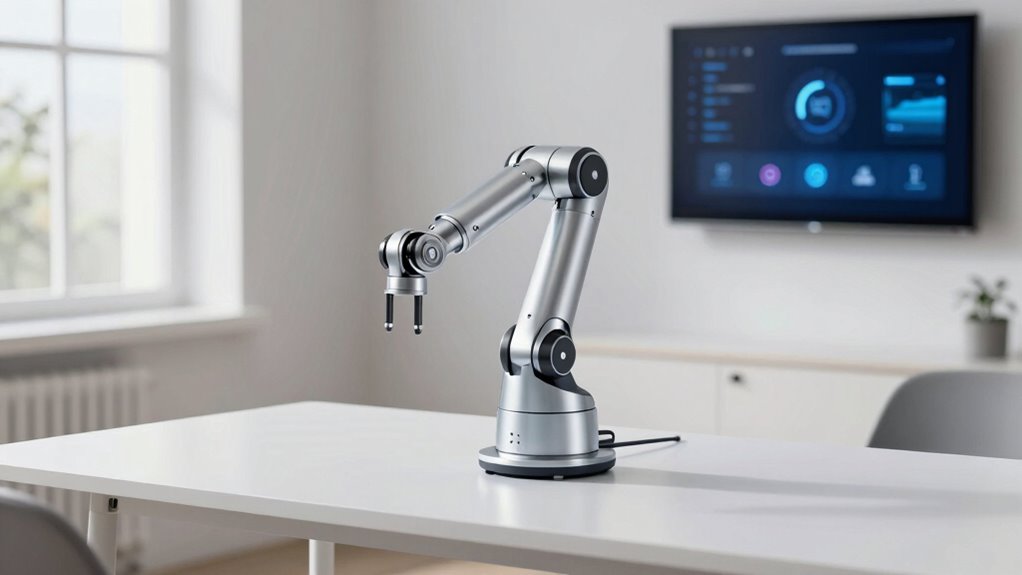
Consumer robotics is rapidly transforming daily life, making tasks easier and more efficient than ever before. You might think these robots are large, complex machines, but the future is leaning toward smaller, more adaptable devices that seamlessly blend into your everyday environment. Instead of bulky robots dominating your space, you’ll see compact devices designed for specific tasks, like robotic companionship or smart home integration. These smaller robots aren’t just about novelty—they’re about enhancing your lifestyle discreetly and effortlessly.
Small, adaptable robots seamlessly integrate into daily life, enhancing convenience and companionship discreetly.
Robotic companionship is becoming more personalized and intuitive. Instead of distant, robotic machines, you’ll encounter friendly, smaller devices that can keep you company, help with reminders, or even provide emotional support. These compact companions are designed to fit comfortably into your home, often resembling everyday objects or cute, unobtrusive shapes. They use advanced AI to understand your preferences, respond to your voice commands, and adapt to your routines. This means you can enjoy a more natural, engaging interaction without feeling overwhelmed by technology. The focus is on creating a bond that feels genuine, making your daily life less lonely and more connected. As AI technology continues to advance, these devices will become even more capable of understanding and anticipating your needs.
Smart home integration is taking a significant step forward with these smaller robots. Instead of standalone devices, you’ll find compact robots acting as hubs that coordinate your smart appliances, security systems, and lighting. Their small size allows them to be placed anywhere—on a shelf, beside your bed, or on a countertop—without cluttering your space. These robots serve as a central point of control, streamlining your home automation. They can learn your habits, anticipate your needs, and even suggest adjustments to optimize energy use or enhance security. Because they’re small, they’re less intrusive and easier to update or replace, ensuring your smart home stays current and efficient. Advances in power storage and weatherproofing are making these devices more reliable and suitable for diverse environments. Additionally, ongoing research into miniaturization techniques is helping to push the boundaries of what these small devices can achieve. As these innovations progress, the integration of compact robotics will continue to expand, making smart homes more intuitive and responsive.
The shift toward smaller consumer robots is also driven by advancements in miniaturization and AI. You benefit from devices that are powerful yet unobtrusive, blending seamlessly into your environment. These robots will become more affordable and accessible, encouraging wider adoption. As they grow smarter and more capable, you’ll find yourself relying on them for more tasks—whether it’s companionship, managing your home, or simply making your daily routines smoother. The future of consumer robotics isn’t about giant, futuristic machines; it’s about small, smart, and adaptable devices that enhance your life quietly and effectively.
compact robotic companionship devices
As an affiliate, we earn on qualifying purchases.
As an affiliate, we earn on qualifying purchases.
Frequently Asked Questions
Will Mini Robots Perform Tasks Better Than Larger Devices?
Yes, smaller robots can perform tasks better than larger devices because their compact size allows for greater maneuverability and access to tight spaces. Robot size directly influences task efficiency, especially in delicate or detailed work. You’ll find that mini robots excel in environments where larger devices struggle, providing precise control and quicker responses. For many applications, their small size makes them more versatile, efficient, and effective at completing specific tasks.
How Affordable Will Small Consumer Robots Become?
Think of how smartphones once seemed pricey but became affordable through mass production. Small consumer robots will follow this path, with cost reduction driving market adoption. As technologies improve and manufacturing scales up, prices will drop, making these robots accessible for everyday use. Soon, you’ll find compact robots within your budget, helping with chores or entertainment, much like how smartphones became an essential, affordable part of daily life.
Are Tiny Robots Safe Around Children and Pets?
Tiny robots can be safe around children and pets if designed with child safety and pet protection in mind. Look for models with rounded edges, non-toxic materials, and secure, tamper-proof components. Always supervise interactions and keep small robots out of reach when not in use. Manufacturers are increasingly focusing on safety features, so choosing reputable brands guarantees your child and pets stay protected while enjoying the benefits of these innovative devices.
Will Smaller Robots Require Less Maintenance or Repairs?
Smaller robots tend to require less maintenance because their compact size cuts down on parts that can break or wear out, boosting durability. With fewer components, they often need fewer repairs, lowering maintenance costs. Plus, their simple, streamlined design makes cleaning and upkeep quicker and easier. So, you’ll find that tiny robots generally demand less attention, making them more durable and affordable over their lifespan.
Can Tiny Robots Integrate Seamlessly With Smart Home Systems?
Yes, tiny robots can integrate seamlessly with smart home systems. Thanks to advances in artificial intelligence, they can adapt to your routines, respond to voice commands, and coordinate with other devices effortlessly. Their small size also boosts energy efficiency, allowing for prolonged operation without frequent recharging. As these robots become smarter and more connected, expect them to enhance your home automation, making everyday tasks easier and more efficient.
miniature smart home automation robots
As an affiliate, we earn on qualifying purchases.
As an affiliate, we earn on qualifying purchases.
Conclusion
So, as you imagine the future of consumer robotics, remember it’s not about giant, sci-fi machines taking over. Instead, these tiny devices will become your everyday companions, transforming your life in ways you can’t even grasp — they’ll be so small, they’re practically invisible. This revolution isn’t just a step forward; it’s a leap into a future where your world is reshaped by the tiniest, most powerful innovations. Get ready — the future is smaller and smarter than you ever imagined!
small AI-powered home assistants
As an affiliate, we earn on qualifying purchases.
As an affiliate, we earn on qualifying purchases.
discreet personal robots for elderly
As an affiliate, we earn on qualifying purchases.
As an affiliate, we earn on qualifying purchases.