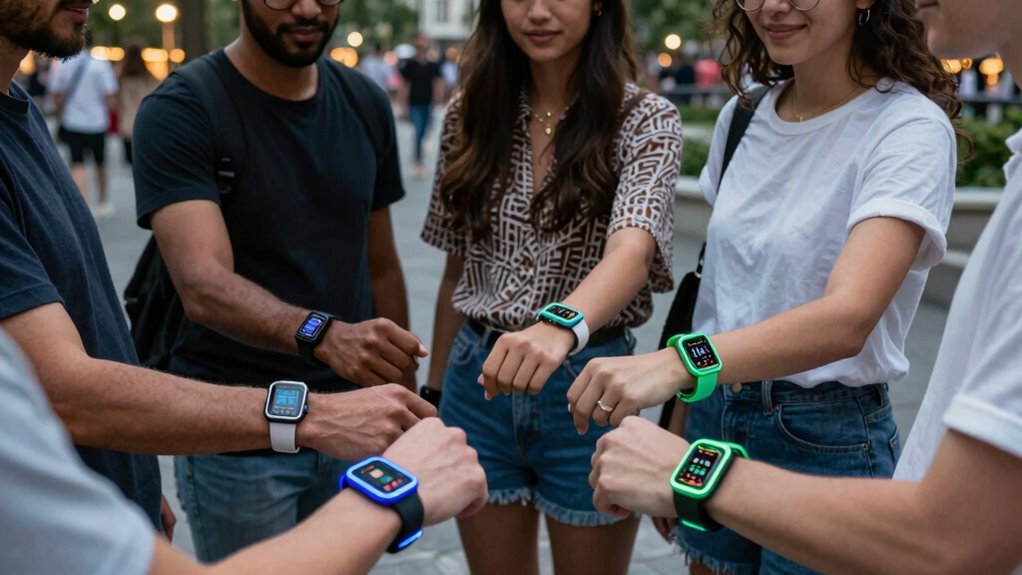

Wearing visible tech now says more than just you’re connected; it signals your social status, health priorities, and personal identity. Devices like smartwatches and earbuds act as social signals, shaping how others see your professionalism and lifestyle. They help you fit into groups or stand out. But remember, these tech choices also reveal your routines and habits, raising privacy concerns. If you want to understand how this shape our social world, keep exploring the details below.
Key Takeaways
- Wearing visible tech now signals social status, lifestyle, and personal identity beyond functionality.
- Visible devices influence perceptions of professionalism, health consciousness, and modernity in social interactions.
- Tech choices as fashion statements help individuals fit into or stand out within social groups.
- Displayed tech can reveal personal habits, routines, and privacy risks to others.
- Balancing self-expression with privacy concerns is essential as wearable tech becomes more integrated and visible.

In today’s digital age, wearing visible tech has shifted from a purely functional choice to a powerful social signal. You’re no longer just using gadgets for convenience; you’re communicating something about yourself through what you wear. When you sport a smartwatch or earbuds that everyone can see, it’s easier for others to interpret your lifestyle, priorities, and even your social status. This visibility turns your tech into a form of social signaling, allowing you to project an image of being tech-savvy, health-conscious, or connected. But with this visibility comes important considerations—particularly around privacy implications. As your devices become more integrated into your daily life and more visible to those around you, you’re exposing more than just your style; you’re revealing snippets of your habits, routines, and even personal data.
The social signaling aspect is pretty clear: your choice of visible tech can send subtle messages about your identity. Wearing a sleek smartwatch might suggest you’re into fitness or keeping up with the latest trends. Using wireless earbuds openly might indicate you’re someone who values convenience and connectivity. These signals can help you fit in with certain groups or stand out within others. But it’s not just about fitting in; it’s about shaping how others perceive you. Your visible tech choices become part of your personal brand, influencing social interactions and perceptions. People might judge your professionalism, health consciousness, or tech-savviness based on what you wear and how you wear it.
However, as you embrace this form of expression, you should also be mindful of privacy implications. When your devices are visible and connected, they often collect data continuously—your location, activity, and even conversations. This data can be accessed or intercepted if you’re not careful, raising concerns about who can see what you’re doing and why. Wearing visible tech makes it easier for others to observe your habits, but it also exposes you to potential data breaches or targeted advertising. Advances in sensor technology have also enhanced the capabilities of wearable devices, making them more integrated into your daily routines but also raising additional privacy concerns. It’s a trade-off: you gain social capital and seamlessly communicate your identity, but you also risk revealing more than you intend. Being aware of these privacy implications helps you decide how much you want to share and when to keep certain aspects of your life private.
Furthermore, as technology continues to evolve, understanding the privacy implications of wearable devices becomes increasingly important to safeguard your personal information. Staying informed about the latest developments in digital privacy can help you make better choices about when and how to wear visible tech. Ultimately, your visible tech choices are a form of self-expression and social signaling, but they also come with responsibilities. Balancing the desire to project a certain image with protecting your personal information is key. As technology continues to evolve, so will the way you communicate your identity through what you wear—making it all the more important to stay informed and intentional about your digital presence.

Military Smart Watches for Men(Answer/Make Calls), 1.39" HD Fitness Watch, 24/7 Heart Rate Sleep Monitor, Smart Watch for Men,114+ Sport Modes, IP68 Waterproof Smartwatch for Android iOS, 30Day, Black
【Bluetooth Calling & AI Voice Assistant】 Stay connected hands-free with advanced Bluetooth 5.3, a HIFI speaker, and dual…
As an affiliate, we earn on qualifying purchases.
As an affiliate, we earn on qualifying purchases.
Frequently Asked Questions
How Do Different Cultures Perceive Visible Tech Accessories?
You’ll find that different cultures see visible tech accessories as expressions of cultural identity or fashion statements. In some regions, they symbolize modernity and innovation, while in others, they might challenge traditional norms. You may notice that in certain societies, wearing visible tech signifies status or belonging, whereas in more conservative cultures, it could be perceived as disruptive or inappropriate. Your choice to wear visible tech reflects how you navigate and express your cultural identity.
What Are the Privacy Concerns Associated With Visible Wearable Technology?
Imagine your visible tech as a lighthouse, shining bright in a busy harbor. It attracts attention, but also risks exposing your private information. You face privacy concerns like data security breaches and surveillance risks, where your personal data could be collected without consent. To protect yourself, stay vigilant about who accesses your information, use strong security measures, and be mindful of how openly you wear your tech, avoiding unnecessary exposure.
How Does Visible Tech Influence Social Interactions in Professional Settings?
Visible tech influences your social interactions by altering non-verbal cues, which can affect how others perceive you. When you wear these devices, you might seem more connected and informed, fostering social acceptance in professional settings. However, it can also create barriers if others see your tech use as distracting or impersonal. Balancing visibility and engagement helps you navigate these interactions while maintaining professionalism and positive impressions.
Are There Age-Related Differences in Acceptance of Visible Tech?
You’ll find that acceptance of visible tech varies across generations, reflecting differing attitudes and tech adoption rates. Younger people tend to embrace visible tech more readily, seeing it as a norm and a form of self-expression. In contrast, older generations might be more hesitant, viewing it as intrusive or unnecessary. These age-related differences influence how openly individuals wear and display tech devices, shaping social interactions across age groups.
How Does Visible Tech Impact Personal Identity and Self-Expression?
They say “you are what you wear,” and visible tech influences your personal identity and self-expression. By showcasing your technological identity, you build personal branding that reflects your values and style. Wearing tech openly makes a statement, empowering you to communicate confidence and innovation. It’s a modern form of self-expression, turning gadgets into symbols of who you are and how you want to be perceived by others.

Wireless Earbuds, Bluetooth 5.3 Headphones with Makeup Mirror Charging Case, Semi-Transparent Design, 30H Playback, IP54 Waterproof in-Ear Ear buds, Clear Calls Earphones for Sports Workout, Beige
[Unique Built-in Mirror Design]: Unlike traditional bulky cases, this charging case features a built-in mirror, allowing you to…
As an affiliate, we earn on qualifying purchases.
As an affiliate, we earn on qualifying purchases.
Conclusion
As you embrace visible tech, you’re not just showcasing gadgets—you’re making a statement about your identity and values. It’s a way to connect, express, and even challenge social norms. But have you ever wondered if your tech choices truly reflect who you are or simply follow trends? Wearing visible tech now shapes social perceptions, urging you to contemplate how your accessories speak louder than words in today’s interconnected world.

Smart Watch Health Fitness Tracker with 24/7 Heart Rate, Blood Oxygen Blood Pressure Sleep Monitor, 115 Sports Modes, Step Calorie Counter Pedometer IP68 Waterproof for Android and iPhone Women Men
【Health Metrics Monitoring】These fitness watches for women and men pack 24/7 heart rate, blood oxygen, blood pressure monitors…
As an affiliate, we earn on qualifying purchases.
As an affiliate, we earn on qualifying purchases.

Smart Watch for Men/Women, Answer/Make Call, 1.85" AMOLED Always-On Display Screen Smartwatch for iPhone & Android, 3ATM Waterproof Fitness Tracker with Heart Rate/Sleep/SpO2 Monitor, 120+ Sport Modes
【Make Call & Message Notification】Enjoy crystal-clear Bluetooth calls directly from your wrist while driving, cooking, or commuting. Stay…
As an affiliate, we earn on qualifying purchases.
As an affiliate, we earn on qualifying purchases.