
Among these mirrorless cameras for beginners, I’d put the Canon EOS R50 with the RF-S 18-45mm lens first for its approachable controls, modern autofocus, and room to grow. The Sony a6400 is a strong alternative for buyers who prioritize subject tracking, while the Canon EOS R100 kits keep the learning curve and feature set simpler. The main tradeoffs are ease of use versus room to grow, and whether a bundle’s extra lens or accessories are more useful than a stronger camera body. Read on for the full breakdown of what each option suits, where the kits differ, and which one matches your first-camera priorities.

Get business pricing on tech for your team
- Business-only prices and quantity discounts
- Tax-exempt purchasing
- Multiple users, one account, clear invoices
Key Takeaways
- The EOS R50 is the strongest all-around starter in this lineup, pairing beginner-friendly handling with a broader set of modern features than the R100.
- The EOS R100 appears in five configurations; the camera body is broadly similar, so choose among the listings by checking whether you need a basic lens kit, a double-zoom kit, or bundled accessories.
- The Sony a6400 is the clearest alternative for autofocus-focused buyers, but its controls and menus may feel less welcoming to someone learning photography from scratch.
- The EOS R50 V is a video-oriented choice, while the standard EOS R50 is the more balanced pick for stills and mixed use.
- The Sony a7 IV is a major step beyond a typical beginner kit: its full-frame body and 24-105mm lens offer versatility, but the size and complexity can be more than a new photographer needs.
| Canon EOS M50 Mirrorless Camera Kit with EF-M 15–45mm Lens, 4K Video, Black (Renewed) |  | Best for a Flexible Beginner Setup | Sensor: 24.1MP APS-C CMOS | Processor: DIGIC 8 | Included lens: EF-M 15–45mm; 24–72mm equivalent | VIEW ON AMAZON | See Our Full Breakdown |
| Sony Alpha a6400 Mirrorless Camera with 16–50mm Lens, Black |  | Best for Fast-Moving Subjects | Model: ILCE-6400L/B | Sensor: APS-C Exmor RS CMOS listed; product details also conflict by listing 1-inch | Included lens: 16–50mm | VIEW ON AMAZON | See Our Full Breakdown |
| Canon EOS R100 Mirrorless Camera with RF-S 18-45mm Lens and 64GB Memory Card Bundle |  | Best Straightforward Starter Bundle | Sensor: 24.1MP APS-C CMOS | Processor: DIGIC 8 | Autofocus: Dual Pixel CMOS AF with human face and eye detection | VIEW ON AMAZON | See Our Full Breakdown |
| Canon EOS R50 V Mirrorless Camera with RF-S 14-30mm Lens Bundle |  | Best for Beginner Video Creators | Sensor: 24.2MP APS-C CMOS | Included lens and mount: Canon RF-S 14–30mm f/4–6.3 IS STM PZ; Canon RF | Video: Uncropped 4K at 30p; Full HD at 120p | VIEW ON AMAZON | See Our Full Breakdown |
| Sony Alpha 7 IV Full-frame Mirrorless Interchangeable Lens Camera with Sony FE 24-105mm f/4 G OSS Standard Zoom Lens (SEL24105G/2) |  | Best Premium Step-Up | Sensor: 33MP full-frame Exmor R back-illuminated CMOS | Processor: BIONZ XR | Video: 4K up to 60p, 10-bit 4:2:2 with full pixel readout | VIEW ON AMAZON | See Our Full Breakdown |
| Canon EOS R50 Mirrorless Camera with RF-S 18-45mm f/4.5-6.3 STM Lens Kit | 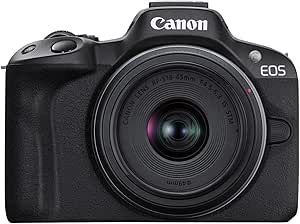 | Best Overall for Beginner Photo and Video | Sensor: 24.2MP APS-C CMOS | Processor: DIGIC X | Video: 6K-oversampled uncropped 4K up to 30 fps; Full HD up to 120 fps | VIEW ON AMAZON | See Our Full Breakdown |
| Canon EOS R100 Mirrorless Camera with 18–45mm Lens | 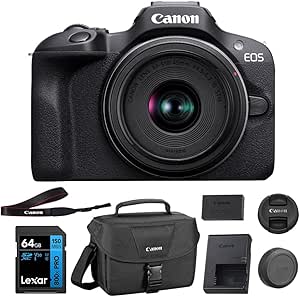 | Best Value Starter Bundle | Sensor: 24.1MP APS-C CMOS | Processor: DIGIC 8 | Video: 4K up to 24 fps; Full HD up to 60 fps; HD up to 120 fps | VIEW ON AMAZON | See Our Full Breakdown |
| Canon EOS R50 Mirrorless Camera with RF-S 18-45mm Lens Bundle |  | Best Beginner Bundle with Extras | Sensor: 24.2MP APS-C CMOS | Included lens: RF-S 18-45mm f/4.5-6.3 IS STM | Video: Uncropped 4K up to 30 fps, oversampled from 6K | VIEW ON AMAZON | See Our Full Breakdown |
| Canon EOS R100 Mirrorless Camera Double Zoom Lens Kit |  | Best for Beginner Wildlife and Distant Subjects | Camera: Canon EOS R100 mirrorless | Standard zoom lens: RF-S 18-45mm f/4.5-6.3, approximately 29-72mm equivalent on APS-C | Telephoto lens: RF 75-300mm f/4-5.6, approximately 120-480mm equivalent on APS-C | VIEW ON AMAZON | See Our Full Breakdown |
| Canon EOS R100 Mirrorless Camera with RF-S 18-45mm Lens Bundle |  | Best Simple Still-Photography Kit | Sensor: 24.1MP APS-C CMOS | Processor: DIGIC 8 | Included lens: Canon RF-S 18-45mm f/4.5-6.3 IS STM | VIEW ON AMAZON | See Our Full Breakdown |
| Canon EOS R100 Mirrorless Camera with RF-S 18-45mm Lens |  | Best Simple Starter Kit | Mount: Canon RF | Sensor: 24.1 MP APS-C CMOS | Processor: DIGIC 8 | VIEW ON AMAZON | See Our Full Breakdown |
| mirrorless cameras for beginner | Sensor | Video | Included lens | Autofocus |
|---|---|---|---|---|
| Canon EOS M50 Mirrorless Camer | 24.1MP APS-C CMOS | UHD 4K; HD slow motion up to 120p | EF-M 15–45mm; 24–72mm equivalent | Dual Pixel CMOS AF and Eye Detection AF |
| Sony Alpha a6400 Mirrorless Ca | APS-C Exmor RS CMOS listed; product details also conflict by listing 1-inch | 4K | 16–50mm | — |
| Canon EOS R100 Mirrorless Came | 24.1MP APS-C CMOS | Cropped 4K up to 24 fps; Full HD up to 60 fps | — | Dual Pixel CMOS AF with human face and eye detection |
| Canon EOS R50 V Mirrorless Cam | 24.2MP APS-C CMOS | Uncropped 4K at 30p; Full HD at 120p | — | Dual Pixel CMOS AF with eye, face, and subject detection |
| Sony Alpha 7 IV Full-frame Mir | 33MP full-frame Exmor R back-illuminated CMOS | 4K up to 60p, 10-bit 4:2:2 with full pixel readout | Sony FE 24–105mm f/4 G OSS | — |
| Canon EOS R50 Mirrorless Camer | 24.2MP APS-C CMOS | 6K-oversampled uncropped 4K up to 30 fps; Full HD up to 120 fps | RF-S 18-45mm f/4.5-6.3 STM | Dual Pixel CMOS AF II, 651 zones with 100% coverage |
| Canon EOS R100 Mirrorless Came | 24.1MP APS-C CMOS | 4K up to 24 fps; Full HD up to 60 fps; HD up to 120 fps | 18-45mm | Dual Pixel CMOS AF with up to 143 zones |
| Canon EOS R50 Mirrorless Camer | 24.2MP APS-C CMOS | Uncropped 4K up to 30 fps, oversampled from 6K | RF-S 18-45mm f/4.5-6.3 IS STM | Dual Pixel CMOS AF II |
| Canon EOS R100 Mirrorless Came | — | — | — | — |
| Canon EOS R100 Mirrorless Came | 24.1MP APS-C CMOS | 4K 24p with crop; Full HD 60p | Canon RF-S 18-45mm f/4.5-6.3 IS STM | Dual Pixel CMOS AF with 143 zones |
| Canon EOS R100 Mirrorless Came | 24.1 MP APS-C CMOS | 4K at up to 24 fps; Full HD at up to 60 fps | RF-S 18–45mm F4.5–6.3 IS STM | Dual Pixel CMOS AF with face and eye detection |
More Details on Our Top Picks
Canon EOS M50 Mirrorless Camera Kit with EF-M 15–45mm Lens, 4K Video, Black (Renewed)
The EOS M50 gives beginners a helpful mix of approachable controls and shooting aids: its vari-angle touchscreen makes framing from high or low angles easier, while the electronic viewfinder offers a familiar way to compose outdoors. The included 15–45mm lens covers everyday scenes, and Dual Pixel autofocus with Eye Detection can help keep people in focus. Compared with the more basic Canon EOS R100, the M50 has a movable screen and HD 120p slow motion, which give new photographers more room to experiment. Its tradeoffs are meaningful: 4K is limited to 24p, and the camera is renewed, so condition may matter to buyers who want a new body. It also belongs to Canon’s older EF-M system rather than the R mount used by the R100.
Pros:- 24.1MP APS-C sensor gives room for detailed stills and moderate cropping.
- Vari-angle touchscreen makes self-framing and awkward shooting angles easier.
- Dual Pixel autofocus and Eye Detection AF help track people.
- HD 120p slow motion adds a creative option beyond standard video.
Cons:- 4K recording is limited to 24p.
- Renewed condition may not suit buyers seeking a new camera.
- EF-M mount differs from the RF system used by newer Canon options such as the EOS R100.
Best for: First-time photographers who want a viewfinder, a movable touchscreen, and a kit lens for everyday photos and occasional slow-motion clips.
Not ideal for: Buyers who want uncropped, higher-frame-rate 4K or a newer Canon RF-mount system; the renewed condition may also be unsuitable if you prefer new equipment.
- Sensor:24.1MP APS-C CMOS
- Processor:DIGIC 8
- Included lens:EF-M 15–45mm; 24–72mm equivalent
- Video:UHD 4K; HD slow motion up to 120p
- Autofocus:Dual Pixel CMOS AF and Eye Detection AF
- Display and viewfinder:3-inch vari-angle touchscreen LCD; electronic OLED viewfinder
- Connectivity:Wi-Fi, NFC, Bluetooth, HDMI, USB, and 3.5mm microphone input
- Weight and condition:13.7 oz; renewed
Our verdict“Choose the renewed M50 if you want a viewfinder and flexible screen for learning photography, but skip it if 4K video or a current Canon lens system is your priority.”
Sony Alpha a6400 Mirrorless Camera with 16–50mm Lens, Black
The Sony a6400 suits a beginner who expects to photograph children, pets, or action and wants autofocus that can help keep up. Real-time eye autofocus and burst shooting up to 11 fps give it a speed advantage over the Canon EOS R100, whose listed continuous rate is 6.5 fps. The included 16–50mm lens makes it ready for everyday shooting, while the tilting LCD can help with waist-level framing and casual vlogging. That screen does not articulate like the EOS M50’s vari-angle display, so it is less flexible when filming yourself. There is also a specification conflict in the supplied product details: the description lists an APS-C camera, while another sensor detail says 1-inch. I would verify the exact sensor information before buying, especially if sensor size is a deciding factor.
Pros:- Real-time eye autofocus helps keep portraits and moving subjects in focus.
- Up to 11 fps continuous shooting is faster than the listed rate of the Canon EOS R100.
- Included 16–50mm lens covers common everyday scenes.
- Tilting LCD supports low-angle framing and some vlogging setups.
Cons:- Supplied sensor information conflicts between APS-C and 1-inch, so buyers should verify the listing.
- Tilting screen is less flexible for self-recording than the EOS M50’s vari-angle display.
- The supplied details do not specify video frame rates or autofocus features beyond real-time eye AF.
Best for: Beginners photographing active family members, pets, or sports who value eye autofocus and a fast burst rate in a kit-lens setup.
Not ideal for: Self-filming beginners who need a fully articulating screen, or buyers unwilling to confirm the conflicting sensor details before purchase.
- Model:ILCE-6400L/B
- Sensor:APS-C Exmor RS CMOS listed; product details also conflict by listing 1-inch
- Included lens:16–50mm
- Lens mount:Sony E-mount
- Video:4K
- Continuous shooting:Up to 11 fps
- Display:Tiltable LCD
- Included accessories:Rechargeable battery, AC adaptor, shoulder strap, body cap, accessory shoe cap, eyepiece cup, and micro USB cable
Our verdict“Pick the a6400 for fast autofocus and burst shooting if you can verify the sensor listing and do not need a fully articulating screen.”
Canon EOS R100 Mirrorless Camera with RF-S 18-45mm Lens and 64GB Memory Card Bundle
The EOS R100 bundle is a sensible entry point for someone who wants a camera, lens, memory card, and basic carrying accessories together. Its 24.1MP APS-C sensor and human face and eye detection give beginners a useful foundation for portraits and family photos, while the RF-S 18–45mm lens covers common snapshots without requiring an immediate lens purchase. The included guide and bag also make this bundle more beginner-ready than the a6400 kit, which comes with a lens but not the same listed learning accessories. The simpler design has limits: its fixed LCD cannot flip out for self-recording or awkward angles, and 4K is cropped and capped at 24 fps. Compared with the EOS M50, it uses Canon’s RF mount, but it gives up the movable screen and HD 120p slow motion.
Pros:- 24.1MP APS-C sensor supports detailed everyday stills.
- Dual Pixel autofocus includes human face and eye detection.
- RF-S 18–45mm lens provides a useful starting range for general photography.
- Bundle includes a 64GB memory card, bag, and photography guide.
Cons:- Fixed LCD is limiting for self-recording and high- or low-angle compositions.
- 4K video is cropped and limited to 24 fps.
- The listed 6.5 fps burst rate is more modest than the Sony a6400’s up-to-11-fps rate.
Best for: New photographers who want a Canon RF-mount camera, an everyday zoom, and basic storage and carrying accessories in one kit.
Not ideal for: Beginners who plan to vlog, need a screen that moves for varied angles, or want uncropped 4K video.
- Sensor:24.1MP APS-C CMOS
- Processor:DIGIC 8
- Autofocus:Dual Pixel CMOS AF with human face and eye detection
- Continuous shooting:Up to 6.5 fps
- Video:Cropped 4K up to 24 fps; Full HD up to 60 fps
- Included lens and mount:RF-S 18–45mm F4.5–6.3 IS STM; Canon RF
- Display:3-inch fixed LCD
- Included bundle items:64GB SDHC memory card, camera bag, photography guide, strap, battery, charger, and caps
Our verdict“Choose this R100 bundle if you want a simple Canon RF starter kit with useful accessories, but look elsewhere for flexible framing or stronger video options.”
Canon EOS R50 V Mirrorless Camera with RF-S 14-30mm Lens Bundle
The EOS R50 V bundle is the video-focused choice here for beginners who want a camera that can grow with a channel or travel vlog. Its uncropped 4K at 30p avoids the framing penalty found on the EOS R100, and Full HD at 120p opens the door to slow-motion clips. The articulating screen and subject detection also make it easier to frame yourself and keep a person in focus. The included stabilized 14–30mm power-zoom lens is a wider starting point than the R100’s 18–45mm lens, which can help when filming at arm’s length or in tight spaces. That video orientation involves compromises: the supplied details omit an electronic viewfinder, the camera is listed at an unusually heavy 4.4 pounds, and it is not water resistant. Check the weight and kit details before choosing it for travel.
Pros:- Uncropped 4K at 30p preserves the chosen framing for video.
- Articulating touchscreen supports self-recording and varied camera angles.
- Eye, face, and subject detection help maintain focus on people and moving subjects.
- Stabilized 14–30mm power-zoom lens is suited to wide scenes and self-filming.
Cons:- Listed weight of 4.4 pounds could make it less appealing for day-long carrying.
- Not water resistant, limiting use in rain or wet outdoor settings.
- The supplied specs do not list an electronic viewfinder.
Best for: Beginner vloggers and travel creators who prioritize uncropped 4K, a flip-out screen, and a wide stabilized lens over a traditional viewfinder.
Not ideal for: Photographers who want a lightweight walk-around camera, an electronic viewfinder, or gear suited to wet conditions.
- Sensor:24.2MP APS-C CMOS
- Included lens and mount:Canon RF-S 14–30mm f/4–6.3 IS STM PZ; Canon RF
- Video:Uncropped 4K at 30p; Full HD at 120p
- Autofocus:Dual Pixel CMOS AF with eye, face, and subject detection
- Screen:Articulating capacitive LCD
- Image stabilization:Optical stabilization
- Connectivity:USB-C
- Weight and weather protection:Listed at 4.4 pounds; not water resistant
- Included accessories:64GB memory card, battery, charger, camera cover, strap, lens caps, and shoulder bag
Our verdict“Choose the R50 V if video is your main goal and you want uncropped 4K with a self-framing screen, but verify the listed weight before buying for travel.”
Sony Alpha 7 IV Full-frame Mirrorless Interchangeable Lens Camera with Sony FE 24-105mm f/4 G OSS Standard Zoom Lens (SEL24105G/2)
The Sony Alpha 7 IV is the premium step-up for a beginner who already expects to pursue photography or video seriously, rather than the simplest first camera. Its 33MP full-frame sensor, in-body stabilization, and bundled 24–105mm f/4 lens provide a broader toolkit for low-light scenes, portraits, and travel than the APS-C EOS R100. The lens’s constant aperture means exposure stays consistent as you zoom, which can make learning manual settings less confusing. It also records 10-bit 4K at up to 60p, far beyond the beginner-focused options here. That capability comes with real costs in complexity and carry weight: the body and lens are bulkier than the Canon kits, and a new photographer may not need its advanced video features. The supplied listing also gives an unusually large 7.5-inch screen figure, so verify that detail before purchase.
Pros:- 33MP full-frame sensor offers more resolution than the APS-C Canon EOS R100.
- In-body stabilization and optical lens stabilization can help reduce camera shake.
- 10-bit 4K at up to 60p offers more video control than the other listed beginner-focused options.
- 24–105mm f/4 lens provides a broad zoom range with a constant maximum aperture.
Cons:- Body and lens are relatively bulky compared with the EOS R100 and EOS R50 V kits.
- Advanced full-frame and video features may add complexity for a first-time user.
- The supplied 7.5-inch screen specification is unusual and should be verified.
Best for: Committed beginners who plan to build a serious photography or video kit and want full-frame image quality, stabilization, and a versatile constant-aperture zoom.
Not ideal for: Casual learners seeking a compact, simple first camera; the full-frame body and zoom are bulkier and may offer more capability than they need.
- Sensor:33MP full-frame Exmor R back-illuminated CMOS
- Processor:BIONZ XR
- Video:4K up to 60p, 10-bit 4:2:2 with full pixel readout
- Included lens:Sony FE 24–105mm f/4 G OSS
- Lens aperture and stabilization:Constant f/4 aperture; optical stabilization
- Image stabilization:In-body and optical lens stabilization
- Continuous shooting:10 fps
- Memory slots:Two SD slots
- Display:LCD listed as 7.5 inches, 1920 × 1080 resolution
Our verdict“Choose the Alpha 7 IV if you are committed to growing into a premium full-frame system, but pick a smaller APS-C kit if ease and portability matter more.”
Canon EOS R50 Mirrorless Camera with RF-S 18-45mm f/4.5-6.3 STM Lens Kit
I’d put the Canon EOS R50 first for beginners who want one camera to learn on for both stills and video. Its 24.2MP APS-C sensor and broad Dual Pixel AF II coverage help keep portraits, pets, and moving subjects in focus without requiring advanced technique. The vari-angle touchscreen also makes framing yourself or shooting from low angles less awkward. Compared with the more basic Canon EOS R100, the R50 offers faster bursts and more capable 4K recording, which gives a new owner more room to explore action and video. The tradeoff is that its feature set may be more than a still-photo beginner needs, while the included 18-45mm lens has a modest variable aperture for dim rooms or strong background blur. No in-body stabilization is listed, so steady video may call for careful handling or a stabilized lens.
Pros:- 24.2MP APS-C sensor gives room to crop photos while retaining useful detail.
- Dual Pixel CMOS AF II covers the frame and tracks subjects across varied compositions.
- Oversampled uncropped 4K up to 30 fps and Full HD up to 120 fps support varied video projects.
- Vari-angle touchscreen and 2.36-million-dot EVF suit both self-filming and eye-level photography.
Cons:- No in-body image stabilization is specified.
- The kit lens’s f/4.5-6.3 maximum aperture can limit low-light flexibility and background separation.
- Battery-life details are not provided, making extended shooting harder to plan.
Best for: First-time camera buyers who want dependable subject tracking, a useful viewfinder, and room to learn both photography and vlogging.
Not ideal for: Beginners focused mainly on low-light shooting or handheld video who want in-body stabilization or a brighter kit lens.
- Sensor:24.2MP APS-C CMOS
- Processor:DIGIC X
- Video:6K-oversampled uncropped 4K up to 30 fps; Full HD up to 120 fps
- Continuous shooting:Up to 12 fps mechanical; 15 fps electronic
- Autofocus:Dual Pixel CMOS AF II, 651 zones with 100% coverage
- Viewfinder:2.36-million-dot EVF
- Display:Vari-angle Clear View LCD II touchscreen
- Included lens:RF-S 18-45mm f/4.5-6.3 STM
- Connectivity:Bluetooth and Wi-Fi
Our verdict“Choose the R50 kit if you want a beginner-friendly camera that balances strong autofocus, stills, and capable video better than the simpler R100.”
Canon EOS R100 Mirrorless Camera with 18–45mm Lens
The Canon EOS R100 keeps the first-camera setup straightforward: an APS-C sensor, a standard zoom, and a camera bag plus memory card in the bundle. Its 24.1MP sensor gives beginners a solid starting point for family photos, travel, and learning interchangeable-lens basics. Face, eye, animal, and vehicle detection can help the camera find common subjects without making autofocus a project of its own. Compared with the Canon EOS R50, this model is less suited to fast action and video-heavy use: its burst rate is lower, and 4K tops out at 24 fps. That simpler ceiling may be fine for casual clips, but it leaves less flexibility for motion or slow-down effects. I’d favor it over the R50 only when the included bag and card, compact body, and basic shooting needs matter more than advanced video and speed.
Pros:- 24.1MP APS-C sensor supports detailed everyday photographs.
- Face, eye, animal, and vehicle detection covers common beginner shooting subjects.
- Compact, lightweight body is easier to carry than a more feature-rich setup.
- Bundle includes a camera bag and 64GB Lexar UHS-I SD card.
Cons:- 4K video is limited to 24 fps.
- The stated 6.5 fps burst rate applies in One-Shot AF, limiting its appeal for tracking action.
- Compared with the EOS R50, it has a less advanced processor and more limited video capability.
Best for: New photographers seeking a compact Canon kit for everyday stills, with a bag and memory card included to get started.
Not ideal for: Beginners who plan to film frequently, shoot fast-moving sports, or want more responsive continuous shooting than 6.5 fps in One-Shot AF.
- Sensor:24.1MP APS-C CMOS
- Processor:DIGIC 8
- Video:4K up to 24 fps; Full HD up to 60 fps; HD up to 120 fps
- Autofocus:Dual Pixel CMOS AF with up to 143 zones
- Subject detection:Face, eye, animal, and vehicle detection
- Continuous shooting:Up to 6.5 shots per second in One-Shot AF
- Included lens:18-45mm
- Included accessories:Camera bag and 64GB Lexar UHS-I SD card
Our verdict“Pick the R100 bundle for everyday photography and a ready-to-carry starter kit, but choose the R50 if video or action shooting is a priority.”
Canon EOS R50 Mirrorless Camera with RF-S 18-45mm Lens Bundle
This EOS R50 bundle pairs the same capable camera basics as the standard R50 kit with a travel case, memory card, and extra accessories. That makes it a practical pick for a beginner who wants a more complete carry-and-store setup from the start. Its uncropped 6K-oversampled 4K and 15 fps continuous shooting distinguish it from the lower-tier Canon EOS R100, especially for someone who expects to try both video and fast-moving subjects. The articulating screen also makes self-recording easier. The bundle does not change the camera’s core limitations, though: the included 18-45mm lens opens only to f/4.5-6.3, so it is not an ideal answer for dim interiors or pronounced background blur. I’d compare its accessory package with the separate R50 kit before choosing; the camera is the draw, while the extras matter most if you will use them.
Pros:- 24.2MP APS-C sensor and Dual Pixel CMOS AF II provide a strong base for learning photography.
- Uncropped 4K up to 30 fps is more flexible than the R100’s 24 fps 4K mode.
- Up to 15 fps continuous shooting helps with action and candid moments.
- Bundle includes a travel case, 64GB SDHC card, cleaning cloth, charger, and battery.
Cons:- The 18-45mm lens’s f/4.5-6.3 aperture range limits low-light and shallow-depth-of-field options.
- The additional accessories add value only if they match the buyer’s needs and quality expectations.
- No in-body image stabilization is listed.
Best for: Beginners who want the R50’s autofocus and video features plus a travel case and memory card in one bundle.
Not ideal for: Photographers who need a brighter lens for indoor events or who already own a compatible memory card and carrying case.
- Sensor:24.2MP APS-C CMOS
- Included lens:RF-S 18-45mm f/4.5-6.3 IS STM
- Video:Uncropped 4K up to 30 fps, oversampled from 6K
- Autofocus:Dual Pixel CMOS AF II
- Continuous shooting:Up to 15 fps
- Display:3-inch articulating LCD
- Connectivity:Bluetooth, Wi-Fi, and Micro-HDMI
- Weight:1.1 lb
- Bundle accessories:Travel case, 64GB SDHC memory card, cleaning cloth, charger, and battery
Our verdict“Choose this R50 bundle if you want the camera’s faster autofocus and stronger video alongside a supplied travel case and card.”
Canon EOS R100 Mirrorless Camera Double Zoom Lens Kit
The R100 Double Zoom Lens Kit is the most reach-focused option here: alongside the everyday 18-45mm zoom, it includes a 75-300mm telephoto lens that gives beginners a way to frame distant wildlife, outdoor sports, or stage performances more tightly. That flexibility is its main advantage over the single-lens R100 bundle, which is easier to carry but cannot reach as far without another lens. The extra reach comes with a learning curve: switching lenses takes time, and the shoulder bag has to carry the added bulk. The supplied information does not list the camera’s detailed video, autofocus, or burst specifications, so I would not choose this kit over the EOS R50 for a video-first setup or fast, confident subject tracking. It makes the most sense when telephoto framing is the clear reason to buy.
Pros:- Includes both a standard zoom and a telephoto zoom for varied framing.
- 75-300mm lens reaches approximately 120-480mm equivalent on APS-C bodies.
- 18-45mm lens covers common everyday and travel scenes.
- Shoulder Bag 200 ES has space for two lenses.
Cons:- Carrying and changing two lenses is more involved than using the single-lens R100 kit.
- The telephoto range is less useful for wide indoor scenes and close, casual photography.
- The supplied product details do not specify the camera’s video, autofocus, or continuous-shooting performance.
Best for: Beginners who want one kit for everyday photos and occasional distant wildlife, outdoor events, or field sports.
Not ideal for: Travelers prioritizing a small, simple setup, or video-focused beginners who want the R50’s specified 4K and autofocus capabilities.
- Camera:Canon EOS R100 mirrorless
- Standard zoom lens:RF-S 18-45mm f/4.5-6.3, approximately 29-72mm equivalent on APS-C
- Telephoto lens:RF 75-300mm f/4-5.6, approximately 120-480mm equivalent on APS-C
- Included bag:Shoulder Bag 200 ES
- Lens count:Two zoom lenses
- Camera mount:Canon RF
Our verdict“Choose this R100 kit if photographing distant subjects is worth carrying a second lens; otherwise, the simpler single-lens R100 bundle is easier to manage.”
Canon EOS R100 Mirrorless Camera with RF-S 18-45mm Lens Bundle
This EOS R100 bundle suits a beginner who wants the basics in one package without paying for the R50’s faster bursts and more advanced video features. The 24.1MP APS-C sensor, automatic shooting modes, and Dual Pixel autofocus make everyday family and travel photography approachable, while the included image-stabilized 18-45mm lens can help reduce blur from small hand movements. Compared with the R100 Double Zoom Lens Kit, this version is lighter in ambition and simpler to manage: one lens covers general scenes, but it cannot frame distant subjects as tightly. Its 4K recording is limited to 24p with a crop, and the modest lens aperture is not ideal for dim rooms. The listed body weight is 4.2 lb, a figure beginners should check against their carrying needs, particularly if portability is a priority.
Pros:- 24.1MP APS-C sensor provides detailed images for everyday use.
- Dual Pixel autofocus with 143 zones supports dependable beginner-level focusing.
- The included RF-S 18-45mm lens has image stabilization.
- Bundle includes a 64GB memory card and camera bag.
Cons:- 4K recording is limited to 24p and uses a crop.
- The f/4.5-6.3 kit lens aperture can constrain indoor shooting and background blur.
- The listed 4.2 lb weight may be cumbersome for buyers expecting a very light carry kit.
Best for: First-time still photographers who want automatic modes, a stabilized everyday zoom, and a card and bag included.
Not ideal for: Video-first creators, beginners who need uncropped 4K, or buyers who want a compact setup for long days of carrying.
- Sensor:24.1MP APS-C CMOS
- Processor:DIGIC 8
- Included lens:Canon RF-S 18-45mm f/4.5-6.3 IS STM
- Autofocus:Dual Pixel CMOS AF with 143 zones
- Video:4K 24p with crop; Full HD 60p
- Continuous shooting:Up to 6.5 fps
- Viewfinder:2.36-million-dot OLED electronic viewfinder
- Connectivity:Wi-Fi and Bluetooth
- Included accessories:64GB memory card and camera bag
Our verdict“Pick this R100 bundle for straightforward everyday stills and an included stabilized lens, but step up to the R50 for more capable video and faster shooting.”
Canon EOS R100 Mirrorless Camera with RF-S 18-45mm Lens
The EOS R100 makes sense for a first-time buyer who wants a familiar, low-fuss route into interchangeable-lens photography. Its 24.1 MP APS-C sensor and included 18–45mm zoom cover everyday scenes, family photos, and travel without requiring an extra lens to get started. Face and eye detection can help keep people in focus, while the compact body is easier to carry than the Sony a6400 kit. The tradeoff is a fixed rear screen, which is less convenient for self-recording or shots from awkward angles, and 4K tops out at 24 fps. Compared with the Canon EOS R50, the R100 is the more pared-back choice: its core still-photo kit is approachable, but buyers who want a more flexible screen or more room to grow should look at the R50 instead.
Pros:- 24.1 MP APS-C sensor offers ample resolution for everyday photography
- Included RF-S 18–45mm lens covers common wide-to-short-telephoto framing
- Compact body is convenient for travel and daily carry
- Face and eye detection helps keep portraits in focus
Cons:- Fixed LCD limits framing flexibility for selfies, vlogging, and low-angle shots
- 4K recording is limited to 24 fps
- The more basic feature set offers less room to grow than the Canon EOS R50
Best for: First-time photographers who want a compact Canon body, a standard zoom lens, and straightforward tools for everyday still photos.
Not ideal for: Vloggers and video-focused beginners who need a screen that faces forward or smoother 4K frame rates.
- Mount:Canon RF
- Sensor:24.1 MP APS-C CMOS
- Processor:DIGIC 8
- Included lens:RF-S 18–45mm F4.5–6.3 IS STM
- Video:4K at up to 24 fps; Full HD at up to 60 fps
- Autofocus:Dual Pixel CMOS AF with face and eye detection
- Continuous shooting:Up to 6.5 frames per second
- Display:3-inch fixed LCD
- Connectivity:Bluetooth, Wi-Fi, USB, HDMI
Our verdict“Choose the EOS R100 if you want a compact, ready-to-shoot Canon kit for still photography, but pick the EOS R50 if screen flexibility and video matter more.”

How We Picked
I ranked these cameras around what matters when someone is learning: approachable controls, dependable autofocus, useful image and video features, and a kit that can cover everyday subjects without adding complexity. I also looked at how much room each system gives a new photographer to develop, and whether the included lens or bundle changes the practical value. The aim is not to reward the longest feature list; it is to identify which option makes it easiest to start taking the kinds of photos or videos a buyer actually wants.
The EOS R50 leads because it offers the strongest balance of accessibility and capability for varied beginner use. The a6400 follows for buyers who favor tracking performance, while the R100 models rank as simpler entry points whose relative appeal depends on kit contents. The R50 V earns a separate place for video-first users, and the a7 IV ranks as a premium upgrade rather than a default first camera. The renewed EOS M50 sits lower because its older EF-M system offers less appealing long-term flexibility than Canon’s newer RF options.
| mirrorless cameras for beginner | Processor | Connectivity |
|---|---|---|
| Canon EOS M50 Mirrorless Camer | DIGIC 8 | Wi-Fi, NFC, Bluetooth, HDMI, USB, and 3.5mm microphone input |
| Sony Alpha a6400 Mirrorless Ca | — | — |
| Canon EOS R100 Mirrorless Came | DIGIC 8 | — |
| Canon EOS R50 V Mirrorless Cam | — | USB-C |
| Sony Alpha 7 IV Full-frame Mir | BIONZ XR | — |
| Canon EOS R50 Mirrorless Camer | DIGIC X | Bluetooth and Wi-Fi |
| Canon EOS R100 Mirrorless Came | DIGIC 8 | — |
| Canon EOS R50 Mirrorless Camer | — | Bluetooth, Wi-Fi, and Micro-HDMI |
| Canon EOS R100 Mirrorless Came | — | — |
| Canon EOS R100 Mirrorless Came | DIGIC 8 | Wi-Fi and Bluetooth |
| Canon EOS R100 Mirrorless Came | DIGIC 8 | Bluetooth, Wi-Fi, USB, HDMI |
Factors to Consider When Choosing Mirrorless Cameras For Beginners
Before choosing a body, I’d match the camera to what you plan to photograph and how much control you want to learn at once. A beginner kit can be easy to start with yet restrictive later, while a more advanced camera can add features you may not use. These broader checks help separate a genuinely suitable first setup from a bundle that only looks like a better deal.
Choose a Camera for Your Main Subject
Start with the subjects you expect to photograph most: family, travel, sports, wildlife, or video each place different demands on a camera. Autofocus tracking and burst handling are more useful for moving subjects than a long menu of advanced image settings. For travel and everyday use, size and a practical lens range can matter more than a large sensor alone. Buyers who mainly photograph people should also check how reliably the camera detects and follows faces and eyes. A common mistake is buying for an occasional use case, such as distant wildlife, then carrying a bulky setup on every ordinary outing. Let your most frequent subject set the priorities, and treat specialty needs as a reason to add a lens later.
Think Beyond the Kit Lens
The included lens affects what you can shoot just as much as the camera body does. A standard zoom is a sensible place to learn framing and focal length, but it may not be ideal for dim rooms, distant subjects, or strong background blur. Before buying an extra-lens bundle, check the actual focal lengths and ask whether they solve a real problem you have. A longer zoom can help with sports or wildlife, though it adds bulk and may spend much of its time at home if those subjects are rare. Lens compatibility also matters: systems use different mounts, so future lenses should fit the camera or require an adapter. I’d favor a useful first lens and a clear upgrade path over a bundle with accessories you may never use.
Balance Simple Controls With Room to Grow
A beginner camera should help you get a good result quickly while allowing you to learn exposure, focus, and composition at your own pace. Automatic modes and guided settings can reduce early frustration, but access to shutter speed, aperture, and ISO becomes more useful as your skills develop. Try to distinguish a simpler camera from one that merely has fewer controls: the latter can limit learning rather than make it easier. A more capable body may be worth choosing if you expect to explore manual photography or faster action soon. On the other hand, paying for advanced features does little for a buyer who mainly wants reliable family and travel photos. Look for an interface you can understand now and features you have a reason to use later.
Decide How Much Video Capability You Need
Video specifications matter only when they match how you plan to record and share. Occasional clips for family or social posts may not require a video-focused body, while frequent vlogging makes features such as a suitable screen, recording controls, and a lens with a useful wide view more relevant. Check whether the camera’s recording options fit your editing workflow and the devices where you watch or publish. High-resolution video can create larger files and demand more storage and computer capacity, which adds cost and effort beyond the camera itself. Also think about audio: a camera’s built-in microphone may not suit interviews or outdoor recording. Choose around your real filming routine rather than treating the highest video specification as an automatic advantage.
Compare Bundles by What You Will Actually Use
Camera listings can look very different even when they contain the same body and basic lens. Bundles may add memory cards, bags, batteries, or extra lenses, but the list of included items does not tell you whether they are useful or well suited to your needs. Verify the exact camera model and lens in the listing, especially when similar product names appear with different kit contents. Check whether you already own compatible storage or accessories before paying for duplicates. A double-zoom kit makes sense if you need the added reach; it is not automatically a better first purchase for someone who mostly takes indoor or street photos. Compare the practical setup you will have in hand, not just the length of the bundle description.
Account for Size, System, and Future Upgrades
A camera that stays comfortable in your bag is often more useful than a technically stronger setup you leave behind. Consider the combined size and weight of the body, lens, and any accessories you expect to carry, not the camera body alone. The lens system also shapes future choices: mount compatibility determines which lenses you can add, and older systems may offer a different upgrade path from current ones. Moving to a larger sensor can bring benefits, but lenses for that system can also be larger and may make the whole kit less portable. Beginners often focus on the body and overlook the ongoing choices that come with a camera system. Choose an upgrade path that fits your likely interests rather than buying far ahead for hypothetical needs.
Frequently Asked Questions
Is the Canon EOS R50 a better first camera than the EOS R100?
For a buyer who wants one camera for a mix of photos and video, I’d favor the EOS R50 because it offers a more capable, flexible starting point. The EOS R100 is a reasonable choice when simplicity matters more than having a broader set of features. Think about how quickly you expect to explore different subjects and shooting styles: a more capable body can reduce the urge to replace it soon, but it is only useful if you are comfortable learning its controls. Both are beginner-oriented options in this lineup, so the right choice depends on whether you prefer room to grow or a more basic setup. Compare the exact kit contents before choosing between R100 listings.
Which of the five Canon EOS R100 listings should I choose?
First check whether the listing includes only the RF-S 18-45mm lens, a double-zoom lens kit, or added bundle items such as a memory card. The camera name alone does not tell you whether the kit suits your subjects. Choose the double-zoom version if you have a clear need for more reach, such as photographing distant action; a basic lens kit is easier to carry for general use. Bundled accessories can be convenient, but they should not outweigh the camera and lens you actually need. Read the included-items list carefully, since small differences in listing names can change what arrives.
Should I buy the Sony a6400 or a Canon EOS R50 as my first camera?
I’d choose between them by prioritizing subject tracking or beginner-friendly flexibility. The Sony a6400 stands out for buyers who place a high value on autofocus performance, while the EOS R50 is the more natural all-around recommendation for someone who wants an approachable mix of still photography and video. Also compare how comfortable you feel with each camera’s controls and menus, since a camera you can operate confidently is more useful than a feature list you rarely reach. Think about the lenses you may want later, because changing systems can shape future purchases. If possible, handle both bodies before deciding.
Is a full-frame camera like the Sony a7 IV too much for a beginner?
It is not automatically too advanced, but the a7 IV and its 24-105mm lens are a substantial setup compared with the smaller starter kits here. Full-frame gear can suit a beginner who already knows they want a more involved system and is comfortable with a larger body and lens. For casual travel, family photos, or learning basic exposure, that capability may add bulk and complexity without improving the experience enough to justify the step up. A lighter camera can make practice more frequent, which often matters more at the start. Choose the a7 IV for a deliberate premium path, not just because it is the most advanced camera in this group.
Does the Canon EOS M50 Renewed kit make sense for a new photographer?
The EOS M50 kit can provide a way into mirrorless photography, but its EF-M mount is a meaningful system choice. Before buying, look into the availability and compatibility of lenses you may want, rather than judging the kit only by its included 15-45mm lens. The newer EOS R options in this roundup are more straightforward picks for someone building a current Canon system from the start. A renewed camera also makes it sensible to review the seller’s condition details, included accessories, and return terms. I’d choose the M50 only if its specific kit and system tradeoffs match your plans.
Conclusion
For most first-time buyers, I recommend the Canon EOS R50 with the RF-S 18-45mm lens as the best overall balance of accessibility and room to grow. The EOS R100 is my value-minded and simplest beginner pick when a basic setup is enough; among its listings, choose the lens kit that fits your subjects rather than the longest bundle. For an autofocus-focused alternative, the Sony a6400 makes sense if you are comfortable learning its interface. The EOS R50 V is the specialist choice for video-first buyers, while the Sony a7 IV is the premium pick for someone ready for a larger, more involved system. The renewed EOS M50 is a narrower option for buyers who accept its older lens-system path. Match the kit to what you will actually shoot, and you can avoid paying for reach, video features, or system capability you do not need.
Halloween Picks
halloween
As an affiliate, we earn on qualifying purchases.