You might think of Bitcoin as just digital gold, but its true value goes much deeper. With features like scarcity, divisibility, and inflation resistance, it stands out in today's economic landscape. It's not just a store of value; it's becoming a vital part of decentralized finance. As more investors recognize its potential, you'll want to explore what sets Bitcoin apart from traditional assets and why it's gaining serious traction.

Get business pricing on tech for your team
- Business-only prices and quantity discounts
- Tax-exempt purchasing
- Multiple users, one account, clear invoices
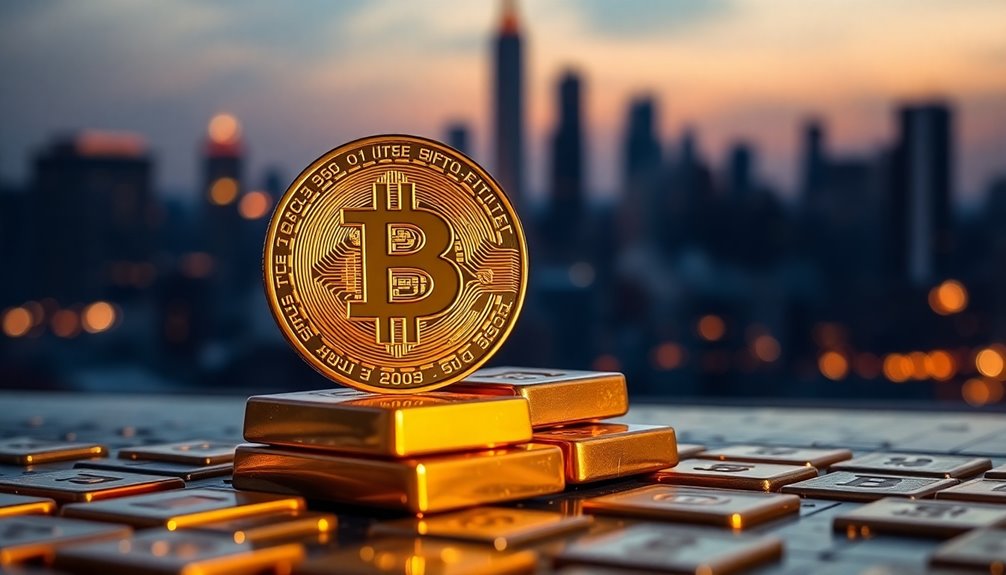
Bitcoin, often hailed as digital gold, represents a unique blend of characteristics that contribute to its perceived worth. One key feature is its scarcity; with a capped supply of 21 million units, Bitcoin is inherently limited. This scarcity drives demand, making it an attractive asset for investors looking to store value. Unlike traditional currencies, which can be printed at will, Bitcoin's fixed supply instills confidence that it won't lose value through inflation.
Another characteristic is durability. You'll find that Bitcoin exists as long as the blockchain remains operational, boasting an impressive uptime of 99.98%. This reliability enhances its appeal as a long-term investment, allowing you to hold onto your assets without worrying about physical degradation. The importance of secure storage for digital assets further emphasizes the need for a reliable investment like Bitcoin.
Plus, because Bitcoin is digital, it's highly portable. You can send it across the globe in seconds, making it an efficient medium for transactions, especially in a world that demands speed and convenience.
Divisibility is yet another advantage. Bitcoin can be divided into smaller units called satoshis, making it accessible for everyday transactions. This feature allows you to buy fractions of Bitcoin, accommodating a range of financial circumstances and making it usable for both large and small purchases.
While Bitcoin is often compared to gold, there are notable differences. Gold's market capitalization stands significantly higher at $12.905 trillion compared to Bitcoin's $529.5 billion. You might notice that Bitcoin experiences greater volatility, which can be both a risk and an opportunity for savvy investors. Bitcoin's volatility is notable, with an average intraday price change of nearly 5% (2018-2021), compared to gold's average of 1.6%.
Though both assets are liquid, gold's widespread acceptance makes it easier to liquidate.
Bitcoin's utility extends beyond just being a medium of exchange. More people are beginning to view it as a store of value, thanks to its combination of scarcity and durability. It also plays a vital role in decentralized finance (DeFi) applications, enabling lending and yield farming opportunities.
However, it's essential to acknowledge that Bitcoin's value is also driven by speculative investment, lacking intrinsic value like gold.
Looking ahead, increased adoption and regulatory clarity could elevate Bitcoin's status even further. Yet, challenges like scalability, competition from other cryptocurrencies, and volatility risks remain. As you explore the world of Bitcoin, you'll discover that its real worth is multifaceted, making it more than just digital gold.
Top picks for "x2019 bitcoin real"
As an affiliate, we earn on qualifying purchases.
Evergreen bestsellers Picks
bestsellers
As an affiliate, we earn on qualifying purchases.