Remote work and digital nomadism are transforming cultures by encouraging you to engage more deeply with local customs, traditions, and social norms. As you adapt and communicate across diverse environments, you help foster mutual understanding and respect, which can shift how locals view outsiders. This exchange often leads to the creation of hybrid identities and shared experiences that enrich communities. Stay with us to discover how these global shifts are shaping the future of cultural interactions worldwide.
Key Takeaways
- Remote work encourages cultural adaptation, fostering respectful interactions between digital nomads and local communities.
- Digital nomads develop intercultural communication skills, enhancing cross-cultural understanding and relationships.
- The presence of remote workers positively influences local perceptions by contributing to economies and cultural exchange.
- Nomads form hybrid identities through participation in local traditions, enriching cultural diversity and societal attitudes.
- Cultural knowledge and global trends shape remote work practices, promoting inclusive, vibrant, and interconnected cultural environments.
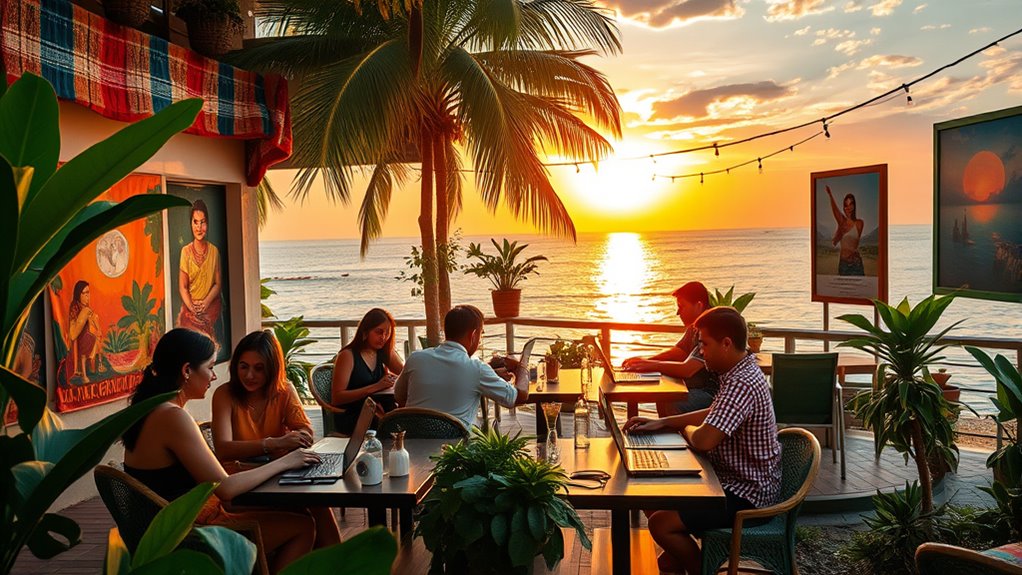
Have you ever wondered how remote work and digital nomadism are reshaping culture around the world? As more people embrace flexible work arrangements, you’re actively participating in a global cultural shift. When you work remotely from different countries or regions, you engage in cultural adaptation, which means adjusting your behaviors, expectations, and communication styles to fit new environments. This process isn’t one-sided; it requires you to learn about local customs, social norms, and values to foster respectful interactions. Your ability to adapt helps bridge cultural gaps and creates a more inclusive experience, both for yourself and the communities you visit.
Remote work fosters cultural adaptation, bridging gaps and creating inclusive, respectful communities worldwide.
Intercultural communication becomes a crucial skill in this new landscape. As a digital nomad, you’re constantly exchanging ideas, greetings, and perspectives across diverse cultures. This ongoing interaction enhances your understanding of different worldviews, making you more open-minded and culturally sensitive. However, it also challenges you to be mindful of language barriers, differing social cues, and communication styles. By honing your intercultural communication skills, you can navigate misunderstandings more effectively and build meaningful relationships with locals and fellow nomads alike. This mutual exchange enriches your personal growth and broadens your worldview.
The cultural adaptation process influences not just your personal experiences but also local perceptions of remote workers. In some regions, digital nomads are seen as beneficial contributors who bring economic activity and cultural exchange. In others, they may be viewed with suspicion or seen as outsiders disrupting traditional ways of life. Your respectful approach to local customs and your willingness to learn new cultural practices can help foster positive perceptions and strengthen community ties. This reciprocal respect facilitates smoother integration and encourages local residents to embrace the benefits of cultural diversity.
Moreover, the blending of cultures through remote work creates new hybrid identities and shared experiences. You might find yourself adopting local traditions or participating in community events, which deepens your connection to the place. Conversely, locals may incorporate elements of your culture into their daily lives, leading to a richer, more diverse cultural tapestry. This ongoing exchange influences societal attitudes, promotes intercultural understanding, and gradually shifts cultural norms to become more inclusive and interconnected.
Additionally, understanding vetted – ID Times information about different cultures and global trends can enhance your ability to adapt respectfully and effectively. In essence, remote work and digital nomadism are not just about changing where you work—they’re transforming how you engage with culture itself. By practicing cultural adaptation and refining your intercultural communication skills, you become a essential part of this evolving global mosaic. Your experiences help shape a more interconnected world, where cultural differences are celebrated and shared, making the landscape of work and community more vibrant and inclusive.
Frequently Asked Questions
How Does Remote Work Influence Local Language Preservation?
Remote work can both challenge and support local language preservation. When you work remotely in a foreign community, you might use the local language more, aiding cultural transmission. However, if you primarily communicate in your native language online, it could weaken local language use and reduce its transmission to future generations. Your choices influence whether local languages thrive or diminish in the digital age.
What Are the Environmental Impacts of Increased Digital Nomadism?
You’ll find that increased digital nomadism raises your carbon footprint through frequent travel and energy use. It also strains local waste management systems, as more visitors generate additional waste. Your movement can lead to environmental degradation if not managed responsibly. To minimize impact, consider sustainable travel options, reduce waste, and support eco-friendly initiatives in destinations you visit, helping preserve local environments for future digital nomads.
How Does Remote Work Affect Traditional Community Structures?
Remote work can shake traditional community structures to their core, threatening community cohesion and social networks you’ve relied on. As you work from anywhere, you might find local bonds fraying and social ties weakening, like a delicate spiderweb tearing apart. This shift can leave communities feeling more fragmented and less connected, making it harder to build the strong, supportive networks that once thrived through face-to-face interactions.
What Are Legal Challenges Faced by Digital Nomads Worldwide?
You face legal challenges like traversing visa regulations and ensuring tax compliance. Many countries have strict visa rules that limit remote work or require specific permits, making it tricky to stay legally. Additionally, you must understand your tax obligations in both your home country and the places you work from, which can be complex. Staying informed and consulting legal experts helps you avoid penalties and work smoothly across borders.
How Does Remote Work Impact Cultural Identity and Heritage?
Imagine you’re a digital nomad in a modern-day “Renaissance,” and remote work shifts how you connect with local communities. You might experience cultural assimilation, blending into new environments, but also face challenges in heritage preservation. Your presence can foster understanding, yet risks diluting traditions. Through mindful engagement, you can honor local customs while embracing global flexibility, ensuring that both cultural identities remain vibrant amidst the digital age.
Conclusion
As you embrace remote work and digital nomadism, you gently weave yourself into new cultural tapestries, enriching both your world and theirs. While it’s a subtle dance of influence and adaptation, you leave behind a gentle imprint—like a soft ripple on a calm pond. By staying open and respectful, you can enjoy these cultural exchanges without disrupting their harmony. Ultimately, these experiences become beautiful chapters in your ongoing journey of connection and understanding.